
![Fmoc-L-Lys[C20-OtBu-γ-Glu(OtBu)-AEEA-AEEA]-OH](/upload/2026/7/89-1.jpg "Fmoc-L-Lys[C20-OtBu-γ-Glu(OtBu)-AEEA-AEEA]-OH")
Octadecanedioic Acid CAS 871-70-5: Structure, Uses & Applications
2026.08.20
Octadecanedioic Acid (CAS 871-70-5) is a linear long-chain α,ω-dicarboxylic acid with an 18-carbon framework and a carboxylic acid group at each end. Its molecular formula is C₁₈H₃₄O₄ and its molecular weight is approximately 314.46 g/mol. The compound is also known as 1,18-Octadecanedioic Acid or Octadecane-1,18-dioic Acid. These core chemical identifiers are consistently reported by PubChem and NIST.
The combination of a long C18 aliphatic segment and two terminal carboxylic acid groups makes Octadecanedioic Acid useful as a bifunctional building block. Its applications extend beyond a single chemical field, including polymer research, functional derivative synthesis, and selected peptide-related side-chain development.
What Is Octadecanedioic Acid?
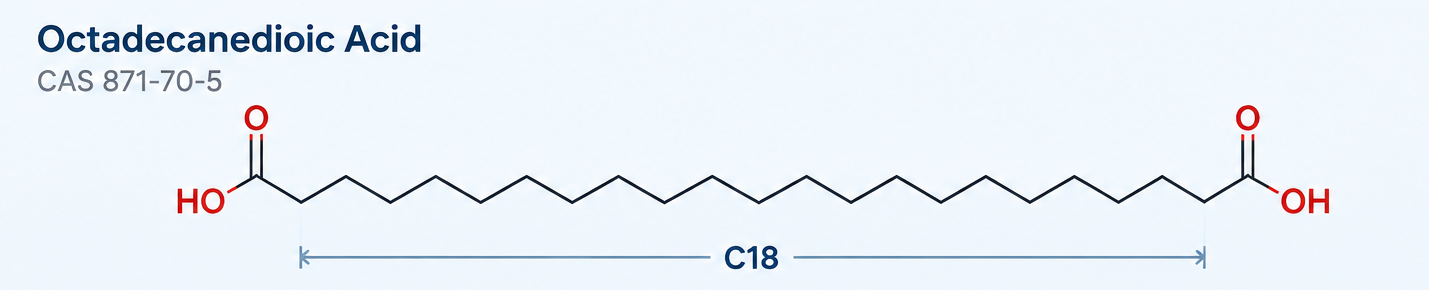
Octadecanedioic Acid belongs to the family of long-chain α,ω-dicarboxylic acids. In a simplified structural description, the molecule consists of a long aliphatic carbon framework terminated by two carboxylic acid groups.
The two terminal carboxyl groups are the key reactive sites. They can participate in transformations such as esterification and amidation, while selective protection of one functional group can create differentiated intermediates for multistep synthesis.
The C18 chain is equally important. It provides a relatively long hydrophobic segment between the two functional groups, making chain length an integral part of the resulting molecular architecture.
For the current product identity, specification and batch-related information, see Juntai's [Octadecanedioic Acid (CAS 871-70-5) product page].
Why Does the C18 Structure Matter?
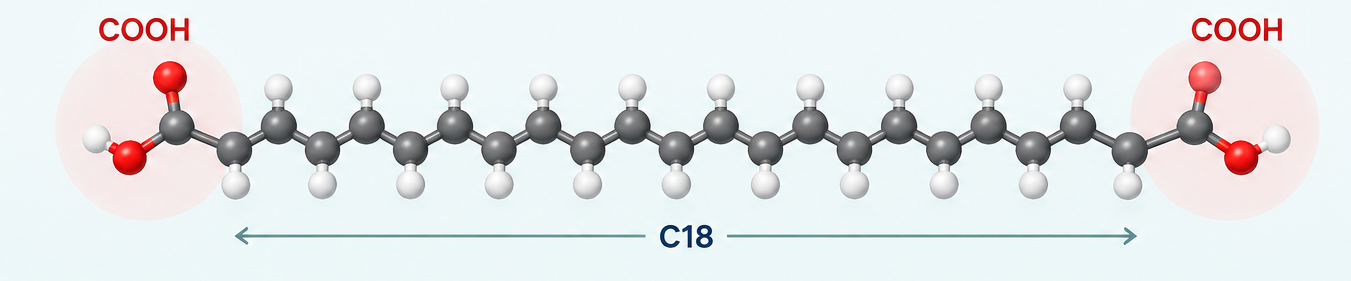
The value of Octadecanedioic Acid is closely related to the combination of its functional groups and carbon-chain length.
| Structural Feature | Technical Significance |
|---|---|
| C18 aliphatic framework | Provides a defined long-chain molecular segment |
| Two terminal carboxylic acid groups | Enables further esterification, amidation and related transformations |
| Linear structure | Provides a defined spacing between the terminal functional groups |
| Symmetrical diacid framework | Allows further development of protected or functionalized derivatives |
The C18 framework should not be viewed simply as a numerical specification. When Octadecanedioic Acid is incorporated into a larger molecule or polymer, the carbon-chain length becomes part of the final molecular structure.
This is why structurally related long-chain diacids should be evaluated according to the intended target rather than treated as automatically interchangeable materials. A detailed comparison of C18 and C20 diacids is discussed separately in [Octadecanedioic Acid vs Eicosanedioic Acid].
Key Applications of Octadecanedioic Acid
Polyamide Research
Octadecanedioic Acid has a documented role in polyamide chemistry.
A peer-reviewed study published in the Journal of Polymer Science Part A: Polymer Chemistry investigated a series of polyamides containing an 18-carbon diacid, including nylon-2,18, nylon-3,18, nylon-4,18, nylon-6,18, nylon-8,18, nylon-9,18 and nylon-12,18. The resulting materials were characterized using viscosimetric, thermal and spectroscopic techniques, with solid-state NMR used to investigate their crystalline forms.
This work illustrates the role of Octadecanedioic Acid as a long-chain bifunctional monomer in polymer research. The properties of the resulting polymer depend on the complete monomer combination, chain architecture and processing conditions rather than on the diacid alone.
Polyester and Long-Chain Material Research
The two carboxylic acid groups also allow Octadecanedioic Acid to participate in ester-forming reactions with suitable alcohol-containing components.
Research has used 1,18-octadecanedioic acid as a long-chain dicarboxylic monomer in polyester systems and structure-property investigations. Recent work has also examined C18 diacid-containing aliphatic–aromatic copolyesters to understand how long-chain dicarboxylic building blocks affect polymer structure and properties. 科学直接
The resulting material characteristics cannot be assigned to Octadecanedioic Acid in isolation. Molecular weight, comonomer selection, chain composition and processing conditions all contribute to the final behavior.
Functionalized Long-Chain Intermediates
Octadecanedioic Acid can also serve as an upstream starting material for the preparation of more specialized derivatives.
Modification of one or both carboxyl groups can produce different functional states, including:
- mono-protected derivatives;
- ester derivatives;
- amide derivatives;
- selectively functionalized long-chain intermediates;
- linker-related structures.
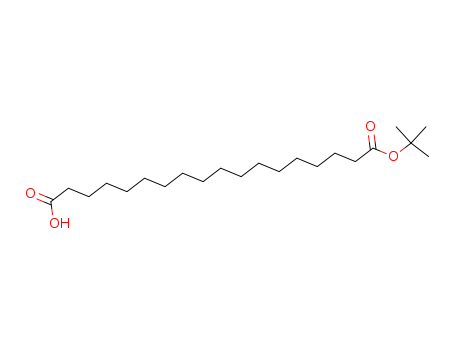
One example relevant to multistep synthesis is [Octadecanedioic Acid Mono-tert-butyl Ester (CAS 843666-40-0)], in which one carboxyl group is protected while the other remains available for further transformation.
The two compounds should not be regarded as the same material. Their different protection states give them different roles in a synthesis route.
Octadecanedioic Acid in Semaglutide-Related Chemistry

Octadecanedioic Acid has a particularly relevant structural connection to Semaglutide research.
FDA materials describe Semaglutide as containing a C18 fatty di-acid attached through a hydrophilic spacer as part of the molecular modification. An FDA clinical pharmacology review identifies this long-chain fatty acid as octadecanedioic acid. The EMA assessment report likewise describes the Semaglutide side chain as containing 1,18-octadecanedioic acid together with a glutamic acid unit and two AEEA-related spacer units.
This distinction is important when discussing Octadecanedioic Acid in peptide chemistry.
Octadecanedioic Acid itself is not the complete Semaglutide side chain. It represents the C18 diacid component within a larger linker architecture. Published patent literature describes Semaglutide-related synthesis routes containing C18 diacid, γ-Glu and AEEA-AEEA structural elements, supporting the use of C18 diacid-derived building blocks in side-chain development.
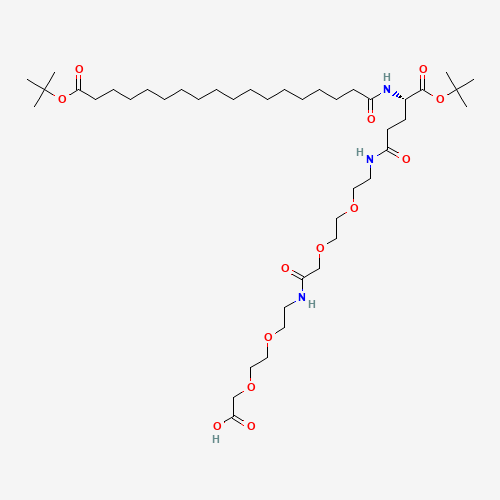
For researchers working with more advanced structures, [tBuO-Ste-γ-Glu(AEEA-AEEA-OH)-OtBu (CAS 1118767-16-0)] represents a substantially more assembled C18 lipid–glutamate–linker intermediate than the parent diacid.
The distinction between the parent diacid, protected derivatives and assembled side-chain intermediates is important when selecting a material for a specific synthesis route.
From Octadecanedioic Acid to Functionalized C18 Intermediates
A useful way to understand the chemistry is to view Octadecanedioic Acid as an upstream structural building block rather than as a finished intermediate for every application.
The two carboxyl groups provide opportunities for controlled functionalization. Depending on the synthesis strategy, one functional group may be protected while the other remains available for coupling or further transformation.
This type of differentiated functionality becomes increasingly important as a synthesis progresses.
A simplified structural relationship can be represented as:
Octadecanedioic Acid
→ selectively protected C18 diacid derivative
→ further functionalized C18 intermediate
→ lipid–linker-containing structure
Each stage represents a different chemical entity. The appropriate material therefore depends on the required functional groups, protection state and position within the overall synthesis route.
For Semaglutide-related intermediate selection, the relevant question is not simply whether a material contains a C18 chain. Researchers should also confirm how the C18 unit is connected to the rest of the molecule and which functional groups remain available for the next synthetic step.
What Should Researchers Consider When Selecting a C18 Diacid?
The first consideration is chemical identity. CAS number, molecular formula and structural representation should be checked together. For Octadecanedioic Acid, the core identifiers are CAS 871-70-5 and molecular formula C₁₈H₃₄O₄
The second consideration is functional state. Unprotected Octadecanedioic Acid and a mono-tert-butyl-protected derivative may originate from the same structural framework but serve different purposes in multistep synthesis.
The third consideration is the intended downstream structure. If the C18 diacid is being evaluated as part of peptide-related side-chain development, the protection pattern and linker architecture need to match the selected route.
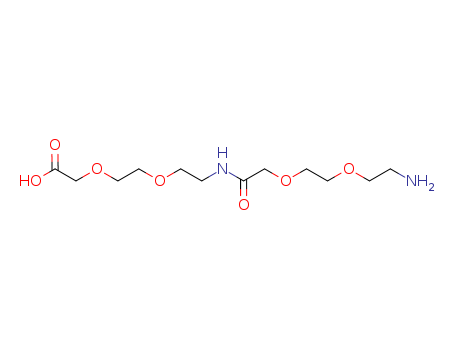
For more advanced Semaglutide-related intermediates, structural differences become even more significant. The presence of an Fmoc-protected lysine, an AEEA-AEEA linker or an activated OSu ester can place otherwise related compounds at very different stages of side-chain assembly. [How Do Semaglutide Side-Chain Intermediates Differ?] provides a detailed comparison of these intermediate types.
Frequently Asked Questions
What is Octadecanedioic Acid?
Octadecanedioic Acid is a linear C18 α,ω-dicarboxylic acid with carboxylic acid groups at both ends. Its CAS number is 871-70-5, molecular formula is C₁₈H₃₄O₄, and molecular weight is approximately 314.46 g/mol.
Why is Octadecanedioic Acid relevant to Semaglutide?
Semaglutide contains a C18 fatty di-acid as part of its modified side-chain architecture. Regulatory and technical sources identify this component as 1,18-octadecanedioic acid. It is one component of a larger linker-containing structure rather than the complete Semaglutide side chain.
Is Octadecanedioic Acid the same as Octadecanedioic Acid Mono-tert-butyl Ester?
No. Octadecanedioic Acid contains two free carboxylic acid groups, while the mono-tert-butyl ester has one carboxyl group protected as a tert-butyl ester. Their different functional-group states give them different roles in multistep synthesis.
Can Octadecanedioic Acid be used directly as a complete Semaglutide side-chain intermediate?
No. Octadecanedioic Acid represents the C18 diacid component and generally requires further functionalization to become part of a more complex lipid–linker architecture. The appropriate intermediate depends on the selected synthesis route and required protection state.
Octadecanedioic Acid as a C18 Building Block
Octadecanedioic Acid combines a defined C18 aliphatic framework with two terminal carboxylic acid groups, making it useful as a bifunctional building block across several areas of chemical research.
Its relevance to Semaglutide-related chemistry is particularly specific: the C18 diacid forms part of the lipid-containing side-chain architecture, while more advanced protected and linker-containing intermediates represent subsequent stages of molecular assembly.
For R&D projects, the most reliable approach is to evaluate the exact chemical structure, functional state and intended synthetic role before selecting a material.
Shandong Juntai Pharmaceutical supports research and process-development projects involving Octadecanedioic Acid, protected C18 derivatives and related peptide synthesis intermediates.
For research and development use only.


