
![Fmoc-L-Lys[C20-OtBu-γ-Glu(OtBu)-AEEA-AEEA]-OH](/upload/2026/7/89-1.jpg "Fmoc-L-Lys[C20-OtBu-γ-Glu(OtBu)-AEEA-AEEA]-OH")
Octadecanedioic Acid vs Eicosanedioic Acid | C18 vs C20 Diacid
2026.08.20
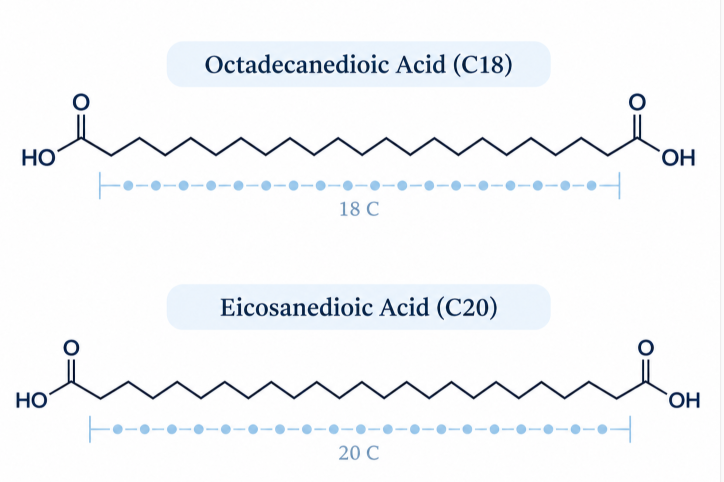
Octadecanedioic Acid and Eicosanedioic Acid are long-chain α,ω-dicarboxylic acids with the same basic functional-group pattern: two carboxylic acid groups positioned at the two ends of a linear hydrocarbon framework.
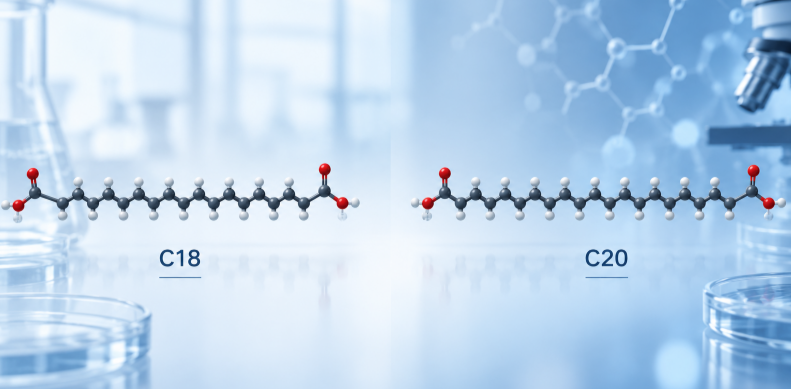
The main structural difference is chain length. Octadecanedioic Acid contains an 18-carbon framework, while Eicosanedioic Acid contains a 20-carbon framework. This difference changes molecular weight and the distance between the two terminal functional groups, which can become important when these compounds are used as building blocks for larger molecules or functional intermediates.
For R&D teams, the key question is not whether C18 or C20 is inherently better. The more useful question is which chain length matches the target molecular architecture and downstream chemistry.
C18 vs C20: Basic Chemical Comparison
| Property | Octadecanedioic Acid | Eicosanedioic Acid |
|---|---|---|
| CAS Number | 871-70-5 | 2424-92-2 |
| Common Structural Description | 1,18-Octadecanedioic Acid | 1,20-Eicosanedioic Acid |
| Carbon Framework | C18 | C20 |
| Molecular Formula | C18H34O4 | C20H38O4 |
| Molecular Weight | 314.46 g/mol | 342.51 g/mol |
| Terminal Functional Groups | 2 × COOH | 2 × COOH |
| Chemical Class | Long-chain α,ω-dicarboxylic acid | Long-chain α,ω-dicarboxylic acid |
The molecular identities and formulas of both compounds are independently documented in chemical databases. Octadecanedioic Acid is CAS 871-70-5 with formula C18H34O4 and molecular weight about 314.5 g/mol. Eicosanedioic Acid is CAS 2424-92-2 with formula C20H38O4 and molecular weight about 342.51 g/mol.
Structurally, both molecules contain two terminal carboxyl groups. The additional two carbon atoms in Eicosanedioic Acid are located within the long-chain hydrocarbon framework rather than changing the fundamental carboxylic-acid functionality.
What Is the Structural Difference Between C18 and C20?
The difference between the two compounds is easy to describe but important to account for in synthesis.
Octadecanedioic Acid provides an 18-carbon aliphatic framework between its terminal carboxyl groups. Eicosanedioic Acid provides a longer 20-carbon framework.
This changes several basic molecular parameters:
- molecular weight;
- length of the aliphatic segment;
- spacing between terminal functional groups;
- relative contribution of the non-polar carbon chain to the overall structure.
The practical consequences depend on what the diacid becomes after further chemical modification. A two-carbon increase should not automatically be interpreted as improved performance, higher reactivity, or better compatibility.
When a diacid is incorporated into a larger molecule, the chain length becomes part of the final molecular architecture. Researchers should evaluate the complete structure rather than comparing the isolated building blocks only by molecular weight.
Why Is C18 Relevant to Semaglutide Side-Chain Chemistry?
The C18 structure has a specific relevance to Semaglutide.
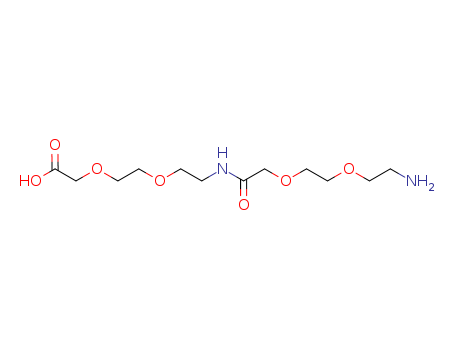
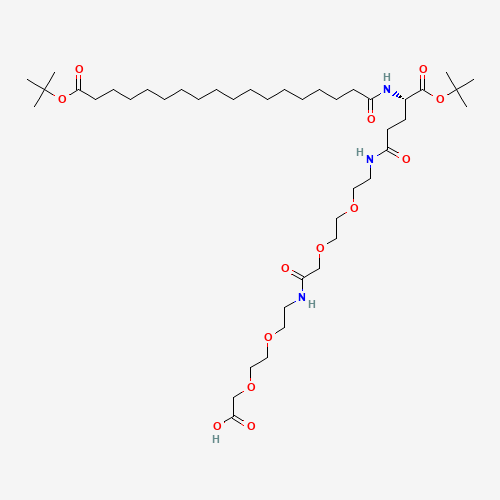
The FDA description of Semaglutide states that albumin binding is facilitated by modification of the Lys26 residue with a hydrophilic spacer and a C18 fatty di-acid. Patent literature describing Semaglutide synthesis further identifies the side-chain architecture as involving octadecanedioic acid together with γ-Glu and AEEA units.
This distinction is important when evaluating long-chain dicarboxylic acids for peptide-related synthesis research.
Octadecanedioic Acid is not the complete Semaglutide side chain. It is one structural component within a larger lipid-linker architecture. In published synthesis approaches, the C18 diacid can appear in protected or further functionalized forms before being incorporated into the peptide structure.
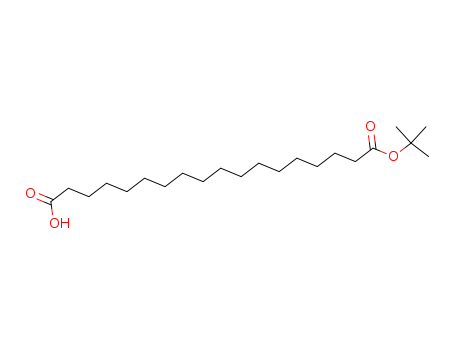
For example, the related mono-tert-butyl-protected C18 derivative, 18-(tert-Butoxy)-18-oxooctadecanoic acid (CAS 843666-40-0), provides differentiated terminal functionality for multistep synthesis. This is structurally different from unprotected Octadecanedioic Acid and from more advanced Semaglutide side-chain intermediates.
For researchers working on Semaglutide-related intermediates, the C18 identity therefore matters at the level of molecular structure and route design. Eicosanedioic Acid should not be treated as a direct C20 replacement simply because it belongs to the same chemical family.
How Does Chain Length Affect Intermediate Design?
Changing from C18 to C20 changes the molecular spacer without changing the basic dicarboxylic-acid functionality.
This can matter when a diacid is converted into a protected derivative, linker, ester, amide, or another functionalized intermediate. The additional carbon atoms remain part of the final structure and may alter molecular spacing, flexibility, hydrophobic character, or packing behavior.
The effect cannot be predicted from chain length alone.
For example, in polymer chemistry, Octadecanedioic Acid has been used to prepare a range of polyamides, including nylon-2,18, nylon-3,18, nylon-4,18, nylon-6,18 and other C18-diacid-containing materials. Research has also examined copolyamides containing nylon-6,18 at different compositions.
This illustrates why chain length should be considered as a molecular-design parameter rather than a simple quality ranking.
For peptide and conjugation chemistry, the same principle applies. The correct intermediate depends on the exact target structure, functional-group arrangement, protecting-group strategy and coupling sequence.
When Should Researchers Consider C18 or C20?
The choice between Octadecanedioic Acid and Eicosanedioic Acid should start with the intended target structure.
| Project Requirement | More Relevant Starting Point |
|---|---|
| Semaglutide-related C18 side-chain research | Octadecanedioic Acid |
| Development of protected C18 side-chain derivatives | Octadecanedioic Acid |
| Long-chain C18 bifunctional building block | Octadecanedioic Acid |
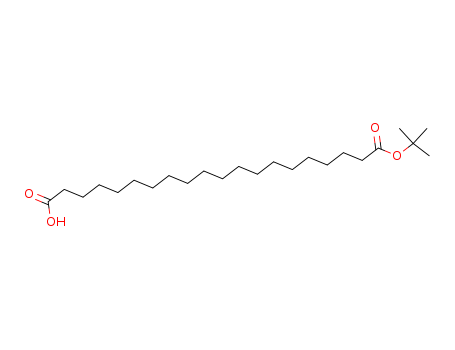
| Target structure specifically requires a C20 framework | Eicosanedioic Acid |
| Comparative C18/C20 structure-property research | Evaluate both |
| Sequential functionalization of a protected C20 diacid | A suitable C20 protected derivative |
For Semaglutide-related research specifically, C18 is the relevant chain-length choice because the established Semaglutide structure contains a C18 fatty di-acid component. A C20 diacid should instead be considered when the target structure independently calls for a C20 framework.
Juntai also provides both Octadecanedioic Acid (CAS 871-70-5) and Eicosanedioic Acid (CAS 2424-92-2) as separate products, allowing project teams to evaluate the appropriate carbon-chain structure according to their synthesis requirements.
What Should R&D and Procurement Teams Check?
Selecting a long-chain dicarboxylic acid should involve more than confirming the product name.
The first step is chemical identity. CAS number, molecular formula and structural representation should be checked together, particularly when C18, C20 and their protected derivatives are being evaluated within the same project.
The second step is the required functional state. Unprotected diacids, mono-tert-butyl-protected derivatives and activated intermediates are different chemical entities and should not be treated as interchangeable materials.
The third step is analytical documentation. Depending on the project stage, technical teams may need a Certificate of Analysis, purity information, related-substance data, identification results or other batch-specific documentation.
The final decision should be based on the downstream synthesis route. A material that has the correct carbon-chain length but the wrong protection state or functional-group arrangement may still be unsuitable for the intended process.
For C18 side-chain development, [Octadecanedioic Acid (CAS 871-70-5)] can serve as the starting long-chain diacid, while [Octadecanedioic Acid Mono-tert-butyl Ester (CAS 843666-40-0)] represents a more differentiated C18 building block. More advanced structures such as protected Semaglutide side-chain intermediates should be evaluated according to their complete molecular architecture rather than by the C18 designation alone.
Frequently Asked Questions
What is the main difference between Octadecanedioic Acid and Eicosanedioic Acid?
Octadecanedioic Acid has an 18-carbon framework, while Eicosanedioic Acid has a 20-carbon framework. Both are long-chain α,ω-dicarboxylic acids with two terminal carboxyl groups.
Which diacid is relevant to Semaglutide side-chain chemistry?
Semaglutide contains a C18 fatty di-acid component in the side-chain architecture attached at the modified lysine residue. Patent literature further identifies octadecanedioic acid in Semaglutide-related structures. Eicosanedioic Acid should not be considered a direct substitute for this C18 component.
Can Octadecanedioic Acid and Eicosanedioic Acid be substituted directly?
Not without evaluating the target structure. Although they share the same dicarboxylic-acid functionality, the C18 and C20 frameworks produce different molecular structures. The appropriate choice depends on the required chain length and downstream chemistry.
What information should be confirmed before purchasing a long-chain diacid for an R&D project?
At minimum, confirm the CAS number, molecular structure, required purity, functional or protection state, applicable analytical specification and batch-specific documentation. If the material will enter an established synthesis route, the acceptance criteria should be reviewed before material selection.
Selecting the Appropriate C18 or C20 Building Block
Octadecanedioic Acid and Eicosanedioic Acid are closely related at the functional-group level but different at the molecular-architecture level.
For general organic and materials research, either compound may be appropriate when its carbon-chain length matches the target design. For Semaglutide-related side-chain research, the C18 framework has a specific structural basis, while C20 diacid chemistry should be evaluated separately rather than treated as an equivalent alternative.
Shandong Juntai Pharmaceutical supports technical evaluation of long-chain dicarboxylic acids, protected derivatives and related peptide synthesis intermediates. Project discussions can cover chemical identity, target specifications, analytical documentation and route-specific material requirements.


