
![Fmoc-L-Lys[C20-OtBu-γ-Glu(OtBu)-AEEA-AEEA]-OH](/upload/2026/7/89-1.jpg "Fmoc-L-Lys[C20-OtBu-γ-Glu(OtBu)-AEEA-AEEA]-OH")
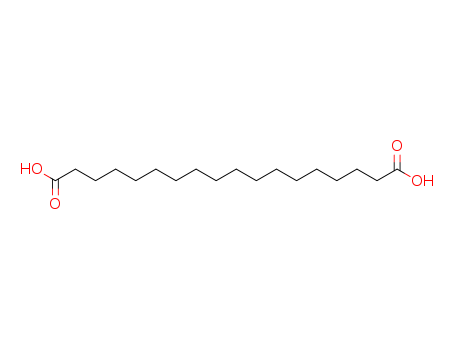
Octadecanedioic Acid | CAS 871-70-5
- cas:871-70-5
- Molecular Formula:C18H34O4
- Purity:99%
- Molecular Weight:314.466
Product Details
CasNo: 871-70-5
Molecular Formula: C18H34O4
Appearance: white crystalline powder
Octadecanedioic Acid (CAS 871-70-5)
Shandong Juntai Pharmaceutical controls the product according to established enterprise specifications, including identification, loss on drying, residue on ignition and related substances. Batch-specific quality documentation can be provided with product supply.
Product Information
| Item | Information |
|---|---|
| Product Name | Octadecanedioic Acid |
| Synonym | 1,18-Octadecanedioic Acid |
| Synonym | Octadecane-1,18-dioic Acid |
| CAS No. | 871-70-5 |
| Molecular Formula | C18H34O4 |
| Molecular Weight | 314.46 |
| Product Type | Long-chain α,ω-dicarboxylic acid |
| Appearance | White to Gray Solid |
| Storage | Store in a tightly closed container and protect from light |
Structural Characteristics of Octadecanedioic Acid
Long-Chain α,ω-Dicarboxylic Acid Structure
Octadecanedioic Acid contains a long aliphatic carbon chain with one carboxylic acid group at each terminal position.
Unlike monocarboxylic fatty acids, this bifunctional structure provides two reactive carboxyl groups that can be further modified through esterification, amidation, selective protection or condensation reactions.
Two Terminal Carboxyl Groups for Further Derivatization
The two terminal carboxylic acid groups can participate in different synthetic transformations depending on the target route.
Typical chemistry may include:
- Carboxyl protection and deprotection
- Esterification
- Amide bond formation
- Long-chain linker construction
- Polyester-related condensation
- Polyamide-related condensation
This makes Octadecanedioic Acid useful not only as a long-chain dicarboxylic acid raw material, but also as an upstream building block for more functionalized intermediates.
Main Applications
Long-Chain Dicarboxylic Acid Derivative Synthesis
Octadecanedioic Acid can be used as a starting material for the preparation of protected and functionalized long-chain dicarboxylic acid derivatives.
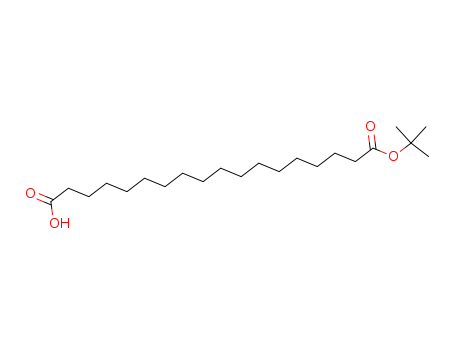
Selective protection of one terminal carboxyl group can generate mono-protected intermediates such as Octadecanedioic Acid Mono-tert-butyl Ester, which can then be used in further multistep synthesis.
Upstream Building Block for Peptide-Related Intermediates
Long-chain dicarboxylic acids and their protected derivatives can be used in the construction of peptide-related side chains and long-chain linker structures.
In these routes, Octadecanedioic Acid generally serves as an upstream long-chain dicarboxylic acid raw material. Further protection or functionalization is typically required before downstream coupling and side-chain construction.
Polyamide and Polyester Synthesis
As a bifunctional long-chain dicarboxylic acid, Octadecanedioic Acid can react with diamines or diols in condensation reactions used to prepare long-chain polyamides, polyesters and related polymer systems.
Its long aliphatic backbone makes it a useful building block for material systems requiring C18 dicarboxylic acid structures.
Specialty Material Synthesis
Depending on the formulation and synthetic route, long-chain dicarboxylic acids may also be used in specialty coatings, adhesives, lubricant-related materials and other specialty chemical applications.
Suitability should be evaluated according to the target structure, process design and final material requirements.
Quality Specification
Shandong Juntai Pharmaceutical evaluates Octadecanedioic Acid according to an established enterprise specification.
| Test Item | Specification |
|---|---|
| Appearance | White to Gray Solid |
| Identification | Conforms to Reference Standard |
| Loss on Drying | NMT 1.0% |
| Residue on Ignition | NMT 0.5% |
| Individual Impurity | NMT 0.5% |
| Total Impurity | NMT 1.0% |
| Storage | Store in a tightly closed container and protect from light |
Actual test results for each production batch are reported in the corresponding Certificate of Analysis.
Why Quality Evaluation Should Not Rely on a Single Purity Number
For long-chain dicarboxylic acid intermediates such as Octadecanedioic Acid, quality should not be evaluated only by a single stated purity value.
A more complete assessment should consider:
- Product identity
- Loss on drying
- Residue on ignition
- Individual impurities
- Total impurities
- Batch-specific analytical results
For procurement and technical evaluation, the supplier's formal specification and batch-specific Certificate of Analysis should therefore be reviewed together.
Quality Control and Documentation Support
Shandong Juntai Pharmaceutical performs quality control according to the established product specification.
Current quality control parameters include:
- Appearance
- Identification
- Loss on drying
- Residue on ignition
- Individual impurities
- Total impurities
A batch-specific Certificate of Analysis can be provided with product supply.
Additional technical documentation or project-specific quality requirements can be discussed according to customer needs.
Relationship Between Octadecanedioic Acid and Octadecanedioic Acid Mono-tert-butyl Ester
Octadecanedioic Acid (CAS 871-70-5) and Octadecanedioic Acid Mono-tert-butyl Ester (CAS 843666-40-0) are structurally related, but they are different products.
Octadecanedioic Acid — CAS 871-70-5
Both terminal groups are free carboxylic acids.
This structure makes it suitable as a base long-chain dicarboxylic acid for further derivatization.
Octadecanedioic Acid Mono-tert-butyl Ester — CAS 843666-40-0
One terminal carboxyl group remains free, while the other is protected as a tert-butyl ester.
This differentiated functional-group arrangement is more suitable for multistep synthesis requiring controlled coupling and protection strategies.
Octadecanedioic Acid can therefore serve as an upstream structural raw material for selected protected C18 dicarboxylic acid derivatives.
Packaging and Storage
Packaging
Packaging can be arranged according to order quantity and specific project requirements.
Customers with special requirements regarding unit packaging, outer packaging or bulk supply can provide the relevant details during inquiry.
Storage
Store in a tightly closed container and protect from light.
Transportation and storage conditions should follow the corresponding product documentation and mutually confirmed supply requirements.
Procurement and Project Support
Shandong Juntai Pharmaceutical supplies Octadecanedioic Acid (CAS 871-70-5) for research and industrial applications.
Before ordering, customers may confirm:
- Current quality specification
- MOQ
- Available quantity
- Packaging options
- Stock status
- Lead time
- Batch-specific COA
- Project-specific specification requirements
For projects involving further derivatization of long-chain dicarboxylic acids or related intermediates, technical and supply requirements can also be discussed based on the target structure.
Frequently Asked Questions
What is the CAS number of Octadecanedioic Acid?
The CAS number of Octadecanedioic Acid is 871-70-5.
What type of compound is Octadecanedioic Acid?
Octadecanedioic Acid is a long-chain α,ω-dicarboxylic acid containing carboxylic acid groups at both ends of the molecule.
What is Octadecanedioic Acid used for?
It can be used as a long-chain dicarboxylic acid building block in the synthesis of protected dicarboxylic acid derivatives, peptide-related upstream intermediates, linker structures, polyamides, polyesters and other specialty materials.
What is the difference between Octadecanedioic Acid and CAS 843666-40-0?
CAS 871-70-5 is the unprotected dicarboxylic acid, with both terminal carboxyl groups remaining free.
CAS 843666-40-0 is Octadecanedioic Acid Mono-tert-butyl Ester, in which one carboxyl group is protected as a tert-butyl ester.
Can Juntai Pharmaceutical provide a COA?
Yes. A batch-specific Certificate of Analysis can be provided with the corresponding product supply.
Which quality parameters are controlled?
The current enterprise specification includes appearance, identification, loss on drying, residue on ignition, individual impurity and total impurity.
How should Octadecanedioic Acid be stored?
Store in a tightly closed container and protect from light. Refer to the corresponding technical documentation for specific handling requirements.
What are the MOQ and lead time?
MOQ, stock status and lead time depend on the required quantity and current production or inventory conditions. Customers are encouraged to provide the expected purchase quantity when submitting an inquiry.
Request Product Information and Quotation
For current specifications, packaging options, MOQ, lead time, COA or other information about Octadecanedioic Acid (CAS 871-70-5), please contact the Shandong Juntai Pharmaceutical sales team.
Providing the expected purchase quantity and project requirements with your inquiry will help us confirm the appropriate supply information more efficiently.
For research and industrial manufacturing use only.
871-70-5 Process route
-

- 1002-25-1
octadeca-7,11-dienedioic acid

-

- 871-70-5
octadecanedioic acid
| Conditions | Yield |
|---|---|
|
With palladium on activated charcoal; hydrogen; In methanol; at 40 ℃; for 12h; Solvent; Time;
|
99% |
-

-
16-(2,2-dimethyl-4,6-dioxy-1,3-dioxan-5-yl)hexadecanoic acid
-
- 871-70-5
octadecanedioic acid
| Conditions | Yield |
|---|---|
|
With hydrogenchloride; In water; at 90 - 110 ℃;
|
71% |
|
With hydrogenchloride; In water; at 90 - 110 ℃;
|
71% |
871-70-5 Upstream products
-
14811-95-1

eicosa-1,19-diene
-
37688-96-3

1,14-dibromotetradecane
-
996-82-7
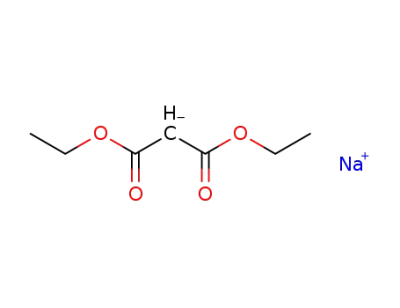
sodium diethylmalonate
-
3155-42-8

18-hydroxystearic acid
871-70-5 Downstream products
-
119039-48-4

octadecanedioic acid di-p-tolyl ester
-
1472-93-1

dimethyl 1,18-octadecanedioate
-
3661-77-6

cycloheptadecanone
-
103170-10-1

1,18-bis-(2,4-dihydroxy-phenyl)-octadecane-1,18-dione
Relevant Products
-
 Fmoc-Glu(OtBu)-Gly-Gly-OH
CAS:N/A
-
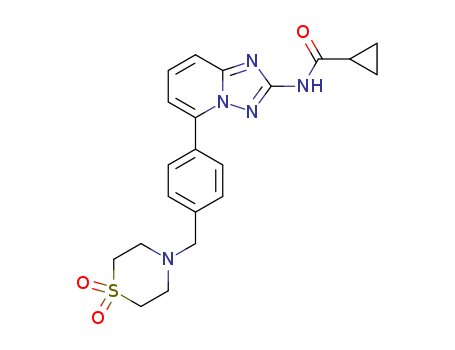 Filgotinib Intermediates
CAS:1206161-97-8
-
 Eicosanedioic Acid
CAS:2424-92-2


