
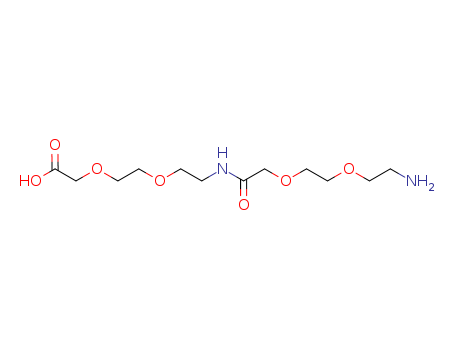
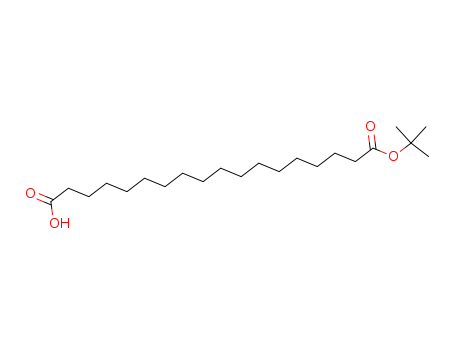
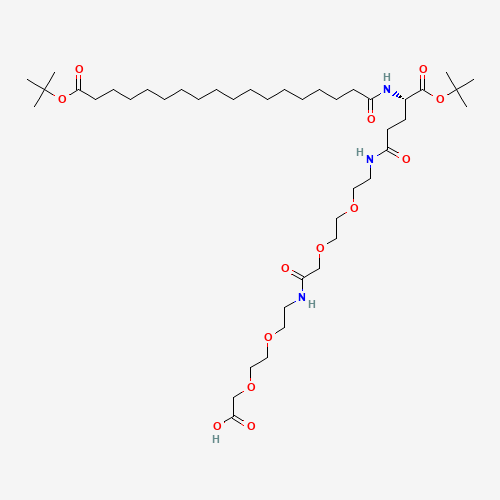
![Fmoc-L-Lys[C20-OtBu-γ-Glu(OtBu)-AEEA-AEEA]-OH](/upload/2026/7/89-1.jpg "Fmoc-L-Lys[C20-OtBu-γ-Glu(OtBu)-AEEA-AEEA]-OH")
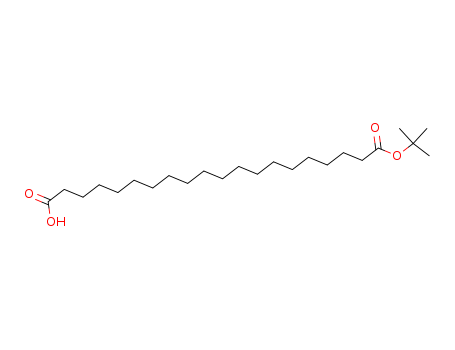
20-(tert-Butoxy)-20-oxoicosanoic acid | CAS 683239-16-9
- cas:683239-16-9
- Molecular Formula:C24H46O4
- Purity:99%
- Molecular Weight:398.627
Product Details
CasNo: 683239-16-9
Molecular Formula: C24H46O4
20-(tert-Butoxy)-20-oxoicosanoic acid (CAS 683239-16-9) | C20 Mono-tert-Butyl Protected Dicarboxylic Acid
Product Overview
20-(tert-Butoxy)-20-oxoicosanoic acid (CAS 683239-16-9), also known as Eicosanedioic Acid Mono-tert-butyl Ester, is a mono-protected long-chain dicarboxylic acid derivative based on a C20 aliphatic framework.
Unlike unprotected eicosanedioic acid, this molecule contains one free carboxylic acid group and one tert-butyl-protected terminal carboxyl group. This differentiated functionality makes the compound useful in multistep organic synthesis where controlled modification of the two ends of a long-chain diacid is required.
Its combination of a C20 hydrophobic chain, free carboxyl group and tert-butyl ester protection makes it suitable for research involving functionalized long-chain intermediates, molecular spacer design and other structure-development projects.
Shandong Juntai Pharmaceutical provides 20-(tert-Butoxy)-20-oxoicosanoic acid with product specifications, batch COA and related quality documentation available according to project requirements.
For research use only.
Product Information
| Item | Information |
|---|---|
| Product Name | 20-(tert-Butoxy)-20-oxoicosanoic acid |
| Common Name | Eicosanedioic Acid Mono-tert-butyl Ester |
| CAS No. | 683239-16-9 |
| Molecular Formula | C₂₄H₄₆O₄ |
| Molecular Weight | 398.62 |
| Purity | 99% |
| Chemical Class | Mono-protected long-chain dicarboxylic acid |
| Carbon Framework | C20 |
| Product Type | Functionalized chemical intermediate |
| Use | Research use only |
Actual specifications and analytical results should be confirmed against the corresponding batch COA.
Structural Features of 20-(tert-Butoxy)-20-oxoicosanoic acid
C20 Long-Chain Framework
The molecule is derived from a C20 long-chain dicarboxylic acid framework.
This extended aliphatic segment provides a relatively long molecular spacer and a pronounced hydrophobic region, which can be useful in the design of functionalized long-chain structures.
The practical effect of the C20 chain depends on the complete target molecule and should be evaluated within the specific research system.
One Free Carboxylic Acid Group
One end of the molecule remains as a free carboxylic acid.
This functional group provides a chemically accessible site for further structural modification and can be used in downstream reactions according to the requirements of the target synthetic route.
One tert-Butyl-Protected Carboxyl Group
The second terminal carboxyl group is protected as a tert-butyl ester.
This protection differentiates the two ends of the molecule and helps reduce simultaneous reaction at both termini during multistep synthesis.
The result is a more controllable mono-protected C20 dicarboxylic acid intermediate for projects that require sequential functionalization.
Why Use a Mono-Protected C20 Dicarboxylic Acid?
Unprotected eicosanedioic acid contains two free carboxyl groups with similar functional behavior.
For some synthetic routes, this symmetry is useful. For others, it can make selective modification more difficult.
Mono-protection changes the functional state of the molecule:
Free carboxylic acid — C20 aliphatic framework — tert-butyl-protected carboxyl group
This allows one end to remain available for further modification while the second end is temporarily protected.
Such a structure can be useful when a project requires:
-
stepwise functionalization;
-
differentiation of terminal groups;
-
asymmetric molecular design;
-
long-chain spacer construction;
-
preparation of more advanced functional intermediates.
The protected derivative therefore serves a different purpose from the parent dicarboxylic acid and should not be treated as an interchangeable form.
Main Research Applications
Functionalized Long-Chain Intermediate Development
20-(tert-Butoxy)-20-oxoicosanoic acid can be evaluated as a C20 long-chain building block in projects requiring both a hydrophobic aliphatic segment and controlled terminal functionality.
The free carboxyl group provides a site for additional structural development, while the protected end can remain unchanged until required at a later stage.
Multistep Organic Synthesis
The mono-protected structure is particularly relevant when different ends of a dicarboxylic acid framework need to be modified sequentially.
Instead of exposing two similar carboxyl groups at the same stage, researchers can work with one available functional group while maintaining protection at the opposite terminus.
This can provide greater flexibility when designing multistep synthetic sequences.
Long-Chain Linker and Spacer Research
The C20 framework can function as a long aliphatic spacer within larger molecular structures.
For projects involving linker-related molecular design, the combination of chain length and differentiated terminal functionality can provide a useful starting point for further structure development.
Actual suitability should always be evaluated against the intended target structure and downstream chemistry.
Peptide-Related Fatty-Acid Side-Chain Research
Mono-protected long-chain diacids may also be evaluated in research involving functionalized fatty-acid side chains and peptide-related molecular architectures.
In such systems, 20-(tert-Butoxy)-20-oxoicosanoic acid should be understood as a C20 protected fatty-diacid building block, rather than as a complete peptide side-chain intermediate.
The exact required structure, protection state and downstream linker components should be confirmed before project use.
20-(tert-Butoxy)-20-oxoicosanoic acid vs. Eicosanedioic Acid
Although both compounds share a C20 long-chain framework, their terminal functional groups are different.
| Comparison | Eicosanedioic Acid | 20-(tert-Butoxy)-20-oxoicosanoic acid |
|---|---|---|
| CAS No. | 2424-92-2 | 683239-16-9 |
| Carbon Framework | C20 | C20 |
| Free Carboxyl Groups | Two | One |
| Protected Carboxyl Group | None | One tert-butyl ester |
| Molecular Symmetry | Symmetric dicarboxylic acid | Mono-protected asymmetric functionality |
| Typical Research Focus | Bifunctional long-chain diacid chemistry | Controlled and sequential functionalization |
The two products should therefore be selected according to the intended synthetic route rather than treated as direct substitutes.
Reference Physicochemical Properties
| Property | Data |
|---|---|
| CAS No. | 683239-16-9 |
| Molecular Formula | C₂₄H₄₆O₄ |
| Molecular Weight | 398.62 |
| Purity | 99% |
| Boiling Point | 496.0 ± 18.0°C (predicted) |
| Density | 0.942 ± 0.06 g/cm³ (predicted) |
| PSA | 63.60 |
| LogP | 7.4345 |
| pKa | 4.78 ± 0.10 (predicted) |
Predicted physicochemical values are provided for reference only and should not be considered batch-release specifications.
Actual product quality should be evaluated using the corresponding batch COA and agreed specification.
Quality and Documentation Support
For a protected long-chain dicarboxylic acid intermediate, product evaluation should cover more than nominal purity.
Important factors may include:
-
correct chemical identity;
-
protection state;
-
purity;
-
batch analytical data;
-
product specification;
-
consistency between batches;
-
project-specific documentation requirements.
Shandong Juntai Pharmaceutical can provide relevant product and quality information according to the actual batch and project requirements, including:
-
COA (Certificate of Analysis);
-
product specification;
-
purity information;
-
batch analytical data;
-
related technical and quality documentation.
Specific analytical items should be confirmed according to the intended project.
What Should Be Confirmed Before Project Evaluation?
Confirm the Exact Chemical Identity
For accurate product identification, verify:
-
20-(tert-Butoxy)-20-oxoicosanoic acid
-
CAS 683239-16-9
-
C₂₄H₄₆O₄
-
Molecular weight: 398.62
-
Eicosanedioic Acid Mono-tert-butyl Ester
Long-chain dicarboxylic acids and their protected derivatives often have similar names, so CAS number and structural information should be checked together.
Confirm the Required Protection State
Before selecting the material, determine whether the project requires:
-
unprotected Eicosanedioic Acid;
-
mono-tert-butyl-protected C20 diacid;
-
or a more advanced functionalized derivative.
These materials serve different roles in synthetic-route design.
Review Batch-Specific Data
Website specifications provide general product information but should not replace batch-specific quality evaluation.
For project use, the actual COA and relevant analytical documentation should be reviewed against the required specification.
Frequently Asked Questions
What is another name for 20-(tert-Butoxy)-20-oxoicosanoic acid?
A commonly used name is Eicosanedioic Acid Mono-tert-butyl Ester. It may also be described as a mono-tert-butyl-protected C20 dicarboxylic acid.
What is the CAS number of 20-(tert-Butoxy)-20-oxoicosanoic acid?
The CAS number is 683239-16-9.
Why is one carboxyl group protected as a tert-butyl ester?
Mono-protection differentiates the two terminal functional groups. One carboxyl group remains available for further structural modification, while the second is temporarily protected.
This can be useful in multistep synthesis where sequential functionalization is required.
Is it the same product as Eicosanedioic Acid?
No.
Eicosanedioic Acid (CAS 2424-92-2) contains two free terminal carboxyl groups, while 20-(tert-Butoxy)-20-oxoicosanoic acid contains one free carboxyl group and one tert-butyl-protected carboxyl group.
What information is available for product evaluation?
Depending on the actual batch and project requirements, product specification, COA, purity data and related quality documentation can be provided.
What information should be provided for a technical inquiry?
It is helpful to provide:
-
required quantity;
-
purity or specification requirements;
-
required quality documents;
-
packaging requirements;
-
project timeline;
-
any additional technical requirements.
This helps ensure that the product information matches the intended research project.
Related Long-Chain Dicarboxylic Acid Products
For projects involving long-chain dicarboxylic acids and protected derivatives, related structures include:
-
Eicosanedioic Acid (CAS 2424-92-2) — unprotected C20 dicarboxylic acid
-
Octadecanedioic Acid (CAS 871-70-5) — C18 long-chain dicarboxylic acid
-
18-(tert-Butoxy)-18-oxooctadecanoic acid (CAS 843666-40-0) — C18 mono-tert-butyl-protected dicarboxylic acid derivative
Different carbon-chain lengths and protection states provide different structural options for molecular design and multistep synthesis.
Contact Shandong Juntai Pharmaceutical
For information about 20-(tert-Butoxy)-20-oxoicosanoic acid (CAS 683239-16-9), including product specifications, COA, batch quality information and project-related technical documentation, please contact Shandong Juntai Pharmaceutical.
For research use only.
683239-16-9 Process route
-

-
tert-butyl icosanedioic acid

-

- 683239-16-9
eicosanedioic acid mono(1,1-dimethylethyl)ester

-

- 2424-92-2
octadecane-1,18-dicarboxylic acid
-

- 1767-98-2
20-methoxy-20-oxoicosanoic acid
| Conditions | Yield |
|---|---|
|
With methanol; barium hydroxide octahydrate; at 30 - 35 ℃; for 14.5h;
|
-

- 50530-12-6
10-bromodecanoic acid
-
- 683239-16-9
eicosanedioic acid mono(1,1-dimethylethyl)ester
-
- 2424-92-2
octadecane-1,18-dicarboxylic acid
-
- 1767-98-2
20-methoxy-20-oxoicosanoic acid
| Conditions | Yield |
|---|---|
|
Multi-step reaction with 3 steps
1.1: trifluoroacetic anhydride / dichloromethane / 0.5 h / 0 °C / Large scale
1.2: 2 h / 0 - 10 °C / Large scale
2.1: zinc; nickel(II) chloride hexahydrate; 2,2':6,2''-terpyridine / N,N-dimethyl-formamide / 10 h / 35 - 45 °C / Inert atmosphere; Large scale
3.1: barium hydroxide octahydrate; methanol / 14.5 h / 30 - 35 °C
With methanol; 2,2':6,2''-terpyridine; nickel(II) chloride hexahydrate; barium hydroxide octahydrate; trifluoroacetic anhydride; zinc; In dichloromethane; N,N-dimethyl-formamide;
|
683239-16-9 Upstream products
-
2424-92-2
octadecane-1,18-dicarboxylic acid
-
36805-97-7
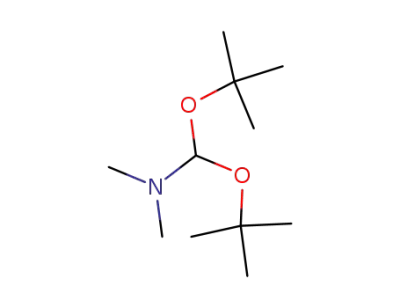
N,N-dimethylformamide di-tert-butyl acetal
-
101702-50-5

1,20-eicosanedioyl dichloride
-
24424-99-5
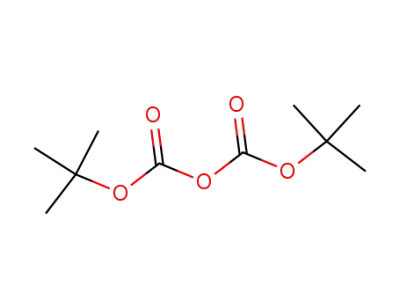
di-tert-butyl dicarbonate
683239-16-9 Downstream products
-
1642333-07-0
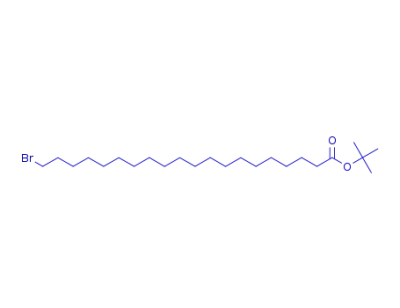
20-bromo-icosanoic acid tert-butyl ester
-
1642333-05-8
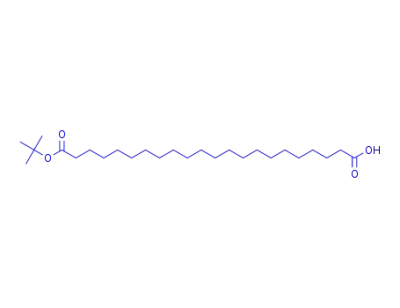
docosanedioic acid mono-tert-butyl ester
Relevant Products
-
 Fmoc-Glu(OtBu)-Gly-Gly-OH
CAS:N/A
-
 Retatrutide
CAS:2381089-83-2
-
 H-Glu-OtBu
CAS:45120-30-7


