
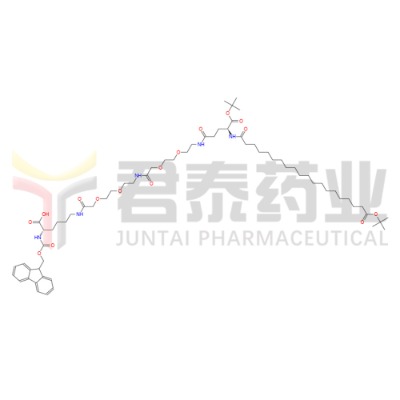
Fmoc-L-Lys[C20-OtBu-γ-Glu(OtBu)-AEEA-AEEA]-OH | CAS 2915356-76-0
- cas:2915356-76-0
- Molecular Formula:C66H105N5O16
- Purity:≥99.0%
- Molecular Weight:
Product Details
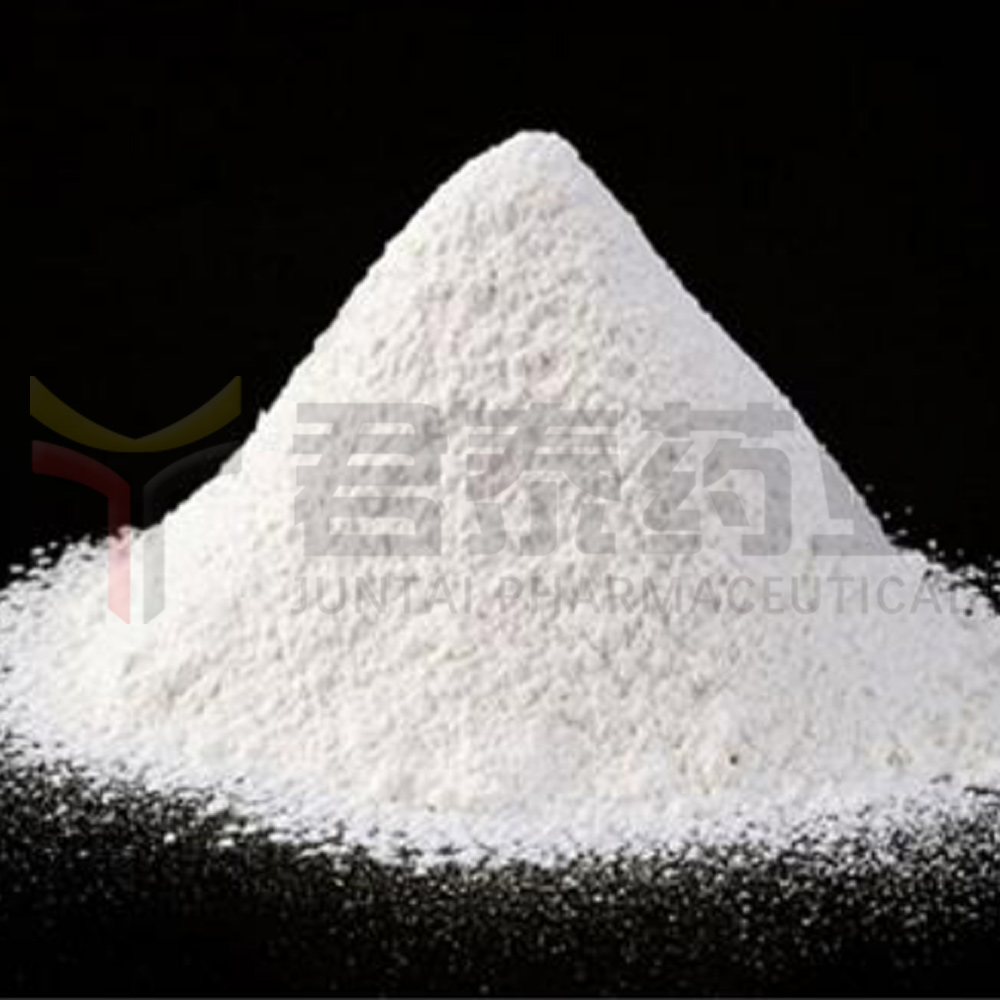
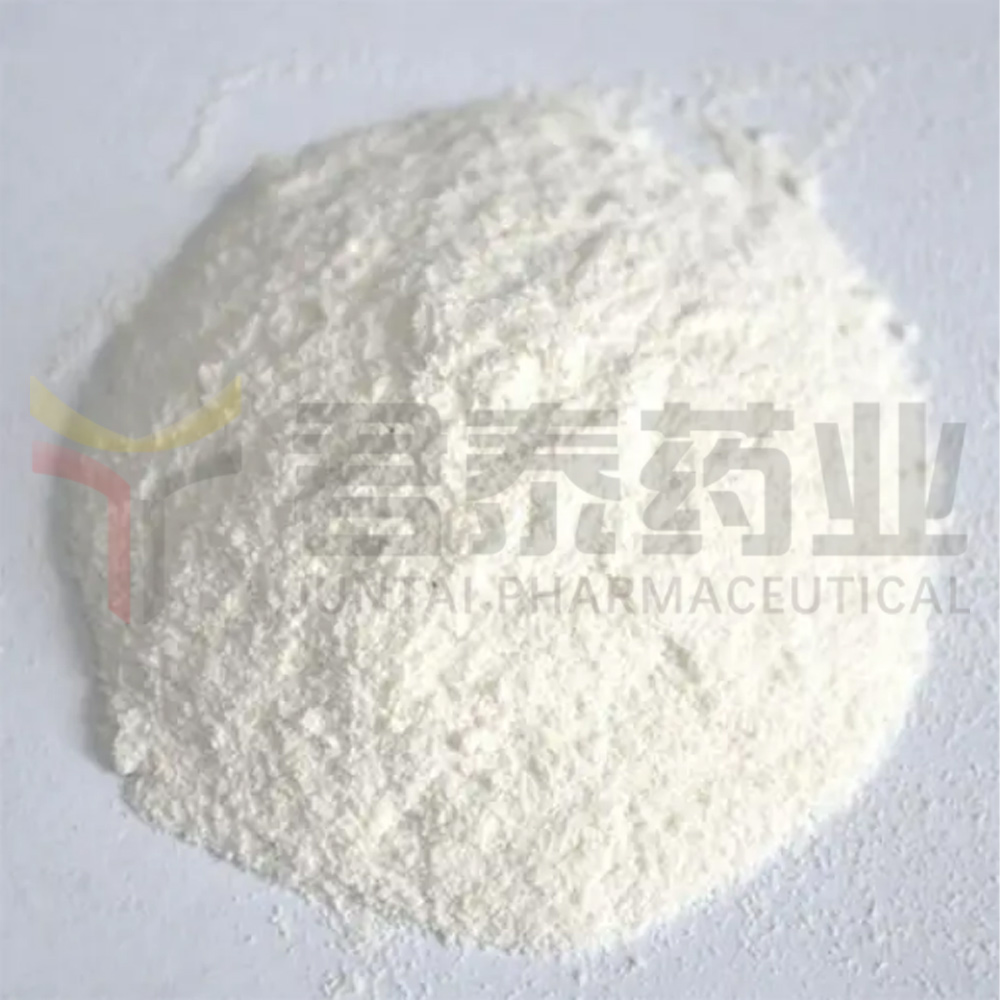
Appearance: White to off-white powder
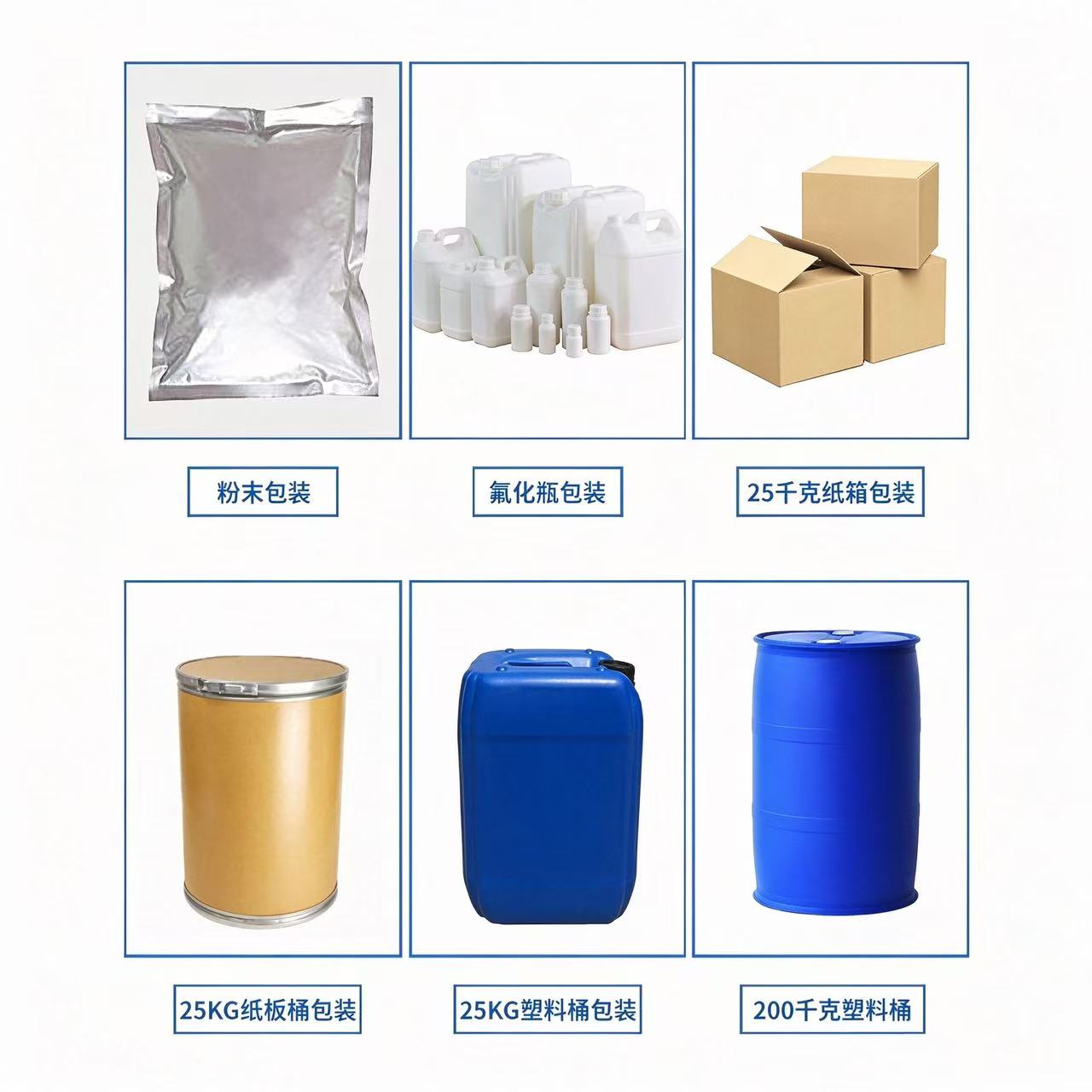
Packing: Available according to order quantity and project requirements
Product Overview
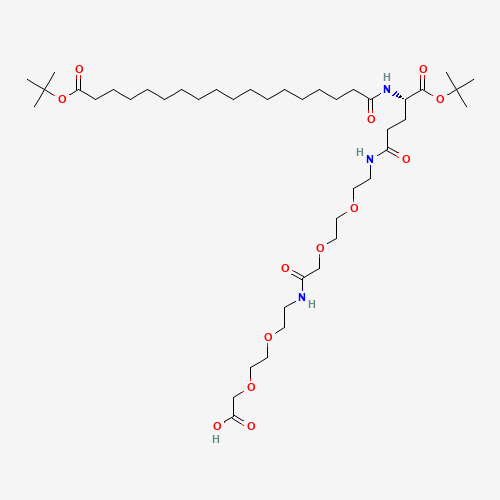
This product is a highly pre-assembled long-acting peptide side-chain intermediate manufactured by H2O Pharm (Shandong Juntai Pharmaceutical). It integrates a C20 long-chain fatty diacid, a γ-Glu bridging unit, and a bis-AEEA hydrophilic spacer, fully pre-assembled onto an Fmoc-protected L-lysine backbone.
In Solid-Phase Peptide Synthesis (SPPS), this pre-assembled intermediate enables direct side-chain modification at the lysine residue via a one-step coupling reaction. It replaces the cumbersome traditional process of multiple deprotections, activations, and stepwise couplings, thereby significantly shortening the synthetic route, reducing sequence truncation impurities, and improving the overall yield of the final product.
⚠️ Compliance Note: This product is an industrial-grade R&D and manufacturing intermediate. It is intended for peptide synthesis process research and drug development manufacturing only, and must not be used directly in humans or for clinical diagnostics.
Modular Structure Breakdown: 4 Pre-assembled Functional Units
The core value of this product lies in its "modular integrated design," which pre-assembles all functional units required for long-acting modification into a single molecule:
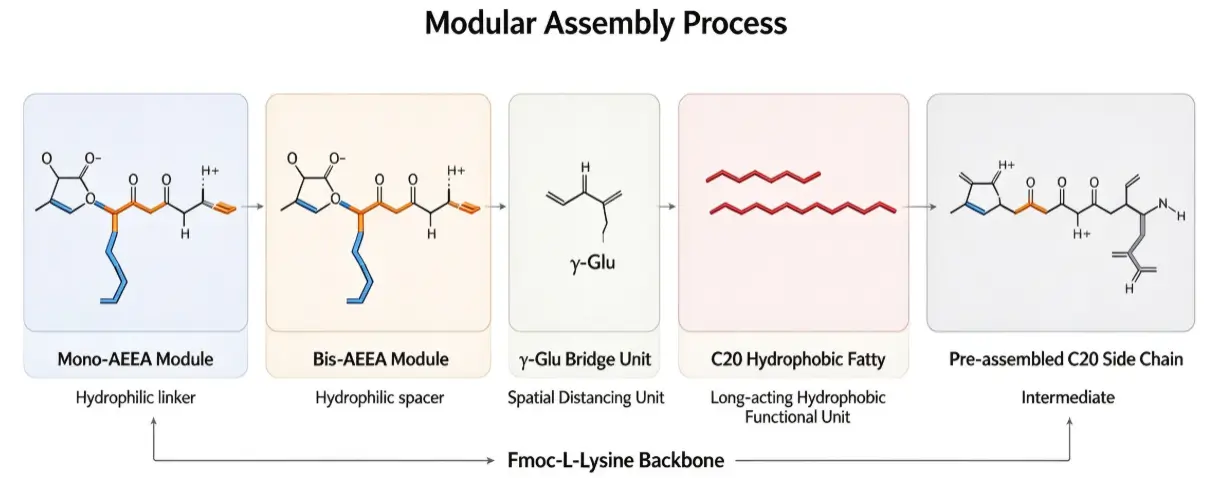
1. Fmoc-L-Lys Backbone
-
Provides the main chain anchoring point for SPPS; the α-amino group is protected by a standard Fmoc group.
-
Compatible with mainstream SPPS protocols; Fmoc can be cleaved under standard piperidine/DMF conditions to release the free amino group for peptide chain elongation.
-
The side-chain ε-amino group serves as the pre-assembly connection site, requiring no additional deprotection.
2. Bis-AEEA Hydrophilic Spacer
-
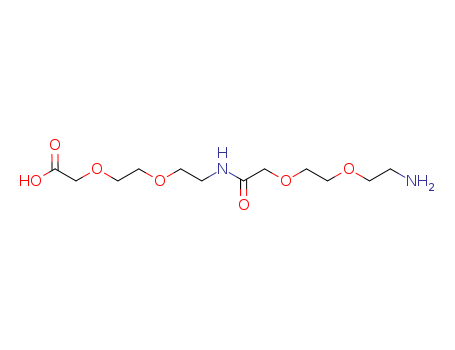
Formed by the continuous assembly of two AEEA (2-(2-aminoethoxy)ethoxyacetic acid) units. Compared to a single AEEA (C6 hydrophilic linker), this dimer provides a more extended spatial span.
-
Effectively shields the strong hydrophobicity of the C20 long-chain fatty acid, significantly improving the overall aqueous solubility and solution stability of the molecule.
-
Provides sufficient spatial distance to prevent the hydrophobic chain from interfering with receptor binding affinity.
3. γ-Glu (OtBu) Bridging Modulator
-
Connected via the γ-carboxyl group of glutamic acid, precisely modulating the spatial distance between the hydrophobic fatty chain and the hydrophilic spacer.
-
Optimizes the molecular charge distribution and balances albumin binding capacity with receptor affinity.
-
The α-carboxyl group is protected as a tert-butyl ester (OtBu), which can be simultaneously cleaved during the final TFA cleavage step.
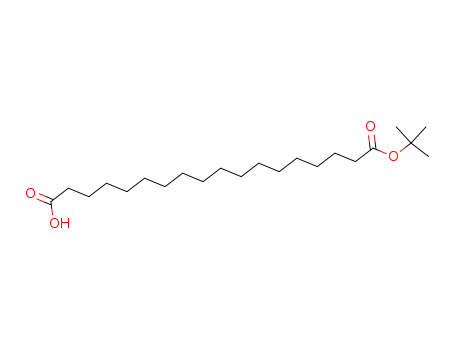
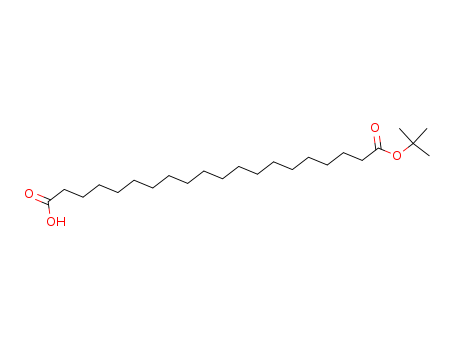
4. C20-OtBu Fatty Diacid Module
-
A 20-carbon long-chain fatty diacid structure that provides strong, reversible albumin-binding capacity.
-
It is the core hydrophobic functional unit for extending the in vivo half-life of peptides and achieving long-acting dosing. (Note: For shorter pure alkyl hydrophobic chains, please refer to C14 hydrophobic alkyl linker).
-
The terminal carboxyl group is protected as a tert-butyl ester (OtBu), ensuring stability without side reactions during synthesis.
Core Process Advantages: Pre-assembled Side Chain vs. Traditional Stepwise Synthesis
By moving the multi-step side-chain modification from the solid phase to the liquid phase in advance, the pain points of stepwise coupling are solved at the root:
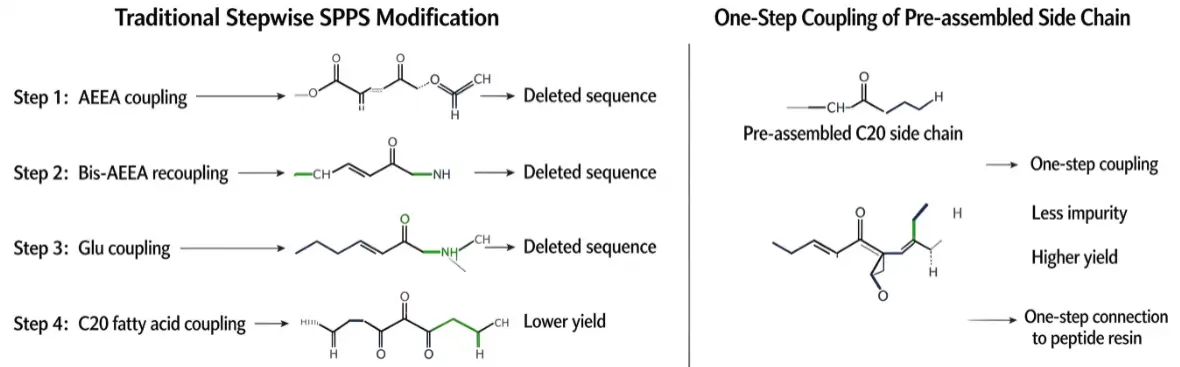
| Comparison Metric | Traditional Stepwise Synthesis (C20→Glu→AEEA→AEEA) | Pre-assembled One-step Coupling |
|---|---|---|
| Reaction Steps | 4 steps of deprotection + activation + coupling; requires multiple process optimizations | Only 1 coupling reaction; mature process directly applicable |
| Synthesis Cycle | Side-chain modification takes 3-5 days; extended overall cycle | Side-chain modification takes only half a day; cycle shortened by >70% |
| Impurity Control | Conversion loss at each step; prone to truncation/deletion impurities; single impurities typically 2-5% | Impurities controlled in the liquid phase; final truncated impurities <0.5% |
| Overall Yield | Cumulative loss over multiple steps; side-chain yield usually 40-60% | One-step coupling conversion ≥95%; overall yield improved by 15-25% |
| Purification Difficulty | Similar impurity structures; difficult separation and high cost | Fewer impurity types; significantly reduced purification pressure |
| Scale-up Adaptability | Many steps and variables; difficult to control batch consistency during scale-up | Consistent batches of pre-assembled side chains; no additional risks for SPPS scale-up |
Physicochemical Properties & SPPS Protocol
1. Basic Physicochemical Properties
| Property | Value |
|---|---|
| Molecular Formula / MW | C66H105N5O16 / 1224.59 g/mol |
| Predicted Density | 1.121±0.06 g/cm³ |
| Solubility | Freely soluble in common peptide synthesis organic solvents (DMF, DMSO, etc.) |
| Storage Conditions | -20±5°C, strictly sealed, protected from light and moisture |
2. Solid-Phase Peptide Synthesis (SPPS) Protocol
(1) Fmoc Deprotection
- Use standard 20% piperidine/DMF solution. It is recommended to use a two-stage treatment (e.g., 5 min + 15 min) to ensure complete removal of sterically hindered groups. Wash thoroughly with DMF after deprotection.
(2) Side-chain Coupling (Critical Step)
-
Recommended Coupling System: HATU / COMU highly efficient coupling reagents.
-
Recommended Molar Ratio: Side Chain : Coupling Reagent : DIPEA = 1 : 1.2~1.5 : 2~3.
-
Reaction Conditions: DMF as solvent, coupling at room temperature for 2 hours. Due to the large molecular weight of the pre-assembled side chain (1224.59), if the reaction is incomplete, Double Coupling is highly recommended (drain the reaction solution and add fresh coupling reagents for a second cycle) rather than using a massive excess of reagents at once.
-
Monitor the coupling endpoint using the Ninhydrin test.
(3) OtBu Deprotection
- All tert-butyl ester (OtBu) protecting groups on the side chain can be simultaneously cleaved during the final peptide cleavage step using a standard TFA cleavage cocktail (e.g., TFA/TIPS/H2O = 95:2.5:2.5), requiring no additional operations.
Packaging, Storage & Delivery
Storage Requirements
-
Long-term: -20±5°C, vacuum sealed, protected from light, dry environment. Shelf life: 24 months.
-
Short-term: Can be stored at 2-8°C briefly. Allow to equilibrate to room temperature before opening to prevent moisture absorption.
-
Note: This product contains multiple ether and amide bonds and is hygroscopic. Weighing should be performed quickly in a dry environment.
Packaging Specifications
-
R&D Scale: 100 mg, 1 g, 10 g in high-barrier glass vials, sealed under argon.
-
Bulk Scale: 100 g, 500 g, 1 kg in aluminum cans/fiber drums. Customizable upon request.
Delivery & Logistics
-
In-stock: 100 mg, 1 g, and 10 g are in stock and ship within 24 hours.
-
Bulk Orders: 100 g to kg scale ships in ~2 weeks. Ton-scale custom orders require scheduling.
-
Shipping: Classified as a non-hazardous chemical; no dangerous goods declaration required.
-
Customs Support: CI, PL, MSDS, and RUO statements are provided to assist with customs clearance.
Frequently Asked Questions
Q1: How is the purity determined? Does the stated purity include moisture?
A: We determine chromatographic purity using HPLC area normalization and moisture content via Karl Fischer titration. The stated purity is the absolute purity excluding moisture and residual solvents. A raw HPLC chromatogram is included with every batch's COA for traceability.
Q2: Is the pre-assembled C20 side chain prone to moisture absorption during shipping and storage? Will this affect its performance?
A: The product contains multiple ether and amide bonds and is inherently hygroscopic. We freeze-dry the product before shipping and seal it in high-barrier glass vials under argon. Upon receipt, store immediately at -20°C. Before opening, allow the vial to reach room temperature and weigh quickly in a dry environment to avoid moisture absorption. Under normal storage conditions, this will not affect performance.
Q3: What is the MOQ? Can you ensure a stable supply for large-scale manufacturing?
A: The minimum stock packaging is 100 mg and 1 g, ideal for initial process development and pilot runs. The 10 g size is also in stock for scale-up. For larger demands, we possess mature kg-scale manufacturing capabilities and ton-scale expansion reserves, ensuring a stable supply for commercial stages without lengthy custom synthesis lead times.
Q4: When should I choose this pre-assembled side chain over stepwise synthesis?
A: For early-stage screening, you may purchase individual modules like AEEA hydrophilic C6 linker, AEEA-AEEA C12 hydrophilic spacer, or C14 hydrophobic alkyl linker to combine flexibly. However, if the process is locked and you are pursuing efficiency and batch consistency, using this pre-assembled side chain eliminates the need for multi-step process optimization and purification, significantly shortening development time and lowering overall costs.
Q5: Does this product require a dangerous goods declaration for export?
A: No. It is a standard non-hazardous chemical. We provide Commercial Invoices (CI), Packing Lists (PL), MSDS, COA, and Research Use Only (RUO) statements to fully assist with customs clearance.
Related Peptide Synthesis Intermediates & Linkers
| Product | Role in Synthesis |
|---|---|
| AEEA (C6) | Short-chain hydrophilic linker module,Improves aqueous solubility and reduces steric hindrance. |
| AEEA-AEEA (C12) | Bis-AEEA hydrophilic module,Core component of this product, offering a longer hydrophilic spacer. |
| Boc-C14-COOH (C14) | Pure hydrophobic alkyl linker,Used for non-cleavable ADC linkage or hydrophobic PROTAC design. |
Relevant Products
-
 Fmoc-Glu(OtBu)-Gly-Gly-OH
CAS:N/A
-
 C20-OtBu-γ-Glu(OtBu)-AEEA-AEEA-OH
CAS:1188328-37-1
-
 Fmoc-Thr(tBu)-Phe-OH
CAS:1962160-86-6


