
![Fmoc-L-Lys[C20-OtBu-γ-Glu(OtBu)-AEEA-AEEA]-OH](/upload/2026/7/89-1.jpg "Fmoc-L-Lys[C20-OtBu-γ-Glu(OtBu)-AEEA-AEEA]-OH")
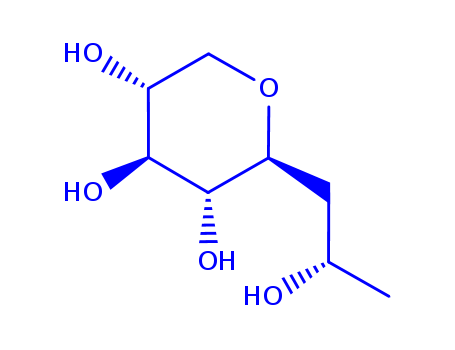
(S)-Pro-xylane | CAS 439685-79-7
- cas:439685-79-7
- Molecular Formula:
- Purity:99%
- Molecular Weight:192.212
This product is for research and development use only.
Product Details
CasNo: 439685-79-7
Buy Good Quality (S)-Pro-xylane 439685-79-7 with a minimum purity of 99%
- Molecular Formula:C8H16O5
- Molecular Weight:192.212
Pro-xylane Chemical Properties
|
Boiling point |
376.0±42.0 °C(Predicted) |
|
density |
1.368±0.06 g/cm3(Predicted) |
|
vapor pressure |
0Pa at 25℃ |
|
storage temp. |
Store at -20°C |
|
solubility |
Water: 250 mg/mL (1300.66 mM); DMSO: ≥ 83.33 mg/mL (433.54 mM) |
|
form |
Liquid |
|
pka |
13.55±0.70(Predicted) |
|
color |
Colorless to light yellow |
|
Cosmetics Ingredients Functions |
SKIN CONDITIONING |
|
InChI |
InChI=1/C8H16O5/c1-4(9)2-6-8(12)7(11)5(10)3-13-6/h4-12H,2-3H2,1H3/t4,5-,6+,7+,8+/s3 |
|
InChIKey |
KOGFZZYPPGQZFZ-ZXWVZLFTNA-N |
|
SMILES |
C([C@@H]1OC[C@@H](O)[C@H](O)[C@H]1O)C(O)C |&1:1,4,6,8,r| |
|
LogP |
-2.07 |
Pro-xylane Usage And Synthesis
|
cosmetic ingredient |
Pro-Xylane is a cosmetic ingredient used mainly as an anti-ageing agent in skin creams. Produced by Chimex, its chemical structure is derived from the xylose, a natural component of glycosaminoglycans and of hemicellulose. Pro-Xylane is produced in a two-steps process: 1) The reaction of xylose and acetylacetone in water, then 2) the hydrogenation of the intermediate. |
|
Physical Form |
Powder |
|
Cosmetics Application |
Pro-Xylane is a biochemical which induces neo-synthesis of matrix proteins. It is a biologically active C-glycoside in aqueous media, acts as an activator of glycosaminoglycans (GAGs) biosynthesis. Pro-xylane is the first example of 'Green' chemical used in cosmetic. Pro-Xylane is an ingredient originally developed by Lancome in 2006. According to research, it is a sugar-protein hybrid made from xylose, a sugar found abundantly in beech trees and known to stimulate the production of glycoaminoglycans (GAGs), molecules responsible for defending the skin against water loss. |
|
function |
Pro-Xylane is a sugar-molecule derived from the beech wood tree utilizing green chemistry. It functions, in vitro, by stimulating the production of proteoglycans, a water-absorbing molecule in human reconstructed skin. |
|
Description |
Pro-xylane (PX) is a cosmetic ingredient used for skin conditioning and is widely used in anti-aging product research. It is considered to be an optimal activator for the biosynthesis of glycosaminoglycans (GAGs) sulphate and can be used to prepare a novel bioactive c-glycoside compound, which is a "green" chemical. In addition, Pro-xylane has been shown to enhance the blue colour of anthocyanins (ACNs), with ACNs-PX showing a colour close to Oxford blue, a surface height of 2.13 ± 0.14 nm and a slight increase in stability[1-2]. |
|
Chemical Properties |
Pro-xylane is an organic compound with the appearance of a pale yellow to off-white powder or a colourless viscous liquid, stored in a cool dry place, and has been used in experiments related to the basic science of aging. |
|
Uses |
Pro-Xylane is a sugar-molecule derived from the beech wood tree utilizing green chemistry. It functions, in vitro, by stimulating the production of proteoglycans, a water-absorbing molecule in human reconstructed skin. Higher levels of proteoglycans within the reconstructed skin’s extracellular matrix correlate to increase skin-elasticity and firmness. In cosmetics, pro-xylane products are frequently incorporated into anti-aging lotions and creams to counterbalance signs of aging (i.e., fine lines and wrinkles). |
|
Mechanism of action |
Pro-Xylane enters the skin and stimulates the part that produces and builds the extracellular matrix (a gel-like network of proteins and sugars that act as a scaffold and shock absorber between cells) called proteoglycans.These molecules absorb water and make the matrix more gel-like, increasing the firmness of the cells and increasing the firmness of the skin.It can also serve as a highway to guide supplemental molecules (such as growing proteins) to cells. |
|
References |
[1] ALEXANDRE CAVEZZA . Synthesis of Pro-XylaneTM: A new biologically active C-glycoside in aqueous media[J]. Bioorganic & Medicinal Chemistry Letters, 2009. DOI:10.1016/j.bmcl.2008.12.037. [2] KAI DENG. Improved Stability of Blue Colour of Anthocyanins from Lycium ruthenicum Murr. Based on Copigmentation.[J]. Molecules, 2022. DOI:10.3390/molecules27186089. |
Relevant Products
-
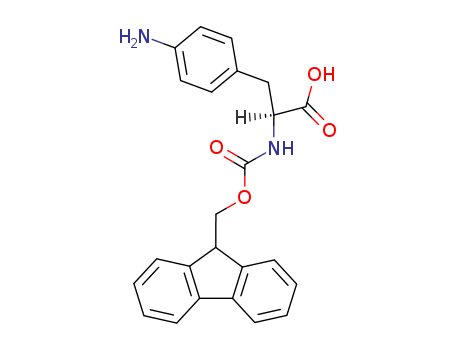 Fmoc-L-Phe(4-NH2)-OH
CAS:95753-56-3
-
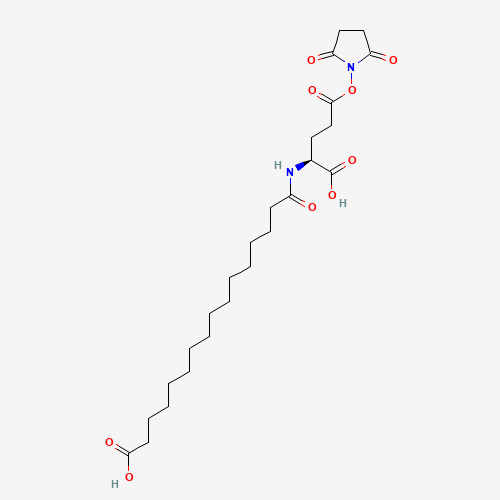 HO-C16-Glu(Osu)-OH
CAS:943586-12-7
-
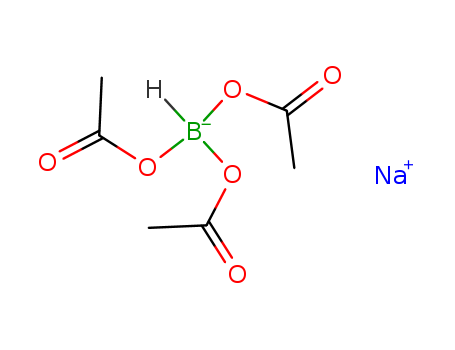 Sodium triacetoxyborohydride
CAS:56553-60-7
-
 Ectoine
CAS:96702-03-3


