
Fmoc-AEEA | CAS 166108-71-0
- cas:166108-71-0
- Molecular Formula:C21H23NO6
- Purity:99%
- Molecular Weight:385.417
Product Details
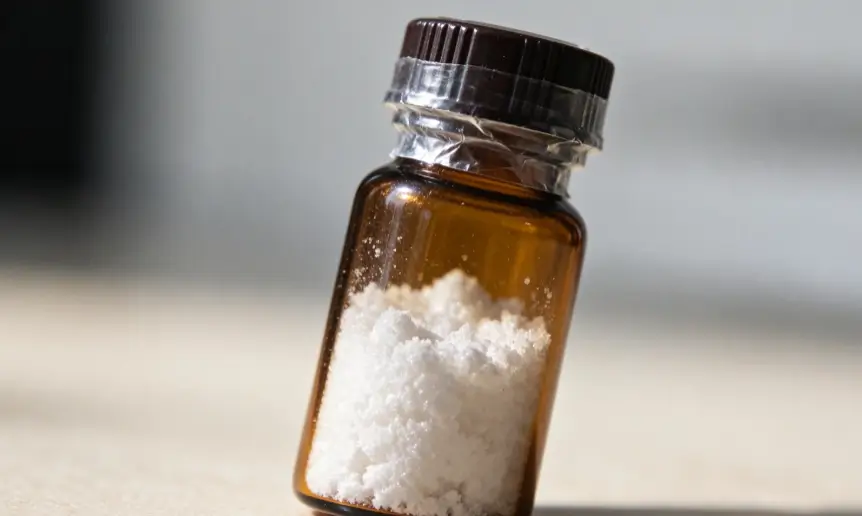
Appearance: white crystal
Fmoc-AEEA Introduction
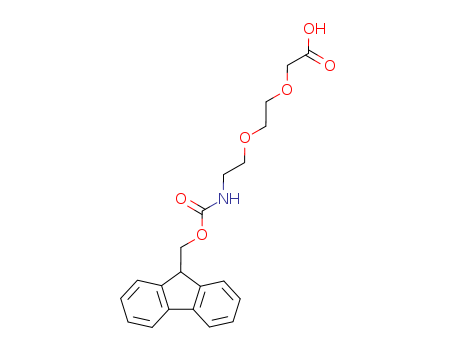
Fmoc-AEEA, systematically known as 8-(Fmoc-amino)-3,6-dioxaoctanoic acid or Fmoc-NH-PEG2-CH2COOH, is a high-purity, monodispersed, heterobifunctional hydrophilic PEG linker. It features a base-labile Fmoc-protected amino group at one terminus and a reactive carboxylic acid group at the other, separated by a flexible two-unit ethylene glycol (PEG2) spacer. The hydrophilic PEG2 backbone greatly improves the water solubility of conjugates, and its orthogonal reactivity enables stepwise controlled conjugation to avoid self-polymerization during synthesis. Shandong Juntai Pharmaceutical Co., Ltd. is a direct manufacturer of Fmoc-AEEA (CAS 166108-71-0), providing strict batch-to-batch consistency, full analytical documentation, and competitive factory-direct pricing from laboratory scale to commercial bulk quantities.
Molecular Parameters & Structural Profile
Key Molecular Parameters
| Item | Specification |
|---|---|
| Product Name | Fmoc-AEEA / Fmoc-NH-PEG2-CH2COOH |
| CAS Number | 166108-71-0 |
| MDL Number | MFCD01321015 |
| Molecular Formula | C₂₁H₂₃NO₆ |
| Molecular Weight | 385.417 |
| Density | 1.265 g/cm³ |
| Melting Point | 90–93 ℃ |
| Boiling Point | 631.4 ℃ at 760 mmHg |
| Flash Point | 335.6 ℃ |
| HS Code | 29189900 |
| PSA (Polar Surface Area) | 94.09 Ų |
| LogP | 3.03320 |
| pKa | 3.40 ± 0.10 (Predicted) |
| SMILES | OC(=O)COCCOCCN(C(=O)OCC1C2=CC=CC=C2C3=CC=CC=C13) |
| InChI | InChI=1S/C21H23NO6/c23-20(24)14-27-12-11-26-10-9-22-21(25)28-13-18-16-7-3-1-5-15(16)17-6-2-4-8-19(17)18/h1-8,18H,9-14H2,(H,22,25)(H,23,24) |
Structural Characteristics of Fmoc-AEEA
Fmoc-AEEA is an orthogonal-reactive PEGylated spacer. The Fmoc protecting group can be removed under mild basic conditions (e.g. piperidine) to expose the primary amine, while the terminal carboxyl group is available for amide coupling reactions with primary amines using standard activators such as HATU, HBTU or EDC. This orthogonal reactivity prevents self-polymerization during synthesis, which is the core advantage for controlled stepwise conjugation. The flexible PEG2 ether chain reduces steric hindrance and improves aqueous solubility of the final conjugate molecule.
Research Applications
Due to its balanced hydrophilicity and structural flexibility, Fmoc-AEEA serves as an essential building block across modern drug discovery and synthetic chemistry:
- Solid-Phase Peptide Synthesis (SPPS): Widely used to introduce a hydrophilic spacer into hydrophobic peptide sequences, effectively improving aqueous solubility, reducing aggregation, and enhancing bioavailability.
- GLP‑1 Analog & Therapeutic Peptide Development: Frequently incorporated as a key side-chain linker in the synthesis of long-acting peptide research molecules such as GLP‑1 receptor agonists.
- ADC & Bioconjugation Linkers: Acts as a versatile crosslinker in Antibody-Drug Conjugates (ADCs).
- PROTAC Molecule Construction: Applied as a hydrophilic spacer between E3 ligase ligand and POI ligand in PROTAC design.
QC Testing, Packaging & Storage
Quality Control & Analytical Data
Every batch of Fmoc-AEEA (CAS 166108-71-0) undergoes rigorous analytical testing prior to release. Complete documentation including Certificate of Analysis (COA), HPLC chromatogram, 1H‑NMR spectrum and MSDS is available upon request. We maintain stable supply of Fmoc-AEEA with consistent purity for long-term research projects.
Packaging & Storage Conditions
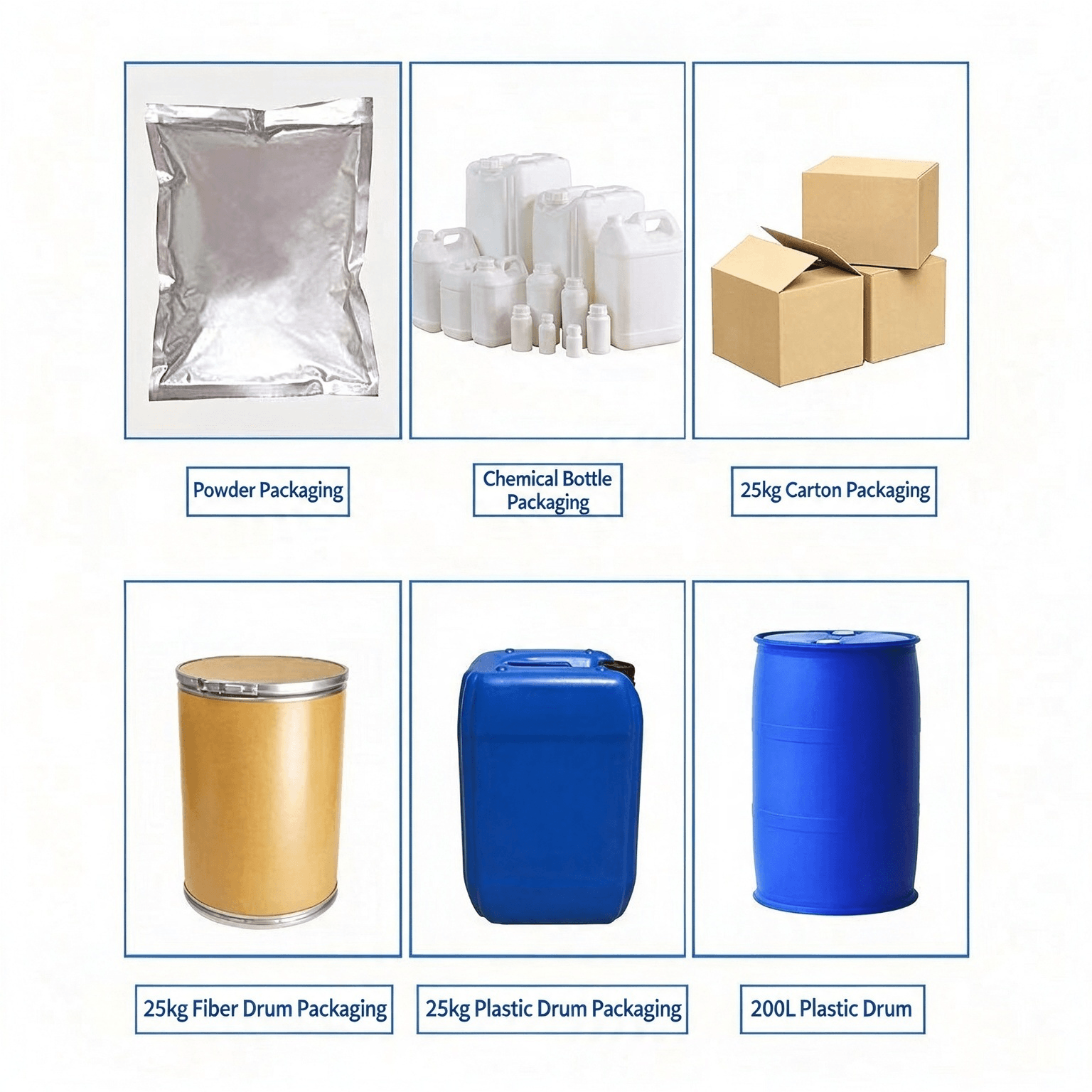
- Standard Packaging: 1g, 5g, 25g, 100g, 500g in amber glass bottles or aluminum foil bags; 1kg, 5kg, 25kg in fiber drums for bulk orders. Custom packaging is available.
- Storage Conditions: Store tightly sealed in a dry, well-ventilated, and light-protected environment at -20 ℃ (or 2–8 ℃ for short-term handling) to prevent moisture absorption and maintain optimal purity.
Cited Literature
Peer-reviewed publications and patents utilizing Fmoc-AEEA (CAS 166108-71-0):
- Preparation method of [2-[2-(Fmoc-amino)ethoxy]ethoxy]acetic acid — Patent Application (2019/09/17).
- A convenient route to diversely substituted icosahedral closomer nanoscaffolds — Satish S. Jalisatgi, Vikas S. Kulkarni, Betty Houston Tang, Zachary H. Lee, Mark W. Hawthorne, M. Frederick. Journal / Proceedings, pp. 12382–12385 (2011/10/02).
Frequently Asked Questions
Q1: What is the difference between Fmoc-AEEA and AEEA?
AEEA (H2N-PEG2-CH2COOH) has a free primary amino group, while Fmoc-AEEA has its amino group protected by Fmoc. Fmoc protection avoids side reactions during coupling; you can remove Fmoc under basic conditions to obtain free AEEA amine when needed.
Q2: Can Fmoc-AEEA be used directly in aqueous bioconjugation?
It is suitable for organic-phase coupling. The Fmoc group is unstable in strong alkaline aqueous environments. Deprotection and reaction conditions should be designed according to your synthetic route.
Q3: What analytical data do you provide with each shipment?
Every order is accompanied by a batch-specific Certificate of Analysis (COA) and Material Safety Data Sheet (MSDS). High-resolution HPLC purity reports, Mass Spectrometry (MS), and 1H‑NMR spectra can also be provided to support your quality audit.
Q4: What is the MOQ of Fmoc-AEEA?
We support flexible packaging for laboratory research and bulk industrial orders. Contact our sales team for current MOQ, lead time and quotation.
Q5: How long is the shelf life of Fmoc-AEEA?
When stored under recommended -20 ℃ light-protected and dry conditions, the shelf life is 24 months from production date.
Relevant Products
-
 Fmoc-Glu(OtBu)-Gly-Gly-OH
CAS:N/A
-
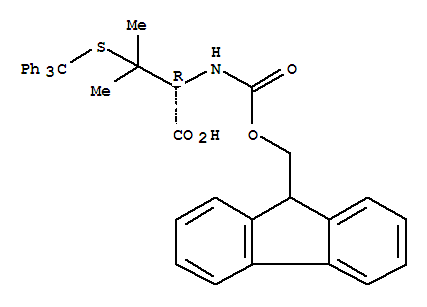 Fmoc-L-Pen(Trt)-OH
CAS:201531-88-6
-
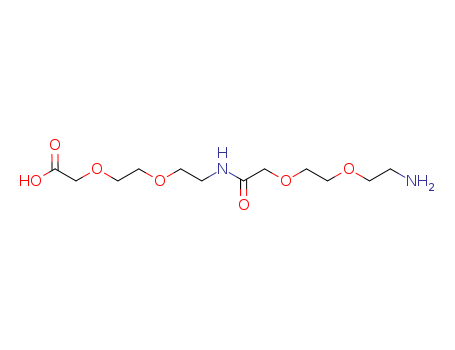 AEEA-AEEA
CAS:1143516-05-5


