
![Fmoc-L-Lys[C20-OtBu-γ-Glu(OtBu)-AEEA-AEEA]-OH](/upload/2026/7/89-1.jpg "Fmoc-L-Lys[C20-OtBu-γ-Glu(OtBu)-AEEA-AEEA]-OH")
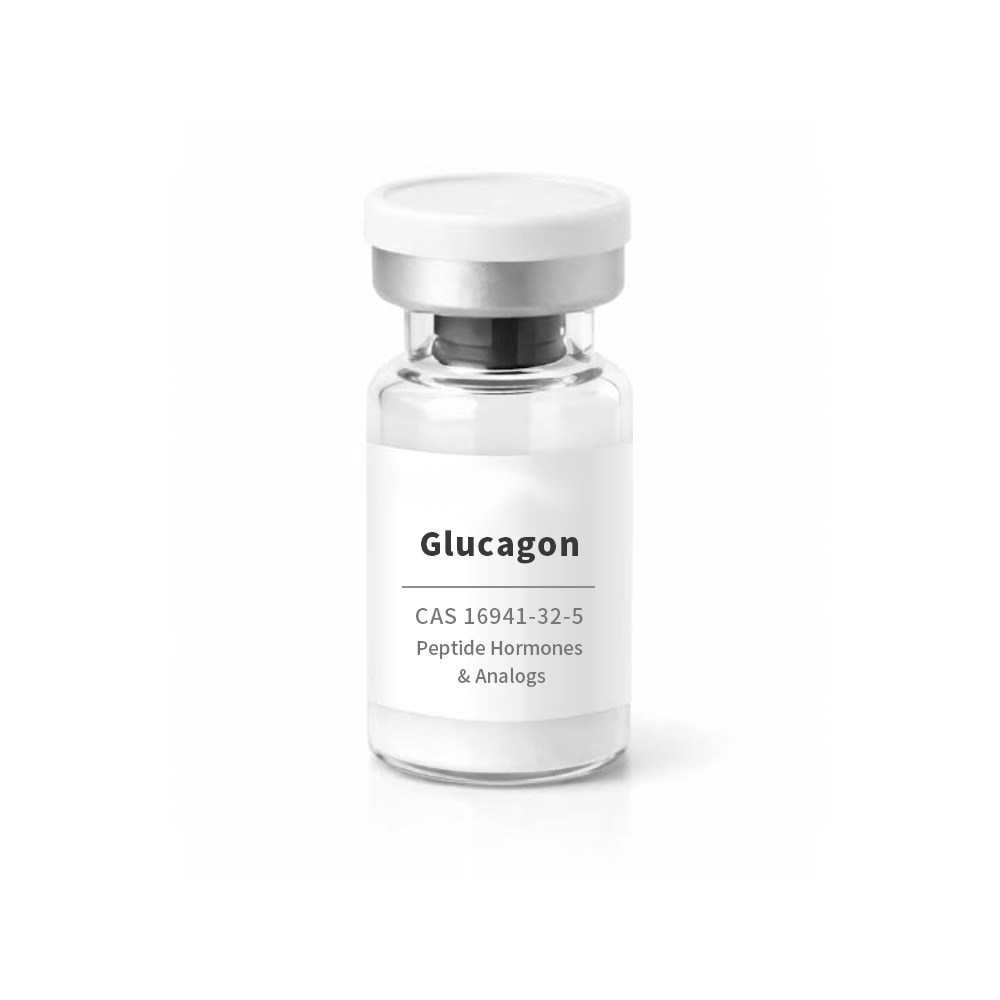
Glucagon | CAS 16941-32-5
- cas:16941-32-5
- Molecular Formula:C153H225N43O49S
- Purity:≥95%
- Molecular Weight:3482.75 g/mol
Product Details
CasNo: 16941-32-5
Molecular Formula: C153H225N43O49S
Appearance: White to off-white powder / lyophilized powder
Delivery Time: Confirmed according to quantity, specification, and project requirements
Packing: According to quantity and project requirements
Throughput: Project-based
Purity: ≥95%
Product Overview
Glucagon, CAS 16941-32-5, is a single-chain peptide hormone composed of 29 amino acids. It is a well-defined ligand in Glucagon Receptor (GCGR) research and is widely used in studies involving peptide–receptor interactions, receptor pharmacology, hormone signaling, and analytical characterization.
Its defined sequence and molecular identity make Glucagon suitable for GCGR-related research, peptide hormone studies, cAMP signaling assays, HPLC analysis, and MS / LC-MS characterization.
Shandong Juntai Pharmaceutical supports B2B research projects involving Glucagon, related peptide hormones, and customized peptide sequences.
Product Information
| Item | Information |
|---|---|
| Product Name | Glucagon |
| Alternative Name | Glucagon (1-29) |
| CAS No. | 16941-32-5 |
| Molecular Formula | C153H225N43O49S |
| Molecular Weight | 3482.75 g/mol |
| Peptide Length | 29 amino acids |
| One-Letter Sequence | HSQGTFTSDYSKYLDSRRAQDFVQWLMNT |
| Product Type | Peptide Hormone |
| Research Target | Glucagon Receptor (GCGR) |
| Category | Peptide Hormones & Analogs |
| Typical Appearance | White to off-white powder / lyophilized powder |
| Typical Purity | ≥95% by HPLC, reference specification |
| Storage | Sealed and protected from moisture; low-temperature storage recommended |
| Intended Use | Research and development use only |
Amino Acid Sequence
His-Ser-Gln-Gly-Thr-Phe-Thr-Ser-Asp-Tyr-Ser-Lys-Tyr-Leu-Asp-Ser-Arg-Arg-Ala-Gln-Asp-Phe-Val-Gln-Trp-Leu-Met-Asn-Thr
Product Features
Defined 29-Amino-Acid Sequence
Glucagon has a clearly defined 29-amino-acid sequence and molecular identity, providing a reliable basis for peptide research and analytical method development.
For research applications, product identity can be assessed through multiple parameters, including sequence information, molecular weight, HPLC profile, and MS / LC-MS data.
Direct Relevance to GCGR Research
Glucagon is a key peptide ligand for the Glucagon Receptor (GCGR), giving it a clear role in receptor-focused research rather than serving only as a general research peptide.
Common research areas include:
- Glucagon receptor interaction
- GCGR signaling
- Receptor pharmacology
- Peptide hormone signaling
- Peptide–receptor interaction studies
Suitable for Multi-Parameter Peptide Characterization
For a 29-amino-acid peptide hormone, analytical evaluation commonly goes beyond a single HPLC purity value.
Depending on project requirements, characterization may include:
- HPLC purity
- Molecular-weight verification
- MS / LC-MS identity
- Sequence confirmation
- Related impurity analysis
- Analytical method performance
The ≥95% HPLC value shown on this page is a common research-grade reference specification. Actual supply specifications should be confirmed according to batch-specific documentation.
Research Applications
Glucagon Receptor (GCGR) Research
Glucagon can be used in studies involving GCGR binding, receptor activation, receptor pharmacology, and downstream signaling mechanisms.
Experimental findings should be interpreted within the specific assay system, model, and research conditions used.
Peptide Hormone and Receptor Interaction Studies
As a defined peptide hormone, Glucagon may support research involving:
- Peptide–receptor interactions
- Hormone–receptor signaling
- Receptor pharmacology
- Peptide structure–function relationships
- Class B GPCR-related studies
cAMP and Cellular Signaling Research
GCGR belongs to a GPCR signaling system, making Glucagon relevant to studies involving GCGR-mediated signaling and cAMP response.
These applications may be combined with cell-based models, receptor-expression systems, and quantitative assay methods.
Analytical and Structural Characterization
Glucagon is also suitable for peptide analysis and analytical development, including:
- HPLC purity analysis
- MS / LC-MS identity confirmation
- Molecular-weight verification
- Peptide characterization
- Related impurity analysis
- Analytical method development
Custom Support
Glucagon-related peptides and other peptide hormone projects can be evaluated according to the requested sequence and technical requirements.
Project discussions may include:
- Glucagon-related sequences
- Peptide hormone projects
- Sequence truncation or extension
- Site-specific amino-acid substitutions
- N-terminal or C-terminal modifications
- Target purity requirements
- HPLC / MS / LC-MS analysis
- Project-specific quantities and packaging
Feasibility is evaluated according to sequence design, purity target, order quantity, and analytical requirements.
Frequently Asked Questions
Can batch-specific COA, HPLC, or MS / LC-MS documentation be provided?
Relevant analytical documentation can be reviewed according to the actual supply batch. If your project requires specific COA, HPLC, MS / LC-MS, or identity data, please include these requirements in your inquiry.
What is the MOQ for Glucagon?
MOQ depends on the requested purity, quantity, packaging format, and current supply arrangement. Small-scale research requirements and larger project quantities can be discussed separately.
Can both small R&D quantities and larger project orders be supported?
Yes. Supply arrangements can be evaluated according to the project stage, target quantity, specification, and analytical requirements.
Can project-specific purity or additional analytical specifications be requested?
Yes. Requirements involving target purity, HPLC, MS / LC-MS, related impurities, or other analytical criteria can be reviewed on a project basis.
How can batch-to-batch consistency be evaluated?
Batch consistency can be assessed using sequence identity, HPLC data, MS / LC-MS results, and batch-specific COA information. For ongoing projects, analytical requirements can be discussed in advance.
Can Glucagon analogs or related peptide sequences be customized?
Yes. Glucagon-related peptides, sequence variants, terminal modifications, and other peptide hormone projects can be evaluated according to the target structure and analytical requirements.
For research and development use only.
Relevant Products
-
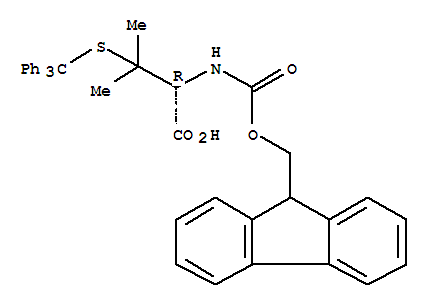 Fmoc-L-Pen(Trt)-OH
CAS:201531-88-6
-
 CJC-1295 DAC
CAS:/
-
 Dermorphin
CAS:/


