
![Fmoc-L-Lys[C20-OtBu-γ-Glu(OtBu)-AEEA-AEEA]-OH](/upload/2026/7/89-1.jpg "Fmoc-L-Lys[C20-OtBu-γ-Glu(OtBu)-AEEA-AEEA]-OH")
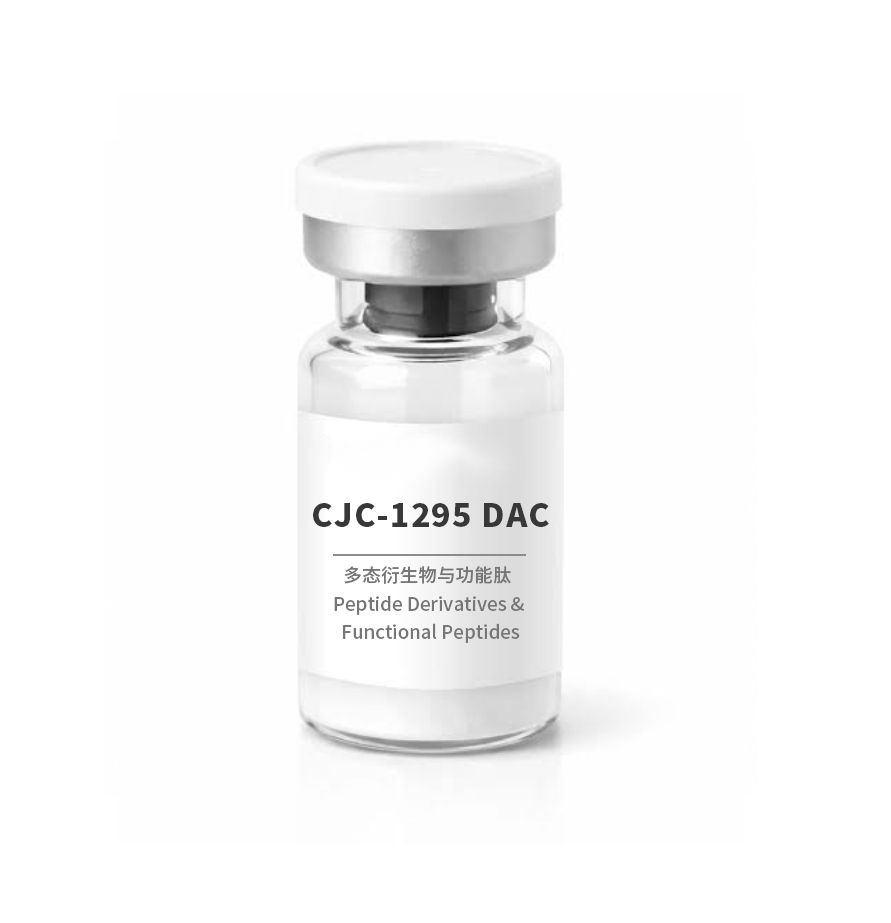
Product Details
CasNo: /
Overview
CJC-1295 DAC is a modified peptide analog derived from the human growth hormone-releasing factor hGRF(1-29) framework.
A defining feature of this molecule is the Drug Affinity Complex (DAC) modification. The DAC architecture incorporates a maleimide-containing group through a modified lysine residue, creating a peptide structure that has been studied for its interaction with thiol-containing proteins such as serum albumin.
CJC-1295 DAC has been investigated as a molecular model in GHRH analog research, peptide–protein interaction studies, site-specific peptide modification, receptor pharmacology, and modified peptide characterization.
Molecular and Structural Information
| Item | Information |
|---|---|
| Name | CJC-1295 DAC |
| Molecular Formula | C165H269N47O46 |
| Molecular Weight | Approx. 3647.2 g/mol |
| Peptide Class | Modified GHRH / GRF Analog |
| Structural Basis | Modified hGRF(1-29) |
| Key Modification | Drug Affinity Complex (DAC) |
| DAC-Related Group | Maleimidopropionamide-modified lysine |
| Structural Type | Modified peptide with protein-reactive side chain |
| Research Context | GHRH receptor, peptide modification and peptide–protein interaction studies |
Structural Features
Modified hGRF(1-29) Framework
CJC-1295 DAC is based on a modified human GRF(1-29) peptide framework.
The peptide backbone contains defined amino-acid substitutions relative to native GRF, while an additional modified lysine residue provides the attachment site for the DAC-related structure.
This combination has made CJC-1295 DAC relevant to studies involving:
- Modified GHRH analogs
- Peptide sequence engineering
- Peptide–receptor interactions
- Structure–function relationships
- Chemically modified peptide systems
Drug Affinity Complex Modification
The term DAC refers to the Drug Affinity Complex incorporated into the peptide structure.
This element includes a maleimide-containing modification associated with a lysine residue. Maleimide chemistry is known for its reactivity toward free thiol groups, making the structure relevant to studies of peptide conjugation and protein interaction.
Peptide–Protein Interaction
One of the distinctive research features of CJC-1295 DAC is its ability to interact with thiol-containing proteins.
Early studies investigated interaction with serum albumin, particularly the free thiol associated with Cys34. This has made CJC-1295 DAC a useful example in research examining how covalent peptide–protein association can influence the molecular behavior of modified peptides.
CJC-1295 DAC and CJC-1295 No DAC
CJC-1295 DAC and CJC-1295 No DAC should not be treated as interchangeable molecular structures.
| Parameter | CJC-1295 DAC | CJC-1295 No DAC |
|---|---|---|
| DAC Modification | Present | Absent |
| Molecular Weight | Approx. 3647.2 g/mol | Approx. 3367.9 g/mol |
| Structural Description | DAC-modified GHRH analog | Modified GRF(1-29) analog |
| Protein-Reactive Group | Present | Absent |
| Key Structural Difference | Contains DAC-related maleimide modification | Does not contain DAC |
The common term “CJC-1295” has historically been used for several related peptide forms, so exact structural description is important when interpreting scientific literature.
Research Background
GHRH Receptor Research
CJC-1295 DAC was originally investigated as a modified analog of human growth hormone-releasing factor.
Research involving the peptide has contributed to studies of:
- GHRH receptor interaction
- Ligand–receptor recognition
- Modified GHRH analogs
- Receptor pharmacology
- Peptide structure–function relationships
These studies are generally performed using controlled biochemical, receptor-based, or cellular research systems.
Peptide Modification Research
The DAC structure also provides a model for studying chemical modification of peptides.
Relevant research areas include:
- Maleimide-based peptide modification
- Site-specific conjugation
- Protein-reactive peptide structures
- Peptide–protein interaction
- Modified peptide design
- Linker and side-chain chemistry
Structure–Function Studies
Because CJC-1295 DAC combines peptide sequence engineering with a chemically reactive side-chain structure, it can be used to examine relationships between:
- Peptide sequence
- Chemical modification
- Molecular recognition
- Protein interaction
- Receptor-related behavior
This makes the molecule useful in comparative research involving modified peptide analogs.
Analytical and Structural Characterization
CJC-1295 DAC can be studied using standard peptide and modified-peptide analytical techniques.
Common approaches include:
- High-performance liquid chromatography (HPLC)
- Mass spectrometry (MS)
- LC-MS analysis
- Molecular-weight verification
- Peptide identity analysis
- Peptide mapping
- Modification-related characterization
- Related impurity analysis
Analytical characterization is particularly important for CJC-1295-related substances because DAC, non-DAC, salt, and other structurally related forms may be described using overlapping terminology in scientific and commercial literature.
Frequently Asked Questions
What does DAC mean in CJC-1295 DAC?
DAC stands for Drug Affinity Complex. It refers to a maleimide-containing structural modification incorporated into the peptide.
Is CJC-1295 DAC the same as CJC-1295 No DAC?
No. The DAC form contains an additional chemically reactive modification, whereas the No DAC form does not. Their molecular structures and molecular weights are different.
What is the molecular weight of CJC-1295 DAC?
The molecular weight commonly associated with the defined DAC-modified structure is approximately 3647.2 g/mol.
Why is CJC-1295 DAC studied in peptide–protein interaction research?
Its DAC-related maleimide group can interact with free thiol groups in proteins. Early research particularly examined interaction with serum albumin.
Why is exact structural identification important?
The name “CJC-1295” has historically been applied to several related molecular forms. Molecular weight, DAC modification, structural description, and analytical data help distinguish these entities.
Which analytical techniques are commonly used to study CJC-1295 DAC?
HPLC, MS, LC-MS, peptide mapping, molecular-weight analysis, and modification-related characterization are commonly used in research involving modified peptides.
This page is provided for scientific and informational purposes only.
Relevant Products
-
 GHK-Cu
CAS:89030-95-5
-
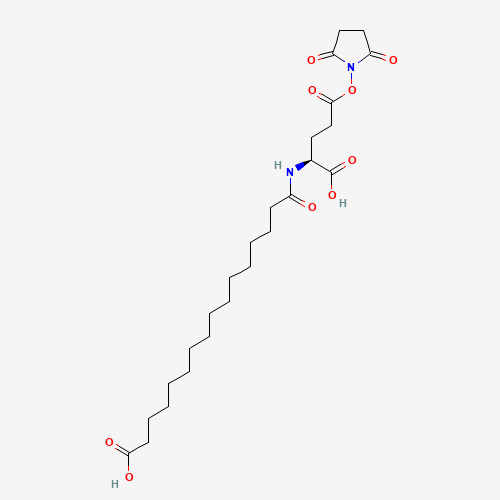 HO-C16-Glu(Osu)-OH
CAS:943586-12-7
-
 ACTH(1-39)
CAS:9061-27-2
-
 Glucagon
CAS:16941-32-5


