
![Fmoc-L-Lys[C20-OtBu-γ-Glu(OtBu)-AEEA-AEEA]-OH](/upload/2026/7/89-1.jpg "Fmoc-L-Lys[C20-OtBu-γ-Glu(OtBu)-AEEA-AEEA]-OH")
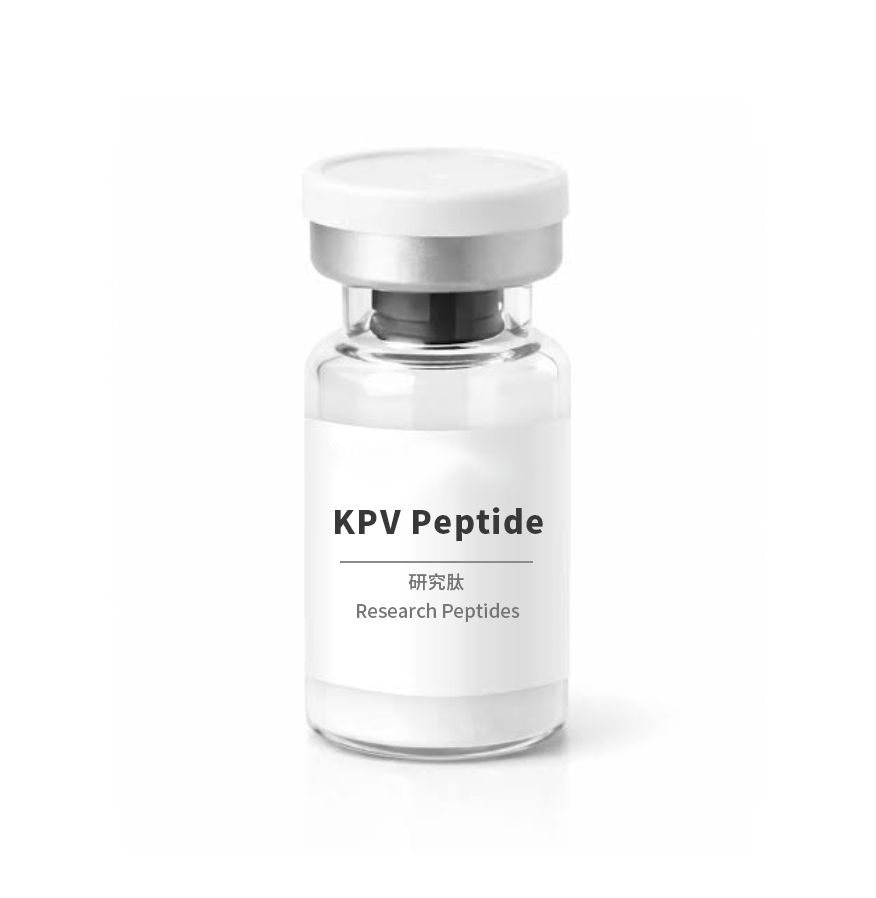
KPV Peptide | CAS /
- cas:/
- Molecular Formula:C16H30N4O4
- Purity:99%
- Molecular Weight:
Product Details
CasNo: /
Molecular Formula: C16H30N4O4
Product Overview
KPV is a short tripeptide composed of lysine (Lys), proline (Pro), and valine (Val). Its amino acid sequence is Lys-Pro-Val, commonly abbreviated as KPV.
This sequence corresponds to residues 11–13 at the C-terminal region of α-MSH (α-Melanocyte-Stimulating Hormone). In scientific literature, KPV is therefore frequently discussed in the context of α-MSH-derived peptide fragments and short-peptide structure research.
KPV has a compact and well-defined molecular structure. Its three amino acid residues differ in charge, conformational properties, and hydrophobicity, making it a useful model for investigating short-peptide sequence composition, local conformation, and structure-related molecular behavior.
Molecular and Structural Information
| Item | Information |
|---|---|
| Name | KPV |
| Amino Acid Sequence | Lys-Pro-Val |
| One-Letter Sequence | KPV |
| Peptide Length | 3 amino acids |
| Peptide Type | Tripeptide / short-chain peptide |
| Molecular Formula | C16H30N4O4 |
| Molecular Weight | Approx. 342.44 g/mol |
| Sequence Relationship | Corresponds to residues 11–13 of α-MSH |
| Research Context | Short-peptide structure, α-MSH-derived fragments, and sequence–structure relationship studies |
Structural Features
Defined Tripeptide Framework
KPV consists of three amino acids arranged as Lys-Pro-Val.
Lys contains a basic side chain, Pro has a distinctive cyclic structure, and Val is a branched hydrophobic amino acid. The combination of these different side-chain properties within a very short peptide makes KPV a simple model for examining how charge, local conformation, and hydrophobicity influence peptide structure.
Relationship to the α-MSH Sequence
α-MSH is a 13-amino-acid peptide, and KPV corresponds to its C-terminal Lys-Pro-Val sequence at positions 11–13.
For this reason, KPV is often compared with full-length α-MSH, other α-MSH-derived fragments, and related short peptide sequences.
However, peptide fragments containing the KPV sequence should not automatically be considered identical to the isolated KPV tripeptide. Differences in peptide length, terminal structure, and molecular form may affect their physicochemical and analytical properties.
Research Applications
KPV is commonly studied in basic peptide research involving:
- Short-peptide structure
- α-MSH-derived peptide fragments
- Amino acid sequence–structure relationships
- Single-residue substitution studies
- Charge and hydrophobicity comparisons
- N-terminal and C-terminal structural variations
These research approaches can help clarify how amino acid composition and side-chain properties influence the molecular behavior of short peptides.
Analytical and Structural Characterization
KPV can be studied using established analytical methods for short peptides.
Common approaches include:
- High-performance liquid chromatography (HPLC)
- Mass spectrometry (MS)
- LC-MS analysis
- Molecular-weight verification
- Amino acid sequence analysis
- Related-component analysis
Because KPV has a relatively low molecular weight, MS and LC-MS can provide direct information for molecular-mass and identity-related analysis. HPLC can be used to examine major components and related chromatographic peaks.
Frequently Asked Questions
What type of peptide is KPV?
KPV is a short tripeptide composed of Lys-Pro-Val and corresponds to the C-terminal residues 11–13 of α-MSH.
What is the amino acid sequence of KPV?
The amino acid sequence of KPV is Lys-Pro-Val, with the one-letter abbreviation KPV.
What is the relationship between KPV and α-MSH?
KPV corresponds to residues 11–13 of the α-MSH sequence and is therefore frequently studied as an α-MSH-derived peptide fragment.
Why is KPV useful in short-peptide structure research?
KPV contains only three amino acids with distinctly different side-chain properties, making it suitable for examining relationships among charge, conformation, hydrophobicity, and peptide structure.
Which analytical methods are commonly used to study KPV?
Common methods include HPLC, MS, LC-MS, molecular-weight verification, and amino acid sequence analysis.
Relevant Products
-
 Fmoc-Glu(OtBu)-Gly-Gly-OH
CAS:N/A
-
 MOTS-c
CAS:/
-
 GHK-Cu
CAS:89030-95-5


