
![Fmoc-L-Lys[C20-OtBu-γ-Glu(OtBu)-AEEA-AEEA]-OH](/upload/2026/7/89-1.jpg "Fmoc-L-Lys[C20-OtBu-γ-Glu(OtBu)-AEEA-AEEA]-OH")
MOTS-c | CAS /
- cas:/
- Molecular Formula:C101H152N28O22S2
- Purity:99%
- Molecular Weight:
Product Details
CasNo: /
Molecular Formula: C101H152N28O22S2
Product Overview
MOTS-C (Mitochondrial-Derived Peptide) is a short peptide encoded by a region of the mitochondrial genome and consists of 16 amino acid residues.
As a representative molecule in mitochondrial-derived peptide (MDP) research, MOTS-C has attracted attention in peptide chemistry, molecular biology, and structural research due to its defined sequence and unique mitochondrial origin.
With a relatively short peptide chain and clearly characterized amino acid composition, MOTS-C provides a useful model for studying peptide sequence characteristics, molecular structure, and sequence–property relationships.
This page provides scientific information about the molecular characteristics, structural background, and analytical approaches associated with MOTS-C research.
Molecular and Structural Information
| Item | Information |
|---|---|
| Name | MOTS-C |
| Full Name | Mitochondrial-Derived Peptide |
| Peptide Length | 16 amino acids |
| Peptide Type | Mitochondrial-derived short peptide |
| Molecular Origin | Encoded by a mitochondrial genome-related region |
| Research Context | Mitochondrial peptide research, peptide structure analysis, and sequence–structure relationship studies |
| Structural Feature | Short peptide with a defined amino acid sequence |
Structural Features
Mitochondrial-Derived Peptide Characteristics
MOTS-C belongs to the mitochondrial-derived peptide (MDP) research field.
Unlike many conventional peptides encoded by nuclear genes, mitochondrial-derived peptides have a unique genetic origin associated with mitochondrial DNA-related sequences.
Due to its defined sequence and compact structure, MOTS-C is studied as a model peptide for investigating:
- Amino acid composition;
- Peptide sequence characteristics;
- Structural features;
- Molecular behavior of short peptides.
Sixteen-Amino-Acid Sequence Characteristics
MOTS-C consists of 16 amino acid residues.
Compared with larger proteins or long-chain peptides, short peptides provide a more defined sequence framework, allowing researchers to examine how individual amino acid components contribute to overall molecular properties.
In short-peptide research, changes in individual residues may influence:
- Charge distribution;
- Local conformation;
- Physicochemical characteristics;
- Analytical behavior.
Therefore, accurate sequence confirmation is an important aspect of MOTS-C related research.
MOTS-C and Mitochondrial-Derived Peptide Research
Mitochondrial-derived peptides (MDPs) represent a research category focused on peptides associated with mitochondrial genetic information.
Research in this area commonly involves:
- Mitochondrial genome-related peptide sequences;
- Peptide structure characterization;
- Sequence–structure relationships;
- Molecular characterization methods.
As one of the representative peptides in this research field, MOTS-C provides a structural model for understanding how peptide sequences and molecular characteristics are related.
Different studies may involve different experimental systems and analytical approaches; therefore, specific molecular information should always be considered when comparing research data.
Short-Peptide Structure and Sequence Research
The compact structure of MOTS-C makes it suitable for studying relationships between peptide sequence and molecular properties.
Common research topics include:
- Amino acid sequence analysis;
- Peptide structure comparison;
- Local conformational characteristics;
- Sequence variation studies;
- Molecular property evaluation.
By comparing different sequence features, researchers can better understand how amino acid composition influences short-peptide structure and behavior.
For short peptides, accurate sequence information, molecular form, and analytical methods are important factors in scientific evaluation.
Identification of Different Molecular Forms
In scientific references, peptides may appear in different molecular forms, including variations in:
- Salt state;
- Terminal structure;
- Analytical conditions.
These differences may affect:
- Theoretical molecular weight;
- Analytical results;
- Chromatographic behavior;
- Molecular characteristics.
When comparing information from different sources, the following factors should be considered together:
- Complete amino acid sequence;
- Molecular composition;
- Molecular weight information;
- Analytical data.
The peptide name alone may not always be sufficient to determine whether two references describe exactly the same molecular form.
Analytical and Structural Characterization
MOTS-C related peptide research can be supported by commonly used analytical techniques for peptide characterization.
Common approaches include:
- High-performance liquid chromatography (HPLC)
- Mass spectrometry (MS)
- LC-MS analysis
- Molecular-weight verification
- Peptide sequence analysis
- Peptide mapping
- Related-component analysis
HPLC can provide information about chromatographic characteristics and major components, while MS and LC-MS can support molecular-weight and identity-related evaluation.
For different molecular forms, analytical results should be interpreted together with theoretical structural information.
Frequently Asked Questions
What type of peptide is MOTS-C?
MOTS-C is a mitochondrial-derived short peptide consisting of 16 amino acid residues and is studied within the mitochondrial-derived peptide research field.
Why is MOTS-C used in peptide structure research?
Its defined short sequence allows researchers to investigate relationships between amino acid composition, peptide structure, and molecular characteristics.
How is MOTS-C different from conventional synthetic peptides?
MOTS-C has a research background associated with mitochondrial genome-related sequences, while many synthetic peptides are designed based on specific research requirements. Their origins and structural backgrounds may differ.
Why may MOTS-C information vary between different sources?
Different studies may involve different experimental conditions, molecular forms, or analytical methods. Complete sequence information, molecular weight, and characterization data should be considered together.
Which methods are commonly used to characterize MOTS-C?
Common methods include HPLC, MS, LC-MS, molecular-weight verification, and peptide sequence analysis.
Relevant Products
-
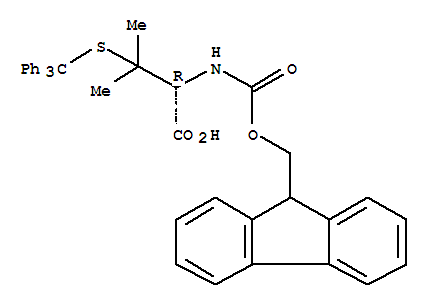 Fmoc-L-Pen(Trt)-OH
CAS:201531-88-6
-
 BPC157
CAS:137525-51-0
-
 KPV Peptide
CAS:/


