
How to Evaluate a Semaglutide Supplier: COA, Specifications and Red Flags
2026.10.20
Author: Shandong Juntai Pharmaceutical
Last updated: October 20, 2026
Evaluating a Semaglutide supplier requires more than comparing product descriptions or headline purity figures. Procurement, quality assurance, and R&D teams need to establish exactly what material is being offered, which specification applies, and whether the supporting documentation is appropriate for the intended project.
The distinction between Semaglutide itself, a synthesis intermediate, and a finished drug product is particularly important. These materials occupy different positions in the pharmaceutical supply chain and should not be evaluated against an interchangeable set of documents.
This guide provides a practical framework for reviewing material identity, batch-specific Certificates of Analysis (COAs), specifications, regulatory records, and supplier documentation.
1. Start by Confirming the Exact Semaglutide Material
Before evaluating a supplier, establish the identity and category of the material under consideration.
Semaglutide is associated with CAS 910463-68-2. However, a matching product name or CAS number does not independently establish the material's grade, manufacturing status, regulatory suitability, or intended application.
A preliminary review should confirm:
-
The exact material name and applicable CAS number.
-
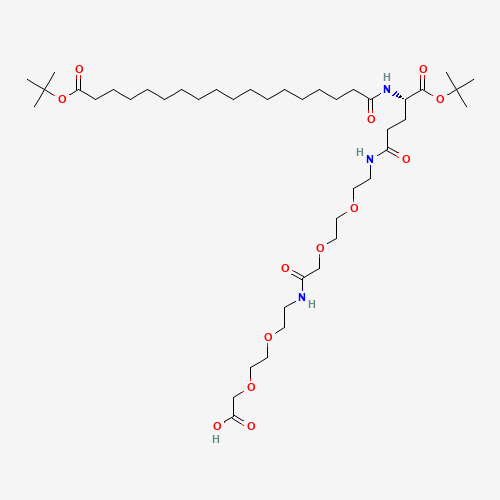
Whether the offering is Semaglutide API, a peptide synthesis intermediate, or a finished pharmaceutical product.
-
The stated grade and intended application.
-
The identity of the actual manufacturer and the role of any distributor or contract manufacturing partner.
-
The specification and documentation applicable to the material being evaluated.
These distinctions determine which quality records are relevant and what further verification may be necessary.
A supplier's catalogue entry is a starting point for evaluation, not evidence that a material has been qualified for a particular pharmaceutical application.

2. Semaglutide API, Intermediates and Finished Drug Products: How Documentation Differs
The documentation required for Semaglutide depends on the material category and its position in the supply chain. Requesting the same document package from every supplier without distinguishing these categories can lead to incomplete or inappropriate assessments.
| Material category | Documents and information to evaluate | Important limitation |
|---|---|---|
| Semaglutide API | Applicable API specification, batch-specific COA, identity and assay results, relevant impurity data, analytical methods, and applicable manufacturing and quality-system records | A COA alone does not establish GMP compliance or regulatory suitability |
| Peptide synthesis intermediate | Intermediate-specific identity, specification, batch COA, relevant purity or assay data, impurity information, and analytical records appropriate to the material and process stage | An intermediate should not automatically be expected to carry the same regulatory dossier as a finished drug product |
| Finished drug product | Product-specific release specification and batch records, applicable marketing authorization or product authorization, dosage-form and strength information, stability and shelf-life documentation, and relevant manufacturing records | An API COA does not qualify a finished formulation or establish authorization to market it |
For API manufacturing, the ICH Q7 Good Manufacturing Practice Guide for Active Pharmaceutical Ingredients provides an internationally harmonized reference for GMP principles applicable to APIs.
For specifications and acceptance criteria, the FDA's ICH Q6A guidance provides useful background on selecting tests and establishing justified acceptance criteria. Its scope and applicability must be considered; it should not be treated as a complete specification framework for every peptide or product presentation.
The appropriate document package should be determined by the actual material, applicable regulatory framework, and buyer's quality requirements.
3. Semaglutide COA Review Checklist
A Certificate of Analysis reports test results for a particular batch or lot. A product specification defines the applicable tests and acceptance criteria. Buyers should review these documents together rather than treating them as interchangeable.
The following checklist provides a practical starting point for Semaglutide-related procurement.
| COA review item | What the buyer should verify |
|---|---|
| Product identity | The material name, CAS number where applicable, and description match the requested material |
| Batch traceability | A batch or lot reference is present and corresponds to the material being evaluated |
| Specification reference | The applicable specification or version can be identified |
| Test methods | The analytical methods are identified where required to interpret the results |
| Reported results | Actual results, units, and applicable acceptance limits are clear |
| Identity confirmation | The available evidence is appropriate to distinguish the intended material from relevant alternatives or impurities |
| Purity, assay and impurities | Each reported parameter is clearly defined and assessed against its own acceptance criterion |
| Approval and document control | The report's issuing organization, date, and applicable approval or authorization information can be verified |
The exact tests required depend on the material category and agreed specification. A procurement team should not assume that every supplier must report an identical list of tests in every circumstance.
A representative COA may help buyers understand a supplier's documentation format during preliminary discussions. It should not be mistaken for the actual results of a different batch.
4. Why Purity Percentages Must Be Read With the Analytical Method
A high purity figure does not, by itself, establish every aspect of material quality.
Before comparing suppliers, determine what the reported percentage represents, which analytical method was used, and what the method can establish. Results obtained using different methods or calculation approaches may not be directly comparable.
For example, an HPLC chromatogram can provide information about chromatographic separation and the relative signals observed under the stated analytical conditions. It does not automatically prove every aspect of molecular identity, nor does a single purity result establish the absence of all relevant impurities.
Depending on the material and project requirements, buyers may need to review additional identity-confirmation results, impurity data, or other supporting analytical records. The appropriate evidence should be determined by the applicable specification and intended use rather than by a universal checklist of instruments.
The ICH quality guidelines provide a broader framework for understanding how analytical procedures, specifications, and GMP controls contribute to pharmaceutical quality.
The key question is not simply whether a supplier reports a high percentage. It is whether the reported result is meaningful, traceable, and appropriate for the material being evaluated.
5. How to Verify Regulatory Records and Manufacturing Claims
Regulatory statements require separate verification from routine analytical results.
If a supplier refers to a Drug Master File (DMF), GMP certificate, manufacturing authorization, or another regulatory record, buyers should confirm the holder or site, document scope, status, and relevance to the specific product and project.
Drug Master File references
The FDA's Drug Master Files guidance explains that DMFs contain confidential information that may support regulatory submissions. A DMF is not itself a product approval and is not approved or disapproved in isolation.
When a project relies on a DMF reference, the buyer should establish whether the cited file belongs to the stated holder, covers the relevant material, and can be referenced through the appropriate authorization process where required.
A DMF number alone does not prove that a specific product is approved for marketing.
GMP and site verification
For relevant European Economic Area manufacturing records, the EMA's EudraGMDP database allows users to review available GMP certificates, manufacturing and import authorizations, and certain non-compliance records.
Check the site identity, certificate scope, relevant operations, and current status. The existence of a certificate should not be interpreted as proof that every product or operation associated with a company is covered.
For the United States, the FDA's Drug Registration and Listing information is another useful reference. FDA explicitly states that establishment registration and drug listing do not indicate that a product is approved or that the agency has verified the information submitted.
Regulatory checks should be specific to the destination market and the product category. A record that is relevant to one site, product, or activity may not establish compliance for another.
6. Eight Red Flags in Semaglutide Supplier Documentation
The following signals warrant clarification before a procurement decision is made. They do not automatically prove misconduct or defective material, but unresolved discrepancies can prevent a reliable qualification assessment.
-
The COA has no identifiable batch or lot number. The results cannot be confidently connected to the material being offered.
-
The product identity does not match across documents. Names, CAS numbers, material categories, or other identifiers conflict between the quotation, specification, COA, and product description.
-
The specification and COA use inconsistent acceptance criteria. The reported results cannot be evaluated against the stated specification or its applicable version.
-
Only a purity percentage is supplied. The analytical method, test definition, or supporting identity information needed to interpret the result is missing.
-
A certificate does not cover the stated site or activity. The issuing entity, site name, validity, or certificate scope does not match the supplier's claim.
-
A DMF reference cannot be reconciled with the stated holder or material. The holder, file reference, product scope, or required authorization to reference the file is unclear. A DMF is also incorrectly presented as a product approval.
-
The supplier's role is ambiguous. It is not clear whether the company manufactures the material, uses a contract manufacturer, or resells another party's product.
-
Documents contain unexplained inconsistencies. Examples include conflicting dates, units, batch identifiers, specification versions, or issuing organizations, or records that appear to have been reused without being matched to the relevant material.
When a red flag appears, request a clarification or corrected record and document the outcome. If the discrepancy affects identity, traceability, applicable specifications, or regulatory suitability, the evaluation should remain open until the issue is resolved.
7. A Practical Supplier Qualification Sequence
A consistent review sequence helps procurement, R&D, and quality teams identify missing information before committing to a material or supplier.
Start by confirming the exact product category and intended project requirements. Next, review the applicable specification and determine which results must be available for the initial evaluation. Compare the COA with that specification, then assess the supporting analytical records and traceability.
Regulatory and manufacturing claims should be checked separately against the relevant authority's records and the actual scope of the documents supplied. Where the supplier uses a contract manufacturer or distributor, establish which organization is responsible for manufacturing, quality release, and the accuracy of the supporting documentation.
Finally, record unresolved questions and agree on the evidence needed to close them. This creates a clearer basis for comparing suppliers than a ranking based solely on price, catalogue claims, or a single purity figure.
Frequently Asked Questions
What should buyers check first on a Semaglutide COA?
Confirm the product identity and batch or lot reference first. Then review the applicable specification, reported results, acceptance criteria, analytical methods, and document traceability.
Is a high purity result sufficient to qualify a Semaglutide supplier?
No. Purity is only one quality attribute. Supplier qualification also depends on material identity, the applicable specification, supporting analytical evidence, traceability, and any regulatory requirements relevant to the intended project.
Does a DMF reference mean that a Semaglutide product is FDA-approved?
No. The FDA does not approve or disapprove a DMF in isolation. Its technical contents are reviewed in connection with applications that reference it.
Should the same documents be requested for Semaglutide API and peptide intermediates?
Not automatically. Both require appropriate identity and quality information, but the relevant specifications and supporting documents depend on the material category, process stage, intended use, and applicable requirements.
What should a buyer do when a supplier cannot provide a requested document?
Clarify whether the document exists, whether an alternative record can address the same requirement, and whether the missing information affects the project's acceptance criteria. Do not assume that an unavailable document proves a quality defect, but do not treat an unverified claim as established evidence.
Conclusion
A defensible Semaglutide supplier evaluation begins with the exact material being offered and proceeds through specification review, batch-specific analytical evidence, document traceability, and verification of applicable regulatory claims.
For procurement and quality teams, the objective is not to collect the largest possible number of certificates. It is to establish whether the available evidence supports the material's identity, agreed quality requirements, and intended application.
This article is intended as a procurement review reference and does not constitute regulatory or quality advice.


