
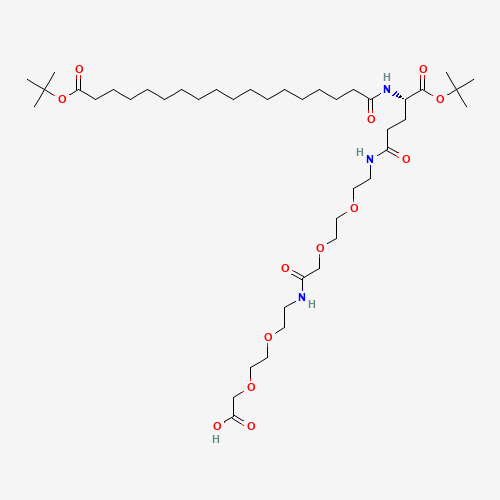
How to Select a Reliable Semaglutide Intermediate Supplier
2026.10.16
Finding a supplier for a Semaglutide-related intermediate is relatively easy. Finding a supplier that can support a project from initial evaluation through process development and repeat production requires a different approach.
For technical buyers, the supplier decision should not be based on catalog availability or price alone. The more relevant questions are whether the supplier understands the requested material, can support the required development stage, can reproduce the material consistently, and has the manufacturing and communication capabilities needed as the project progresses.
A useful supplier qualification process should evaluate the supplier as a project partner rather than treating the purchase as a one-time transaction.
1. Start With the Supplier, Not the Catalog Listing
A product appearing in an online catalog does not necessarily indicate that it is a routinely manufactured material.
Some listings represent established production items, while others may be supplied through external manufacturing partners or produced only after an inquiry.
Before moving into detailed commercial discussions, determine how the supplier actually handles the material.
Useful questions include:
- Is the material routinely manufactured?
- Is production performed in-house?
- Is the supplier the actual manufacturer or a distributor?
- Does the supplier have an established production route?
- Can the supplier support repeat production?
- Is technical information provided by the manufacturer or collected from another source?
The answers help establish whether the supplier is suitable for the current project and whether the relationship could continue if the material requirement increases.
2. Evaluate the Supplier's Technical Response
The quality of the first technical response is often more informative than a product listing.
A capable supplier should be able to understand a specific inquiry and respond to the actual project requirements rather than sending a generic quotation.
For example, a technical inquiry may specify the target intermediate, required quantity, quality requirements, documentation needs, and development stage.
A strong response should address those requirements directly and identify any points that need clarification.
This provides an early indication of whether the supplier has sufficient technical understanding to support communication between procurement, R&D, quality, and manufacturing teams.
A supplier that consistently responds with generic product descriptions, avoids technical questions, or cannot distinguish project-specific requirements may create additional work later in the qualification process.
3. Separate Sample Availability From Real Supply Capability
Sample availability is useful for initial evaluation, but it should not be treated as evidence of long-term supply capability.
A supplier may be able to provide a small quantity for laboratory testing while having limited experience with repeat production or larger project requirements.
The important question is what happens after the sample has been evaluated.
A buyer should understand the expected transition from:
Sample evaluation → repeat laboratory batches → process development → larger production requirements.
The supplier should be able to explain whether the same manufacturing route and quality framework can support this progression.
This distinction is particularly important when an intermediate becomes part of a longer development program. Changing suppliers after process optimization can introduce additional analytical, process, and qualification work.
4. Assess Manufacturing Capability at the Right Project Stage
Supplier capability should be evaluated according to the expected development path.
A research project may initially require only a small quantity. A process-development project may later require repeated batches with defined specifications. A more mature program may require substantially greater production capacity and predictable scheduling.
Instead of asking only, “How much can you supply?”, consider a broader set of questions:
| Evaluation Area | What the Buyer Needs to Understand |
|---|---|
| Production status | Is the material routinely produced or project-specific? |
| Manufacturing ownership | Who is responsible for actual production? |
| Scale capability | Can production increase as project requirements develop? |
| Repeat production | Can additional batches be scheduled when required? |
| Custom synthesis | Can project-specific requirements be evaluated? |
| Production planning | Can expected quantities and timelines be discussed in advance? |
| Technical support | Is there a technical contact throughout the project? |
This approach provides a more realistic picture of manufacturing capability than a single stated production capacity.
5. Examine How the Supplier Handles Changes
Longer development projects rarely remain completely unchanged.
Specifications may be refined, quantities may increase, packaging requirements may change, or the customer may need additional technical documentation during qualification.
A reliable supplier should have a clear process for handling such changes.
Important questions include:
- How are specification changes communicated?
- How are changes to manufacturing arrangements handled?
- Can additional documentation be provided during qualification?
- How are repeat batches managed against agreed requirements?
- Who communicates technical changes to the customer?
This is particularly relevant when the material has already entered a development process. A supplier that communicates changes clearly can reduce unnecessary disruption to the customer's internal workflow.
6. Consider Supply Continuity Before You Need It
Supplier qualification should not begin only when an urgent requirement appears.
For an intermediate that becomes important to an ongoing project, supply continuity can become more important than the initial purchase price.
A buyer should consider whether the supplier can support:
- Repeat orders
- Forecast-based production planning
- Increasing demand
- Consistent commercial communication
- Documentation continuity
- Long-term technical contact
- Custom production when standard supply is insufficient
This does not mean committing to a long-term supplier at the beginning of a project. It means understanding whether the supplier has the operational structure to support one.
7. Compare Suppliers Using the Same Qualification Criteria
Supplier comparisons become difficult when every supplier is evaluated using different information.
A simple qualification matrix can make the decision more objective.
| Qualification Factor | Supplier A | Supplier B | Supplier C |
|---|---|---|---|
| Actual manufacturing capability | |||
| Technical response quality | |||
| Sample evaluation support | |||
| Repeat production capability | |||
| Scale-up support | |||
| Custom synthesis capability | |||
| Documentation support | |||
| Change communication | |||
| Supply continuity | |||
| Project communication |
The purpose is not to assign a high score to the supplier with the longest product list.
A better supplier is the one whose capabilities match the requirements of the specific project.
For example, a supplier with strong custom synthesis and process-development support may be more suitable for a development project than a distributor offering a larger catalog but limited technical involvement.
8. Manufacturer vs. Distributor: Which Is More Suitable?
There is no universal answer.
A distributor can be useful when the primary requirement is sourcing convenience, inventory access, or logistics.
A direct manufacturer may be more appropriate when the project requires deeper technical communication, custom synthesis, process development, repeat manufacturing, or closer coordination between specifications and production.
The key issue is not the label attached to the supplier. It is whether the commercial contact can provide reliable access to the technical and manufacturing resources behind the material.
For longer-term projects, buyers should establish who is responsible for production and who will remain responsible for technical communication after the initial order.
9. Build a Qualification Process Instead of Making a One-Time Purchase Decision
A practical Semaglutide intermediate sourcing process can be divided into several stages:
Stage 1 — Supplier Screening
Identify suppliers that appear capable of supporting the required material and project stage.
Stage 2 — Technical Evaluation
Send the same project requirements to shortlisted suppliers and compare the quality of their responses.
Stage 3 — Sample Evaluation
Evaluate the material against the project's established technical requirements.
Stage 4 — Manufacturing Assessment
Determine whether the supplier can support repeat production and increasing requirements.
Stage 5 — Supplier Qualification
Review technical, quality, manufacturing, documentation, and communication performance together.
Stage 6 — Ongoing Supply Evaluation
Monitor repeat batches, communication, documentation, delivery performance, and the supplier's ability to respond when project requirements change.
This staged approach reduces the risk of selecting a supplier solely because it can provide the first sample quickly.
10. What Should a Buyer Include in the First Supplier Inquiry?
A supplier cannot properly assess a project if the inquiry contains only a product name and quantity.
A more useful initial inquiry should provide enough information for the supplier to determine whether it can support the project.
Include:
- Target intermediate
- Required quantity or expected quantity range
- Project development stage
- Required technical specifications
- Documentation requirements
- Sample requirements
- Packaging requirements
- Expected future demand, if known
- Destination market or shipping destination
The supplier's response can then be evaluated against the same criteria used for competing suppliers.
This creates a much clearer basis for comparing manufacturers and sourcing partners.
Frequently Asked Questions
What is the most important factor when selecting a Semaglutide intermediate supplier?
There is no single factor that determines supplier suitability. The key is whether the supplier's manufacturing capability, technical support, scalability, and supply model match the development stage and requirements of the project.
Should I choose a manufacturer or a distributor?
It depends on the project. Distribution may be appropriate for straightforward sourcing, while direct manufacturing relationships can provide advantages when custom synthesis, technical communication, repeat production, or scale-up support is important.
Is sample availability enough to qualify a supplier?
No. A sample demonstrates that material can be obtained for evaluation. It does not by itself demonstrate repeat manufacturing capability, scale-up capacity, or long-term supply continuity.
When should supplier qualification begin?
Supplier qualification should begin before the material becomes critical to the project. Early evaluation provides more time to compare potential suppliers and reduces the risk associated with changing sources during later development stages.
What information should I provide when contacting a Semaglutide intermediate supplier?
Provide the exact target material, required quantity, project stage, technical requirements, documentation needs, and expected future requirements where available. This allows the supplier to provide a more meaningful technical and manufacturing assessment.


