
From R&D to Scale-Up | Juntai Pharmaceutical & Peptide Capabilities
2026.09.04
From R&D to Scale-Up: How Shandong Juntai Supports Pharmaceutical Intermediate and Peptide-Related Projects
Moving a pharmaceutical intermediate or peptide-related project from laboratory development to pilot scale is not simply a matter of increasing batch size.
Reaction control, heat transfer, mixing, filtration, drying, analytical testing and batch consistency can all change as the process moves to larger equipment.
At Shandong Juntai Pharmaceutical, we support pharmaceutical intermediates, peptide-related intermediates, protected amino acids and functional linker structures through R&D, process evaluation, scale-up and manufacturing support.
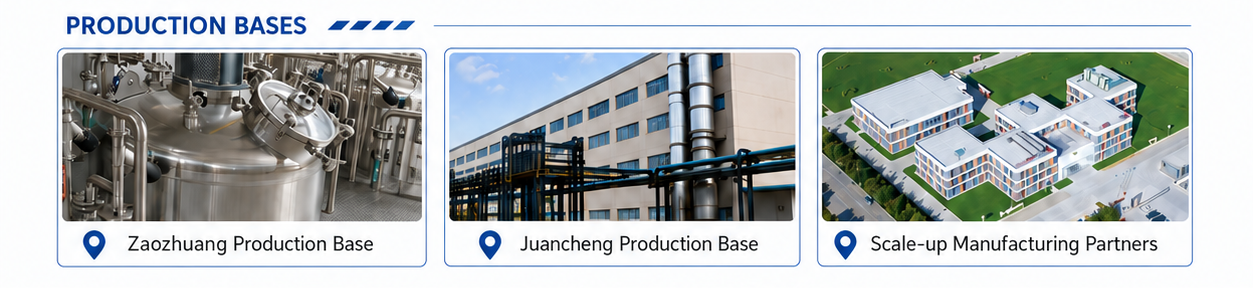
Our focus: connecting chemistry, equipment, quality control and supply capability so that a laboratory process can move toward more stable scale-up.
| R&D | Scale-Up | Peptide Intermediates | Quality |
|---|---|---|---|
| Process evaluation | Equipment matching | Protected amino acids & linkers | COA & batch data |
| Route optimization | Filtration & drying | Long-chain intermediates | Consistency review |
R&D and Process Development: Building a Scalable Process
A scalable process starts with repeatable laboratory work.
During early development, process teams typically evaluate material addition, reaction temperature, reaction time, mixing, work-up and isolation conditions.
For multistep intermediates, the performance of one stage can directly affect the next. Impurity profile, protection state and isolation efficiency may all influence downstream chemistry.
From Reaction Feasibility to Process Repeatability
The goal of development is therefore not only to obtain the target compound, but to establish a route that can be reproduced before it is transferred to larger equipment.
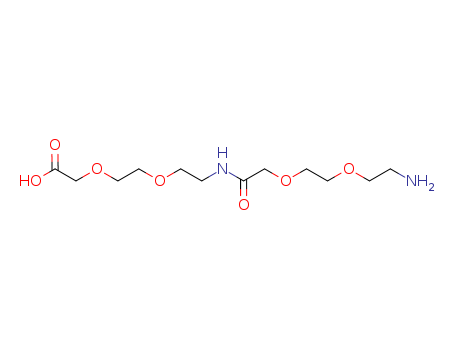
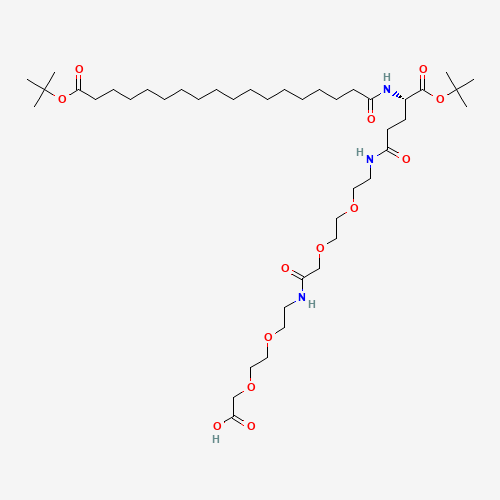
For projects involving peptide-related linker chemistry, building blocks such as AEEA and AEEA-AEEA may require careful control of chemical identity, purity and downstream compatibility.
Equipment Configuration Matters During Process Scale-Up
As batch size increases, equipment becomes an important part of process performance.
Heat transfer, agitation, solid-liquid contact, filtration efficiency and drying behavior may all change compared with small-scale laboratory experiments.

A larger reactor alone does not guarantee successful scale-up.
Reaction, Filtration and Peptide Process Equipment
Different processes require different equipment configurations.
High-viscosity reactions may place greater demands on mixing, while solid-forming processes may depend more heavily on filtration and washing efficiency. Temperature-sensitive intermediates also require stable heating and cooling control.
Peptide-related processing introduces additional requirements. Resin suspension, reagent contact, deprotection, washing and solid-liquid separation all need to work together.
For laboratory and pilot-scale SPPS projects, dedicated solid phase peptide synthesis equipment can integrate mixing, reaction, washing and filtration operations within a system designed around resin-based peptide processing.
The key is not simply equipment size, but whether the equipment matches the characteristics of the process.
Peptide-Related Intermediates Require More Than Purity Control
Peptide development involves more than amino-acid coupling.
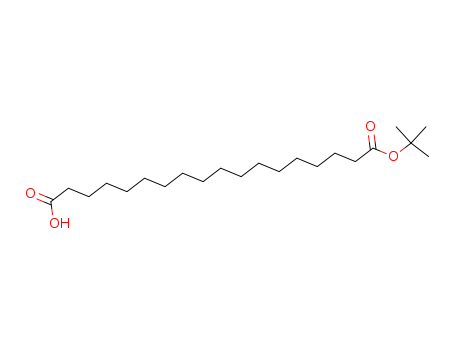
Depending on the target structure, projects may also involve protected amino acids, PEG-based linkers, long-chain fatty-acid structures and functionalized side-chain intermediates.
Long-chain dicarboxylic acids are one example.
Octadecanedioic Acid (CAS 871-70-5) provides a C18 dicarboxylic-acid framework with two terminal carboxyl groups.
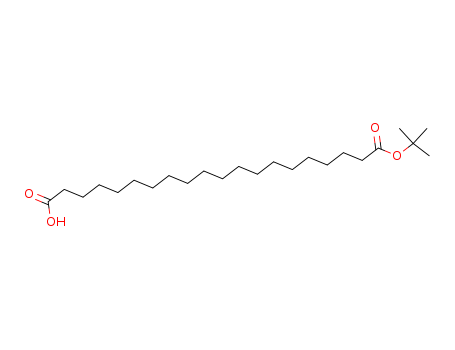
By comparison, 20-(tert-Butoxy)-20-oxoicosanoic acid (CAS 683239-16-9) provides a C20 framework with one free carboxyl group and one tert-butyl-protected terminus.
Why Structural Identity Matters
For these intermediates, a purity value alone does not provide the full picture.
Technical teams may also need to confirm:
-
correct chemical identity;
-
protection state;
-
relevant functional groups;
-
impurity profile;
-
batch-to-batch consistency.
A free dicarboxylic acid and its mono-protected derivative may share a similar carbon-chain framework but play very different roles in a multistep route.
From Batch Quality to Stable Supply
A general specification is useful during initial screening, but batch-specific data becomes more important as a project moves into repeated experiments, pilot work and manufacturing.
The COA shows the result for an actual batch, while the product specification defines the acceptance criteria.
For long-term projects, technical and procurement teams should look beyond a single purity number and consider identity, analytical method, relevant impurities, packaging, documentation and consistency between batches.
Scale-up is a staged process:
Laboratory → confirm process feasibility
Pilot scale → confirm equipment and process scalability
Manufacturing → build batch consistency and stable supply
Shandong Juntai Pharmaceutical continues to strengthen its capabilities in pharmaceutical intermediates, peptide-related intermediates, protected amino acids, functional linker structures and customized project support.
By connecting R&D, process scale-up, manufacturing and quality control, we aim to support customers with both suitable intermediates and the technical coordination needed for longer-term development projects.


