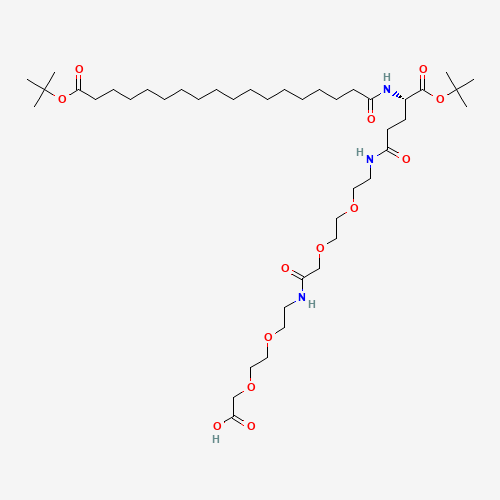
![Fmoc-L-Lys[C20-OtBu-γ-Glu(OtBu)-AEEA-AEEA]-OH](/upload/2026/7/89-1.jpg "Fmoc-L-Lys[C20-OtBu-γ-Glu(OtBu)-AEEA-AEEA]-OH")
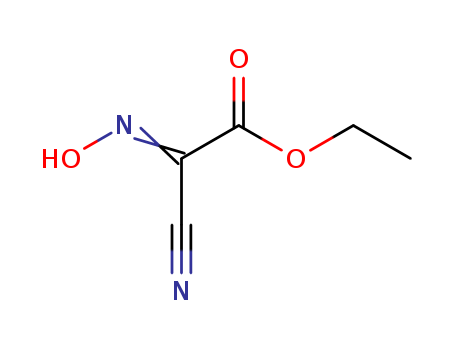
3849-21-6Relevant academic research and scientific papers
Re-evaluating the stability of COMU in different solvents
Kumar, Ashish,Jad, Yahya E.,de la Torre, Beatriz G.,El-Faham, Ayman,Albericio, Fernando
, p. 763 - 768 (2017)
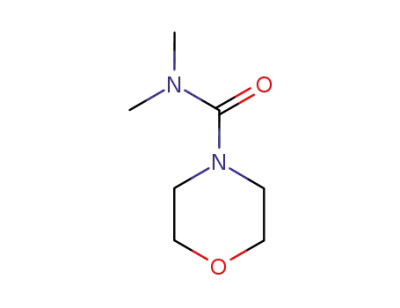
COMU is uronium-type coupling reagent based on OxymaPure. It showed several advantages over classical benzotriazole-based coupling reagents such as higher solubility, water-soluble byproduct, and monitoring the reaction by changing of color. Although COMU is well known to perform excellent in solution, but its hydrolytic stability in DMF limits its use in automatic peptide synthesizer. Herein, we evaluated the hydrolytic stability of COMU in γ-valerolactone (GVL), acetonitrile (ACN) and N-formylmorpholine (NFM) and compared its stability against DMF. The stability of COMU after 24?h was found to be 88 and 89% in GVL and ACN, respectively, when compared in DMF (14%). Further, the demanding Aib-ACP decapeptide and JR decapeptide were successfully synthesized using COMU dissolved in GVL or ACN while Fmoc amino acids were dissolved in DMF. Copyright
A novel aminothiazole KY-05009 with potential to inhibit Traf2- And Nck-Interacting Kinase (TNIK) attenuates TGF-β1-mediated epithelial-to-mesenchymal transition in human lung adenocarcinoma A549 cells
Kim, Jiyeon,Moon, Seong-Hee,Kim, Bum Tae,Chae, Chong Hak,Lee, Joo Yun,Kim, Seong Hwan
, (2014)
Transforming growth factor (TGF)-β triggers the epithelial-to-mesenchymal transition (EMT) of cancer cells via wellorchestrated crosstalk between Smad and non-Smad signaling pathways, including Wnt/β-catenin. Since EMT-induced motility and invasion play a critical role in cancer metastasis, EMT-related molecules are emerging as novel targets of anticancer therapies. Traf2- and Nck-interacting kinase (TNIK) has recently been considered as a first-in-class anti-cancer target molecule to regulate Wnt signaling pathway, but pharmacologic inhibition of its EMT activity has not yet been studied. Here, using 5-(4-methylbenzamido)-2-(phenylamino)thiazole-4-carboxamide (KY-05009) with TNIK-inhibitory activity, its efficacy to inhibit EMT in cancer cells was validated. The molecular docking/binding study revealed the binding of KY-05009 in the hinge region of TNIK, and the inhibitory activity of KY-05009 against TNIK was confirmed by an ATP competition assay (Ki, 100 nM). In A549 cells, KY-05009 significantly and strongly inhibited the TGF-β-activated EMT through the attenuation of Smad and non-Smad signaling pathways, including the Wnt, NF-κB, FAK-Src-paxillin-related focal adhesion, and MAP kinases (ERK and JNK) signaling pathways. Continuing efforts to identify and validate potential therapeutic targets associated with EMT, such as TNIK, provide new and improved therapies for treating and/or preventing EMT-based disorders, such as cancer metastasis and fibrosis.
1,3,4-Oxadiazole Bridges: A Strategy to Improve Energetics at the Molecular Level
Ma, Jinchao,Chinnam, Ajay Kumar,Cheng, Guangbin,Yang, Hongwei,Zhang, Jiaheng,Shreeve, Jean'ne M.
, p. 5497 - 5504 (2021/01/26)
Many energetic materials synthesized to date have limited applications because of low thermal and/or mechanical stability. This limitation can be overcome by introducing structural modifications such as a bridging group. In this study, a series of 1,3,4-oxadiazole-bridged furazans was prepared. Their structures were confirmed by 1H and 13C NMR, infrared, elemental, and X-ray crystallographic analyses. The thermal stability, friction sensitivity, impact sensitivity, detonation velocity, and detonation pressure were evaluated. The hydroxylammonium salt 8 has an excellent detonation performance (D=9101 m s?1, P=37.9 GPa) and insensitive properties (IS=17.4 J, FS=330 N), which show its great potential as a high-performance insensitive explosive. Using quantum computation and crystal structure analysis, the effect of the introduction of the 1,3,4-oxadiazole moiety on molecular reactivity and the difference between the sensitivities and thermal stabilities of mono- and bis-1,3,4-oxadiazole bridges are considered. The synthetic method for introducing 1,3,4-oxadiazole and the systematic study of 1,3,4-oxadiazole-bridged compounds provide a theoretical basis for future energetics design.
Dihydrooxazolo[5,4-d]pyrrolo[1,2-a]pyrimidine-9(5H)-one derivative and application thereof
-
Paragraph 0099; 0102-0104, (2021/05/01)
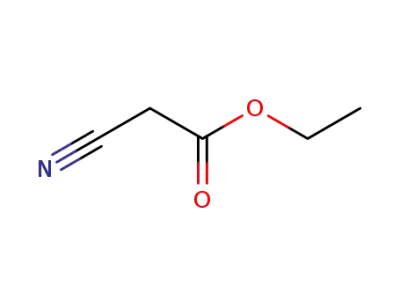
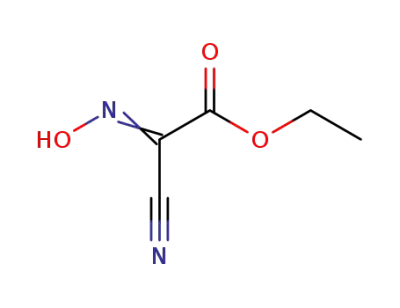
The invention relates to a dihydrooxazolo[5,4-d]pyrrolo[1,2-a]pyrimidine-9(5H)-one derivative and application. The preparation method comprises the following steps: by taking ethyl cyanoacetate as an initial raw material, generating a hydroxylamine compound (A) under the action of sodium nitrite and phosphoric acid, reducing with sodium hydrosulfite to obtain ethyl 2-aminocyanoacetate (B), reacting with different substituted acyl chlorides respectively under an alkali condition, generating different substituted oxazole compounds D1-D48 of 5-amino-4-formate under the action of trifluoroacetic acid, and reacting with pyrrolidone under the action of phosphorus oxychloride to obtain a dihydrooxazolo[5,4-d]pyrrolo[1,2-a]pyrimidine-9(5H)-one compound E1-E48. According to the invention, the inhibition activity of 48g of the compounds on Hela cervical cancer cells, MCF7 breast cancer cells and A549 lung cancer cells is investigated, and results show that the compounds E5, E10, E13, E16, E18, E19, E24, E42 and E43 have inhibition activity on Hela cervical cancer cells, the compounds E22, E24, E47 and E48 have inhibitory activity on MCF7 breast cancer cells, and the compounds E18 and E20 have inhibitory activity on A549 lung cancer cells.
Tetrahydrooxazolopyridino-oxaazaone derivative and application of tetrahydrooxazolopyridino-oxaazaone derivative
-
Paragraph 0104; 0107-0109, (2021/05/12)
The invention relates to a tetrahydrooxazolopyridino-oxaazaone derivative and application thereof. Specifically, the derivative tetrahydrooxazolo[5',4' : 4,5]pyridino[1, 2-a]oxaaza-11(5H)-one derivatives E1-E48. In anti-tumor activity screening, the positive control of DOX is used; the inhibition effect of the 48 tetrahydrooxazolo[5',4':4,5]pyridino[1, 2-a]oxaaza-11(5H)-one derivatives E1-E48 on Hela human cervical cancer cells, MCF-7 breast cancer cells and A549 lung cancer cells is observed, and the results show that compared with the positive control, the compounds E5, E8, E9, E20, E26, E28, E32, E34, E38, E41, E42, E44, E45, E46, E47 and E48 have the inhibition activity on the Hela cervical cancer cells, the compounds E26, E38, E42, E45, E46 and E47 have inhibitory activity on MCF-7 breast cancer cells; and the compounds E8, E9, E26 and E47 have inhibitory activity on A549 lung cancer cells.
Oxazolo[5,4-d]pyrido[1,2-a]pyrimidone derivative and application thereof
-
Paragraph 0101; 0104-0106, (2021/05/29)
The invention relates to an oxazolo[5,4-d]pyrido[1,2-a]pyrimidone derivative and application thereof. Ethyl cyanoacetate is used as a raw material, a hydroxylamine compound (A) is generated under the action of sodium nitrite and phosphoric acid, 2-amino ethyl cyanoacetate (B) is obtained through reduction with sodium hydrosulfite, the 2-amino ethyl cyanoacetate (B) reacts with different substituted acyl chlorides under alkali conditions, and oxazole compounds (D1-D48) of different substituted 5-amino-4-formate are generated under the action of trifluoroacetic acid, and then react with valerolactam under the action of phosphorus oxychloride to obtain the oxazolo[5,4-d]pyrido[1,2-a]pyrimidone compounds (E1-E48). The inhibitory activity of the 48 compounds on Hela cervical cancer cells, MCF-7 breast cancer cells and A549 lung cancer cells is investigated, and the result shows that 11 compounds have the inhibitory activity on the Hela cervical cancer cells; eight compounds have inhibitory activity on MCF-7 breast cancer cells; and five compounds have inhibitory activity on A549 lung cancer cells. E32, E33, E45, E46 and E47 have inhibitory activity on three tumor cells; and E29 and E42 have inhibitory activity on Hela cervical cancer cells and MCF-7 breast cancer cells.
Synthesis and anticancer activity of ethyl 5-amino-1-N-substituted-imidazole-4-carboxylate building blocks
Ruzi, Zukela,Nie, Lifei,Bozorov, Khurshed,Zhao, Jiangyu,Aisa, Haji A.
, (2021/05/27)
A series of 5-amino-1-N-substituted-imidazole-4-carboxylate building blocks was synthesized and assayed for their antiproliferative potential against human cancer cell lines, including HeLa (cervical), HT-29, HCT-15 (colon), A549 (lung), and MDA-MB-231 (breast) cells. The preliminary screening results revealed that several derivatives containing alkyl chains at the N-1 position of the imidazole core demonstrate a certain inhibitory effect on growth and proliferation. A significant effect was observed following ethyl 5-amino-1-dodecyl-1H-imidazole-4-carboxylate (5e) treatment for 72 h. The IC50 value for HeLa cells was 0.737 ± 0.05 μM, whereas that for HT-29 cells was 1.194 ± 0.02 μM. Further investigations revealed that 5e significantly inhibited tumor cell colony formation and migration, and it exhibited antiadhesive effects on HeLa cells as well as antitubulin activity along with the induction of early apoptosis of HeLa and HT-29 cells. In addition, derivative 5e significantly reduced the cell mitochondrial membrane potential in a dose-dependent manner and induced early apoptosis of HeLa and HT-29 cells, indicating that 5e may serve as a lead compound for further drug discovery and development.
2-substituted tricyclic oxazolo[5,4-d]pyrimidine library: Design, synthesis, and cytotoxicity activity
Aisa, Haji Akber,Bozorov, Khurshed,Nie, Lifei,Ruzi, Zukela,Song, Buer,Zeng, Yan,Zhao, Jiangyu
, (2021/11/30)
We report the design, synthetic route, and cytotoxicity of a library of 49 newly synthesized tricyclic oxazolo[5,4-d]pyrimidines. The condensed pyrimidinones were constructed from ethyl 5-aminooxazole-4-carboxylate building blocks. A tricyclic ring system was built using the naturally occurring mackinazolinone alkaloid with a focus on the molecular diversity at position C-2 of the oxazole ring. Synthesized compounds were evaluated against a panel of human cancer cell lines including MCF-7 (breast), HeLa (cervical), and A549 (lung) in vitro. The results revealed that substitution of halogen-related aromatic fragments at position C-2 of the oxazole ring may serve as promising anticancer drug candidates.
New Route to Polynuclear Ni(II) and Cu(II) Complexes with Bridging Oxime Groups That Are Inaccessible by Conventional Preparations
Opalade, Adedamola A.,Gomez-Garcia, Carlos J.,Gerasimchuk, Nikolay
, p. 678 - 693 (2019/02/14)
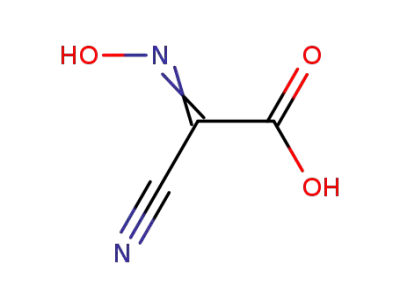
A series of new polynuclear complexes of divalent Ni and Cu with 2-cyano-2-oximino-acetic acid (later AACO2-) were obtained as the result of the ligand modification reaction in the process of complexation, using 2-cyano-2-oximino-acetates such as methyl- (later as MeCO), and ethyl- (as ECO later on). Synthesized compounds were characterized by spectroscopic methods, thermal analysis, magnetochemistry, and X-ray crystallography. Crystal data revealed the formation of the dimeric [Ni(AACO)(H2O)3]2·H2O (1), trimeric K2[Ni3(AACO)4(H2O)4]·4H2O (2), and K2[Cu3(AACO)4(H2O)4]·4H2O (3) complexes, with bridging NO-groups cyanoxime dianions. In the latter two compounds, the AACO2- anions adopt cis-arrangements around metal centers. One mononuclear complex of K2[Cu(AACO)2(H2O)]·2H2O (4) composition was isolated and characterized as well, where the cyanoxime forms the trans-complex 4. There is moderate-to-strong antiferromagnetic coupling between metal centers in polynuclear complexes. Data of thermal analysis studies revealed high-energy properties for dehydrated complexes 3 and 4, which violently decompose at ~200 °C. These compounds may be viewed as room temperature completely safe, but heat-triggered actuators, because of their pronounced mechanical action upon leaving the system (crucible). Final products of thermal decomposition are Ni and NiO for 1, and the mixture of NiO and K2O for 2, with metallic copper for 3 and 4.
99mTc Radiolabeling and Biological Evaluation of Nanoparticles Functionalized with a Versatile Coating Ligand
Felber, Michael,Bauwens, Matthias,Mateos, José M.,Imstepf, Sebastian,Mottaghy, Felix M.,Alberto, Roger
supporting information, p. 6090 - 6099 (2015/04/14)
Radiolabeling allows noninvasive imaging by single photon emission computed tomography (SPECT) or positron emission tomography (PET) for assessing the biodistribution of nanostructures. Herein, the synthesis of a new coating ligand for gold nanoparticles (AuNPs) and quantum dots (QDs) is reported. This ligand is multifunctional; it combines the metal chelate with conjugating functions to biological vectors. The concept allows the coupling of any targeting function to the chelator; an example for the prostate specific membrane antigen is given. Derivatized NPs can directly be labeled in one step with [99mTc(OH2)3(CO)3]+. AuNPs in particular are highly stable, a prerequisite for in vivo studies excluding misinterpretation of the biodistribution data. AuNPs with differing sizes (7 and 14 nm core diameter) were administered intravenously into nude NMRI mice bearing LNCaP xenografts. MicroSPECT images show for both probes rapid clearance from the blood pool through the hepatobiliary pathway. The 7 nm AuNPs revealed a significantly higher bone uptake than the 14 nm AuNPs. The high affinity towards bone mineral is further confirmed in vitro with hydroxyapatite.