
![Fmoc-L-Lys[C20-OtBu-γ-Glu(OtBu)-AEEA-AEEA]-OH](/upload/2026/7/89-1.jpg "Fmoc-L-Lys[C20-OtBu-γ-Glu(OtBu)-AEEA-AEEA]-OH")
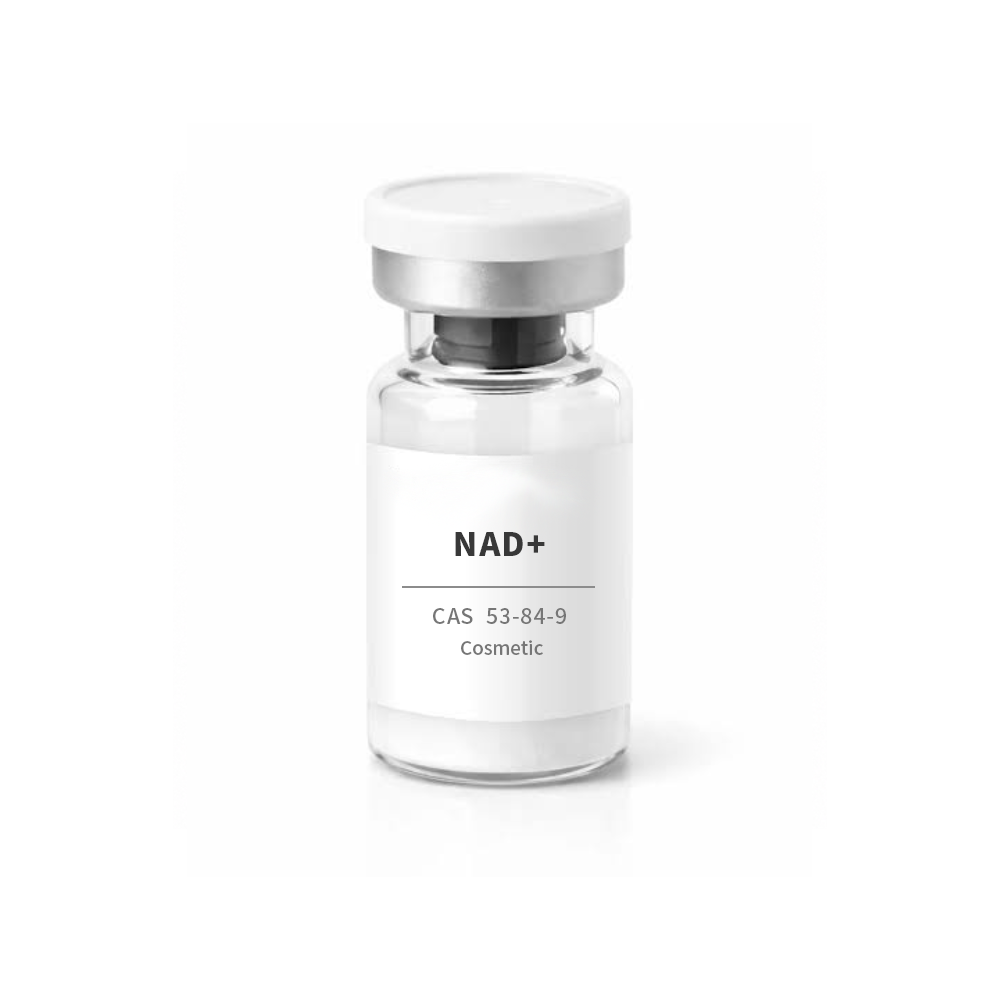
NAD+ | CAS 53-84-9 | CAS 53-84-9
- cas:53-84-9
- Molecular Formula:C21H27N7O14P2
- Purity:≥95% by HPLC
- Molecular Weight:663.43 g/mol
Product Details
CasNo: 53-84-9
Molecular Formula: C21H27N7O14P2
Appearance: White to off-white powder / crystalline powder
Delivery Time: Confirmed according to order quantity, target specification, packaging requirements, and current supply availability
Packing: Available according to order quantity and project requirements
Throughput: Evaluated based on project requirements, specifications, and order quantity
Purity: ≥95% by HPLC
Product Overview
NAD+, CAS 53-84-9, is the oxidized form of β-Nicotinamide Adenine Dinucleotide, also known as β-NAD+, β-NAD, NAD Oxidized, or Coenzyme I.
NAD+ is a naturally occurring coenzyme and redox cofactor involved in numerous biochemical reactions. Its molecular formula is C21H27N7O14P2, with a molecular weight of approximately 663.43 g/mol.
Unlike peptide-based cosmetic actives, NAD+ is not a peptide. For cosmetic and personal-care projects, it is more appropriately positioned as a functional formulation ingredient and coenzyme-related R&D material, with final use conditions determined according to formulation compatibility, stability, and regulatory requirements in the target market.
Shandong Juntai Pharmaceutical supports B2B supply of NAD+ for cosmetic formulation development, functional ingredient projects, analytical work, and related R&D applications. Purity, packaging, analytical specifications, and supporting documentation are confirmed according to the actual supply batch.
Product Information
| Item | Information |
|---|---|
| Product Name | NAD+ |
| Chemical Name | β-Nicotinamide Adenine Dinucleotide |
| Synonyms | β-NAD+ / β-NAD / NAD Oxidized / Coenzyme I |
| CAS No. | 53-84-9 |
| Molecular Formula | C21H27N7O14P2 |
| Molecular Weight | 663.43 g/mol |
| Product Form | Oxidized Form |
| Product Type | Coenzyme / Redox Cofactor |
| Category | Functional Cosmetic Ingredient / Formulation R&D Material |
| Appearance | White to off-white powder / crystalline powder |
| Typical Purity | ≥95% by HPLC |
| Storage | Keep sealed, dry, and refrigerated according to product specification |
| Main Applications | Cosmetic formulation development, functional ingredient projects, analytical research, and related R&D |
Product Features
Defined Oxidized NAD Form
This product refers specifically to NAD+ in the oxidized β-NAD form, CAS 53-84-9.
The oxidation state is an important part of product identity and should be confirmed together with purity, molecular information, and batch-specific analytical data during sourcing.
NAD+ Is Different from NADH
NAD+ and NADH belong to the same biological redox pair, but they are different product forms.
| Item | NAD+ | NADH |
|---|---|---|
| Product Form | Oxidized Form | Reduced Form |
| Product on This Page | Yes | No |
| Common Identity | β-NAD+ | Reduced NAD |
| Specifications Interchangeable | No | No |
For procurement and formulation projects, analytical data and specifications from NADH should not be applied directly to NAD+.
NAD+ Is Also Different from NMN and NR
NAD+, NMN, and NR are often discussed within the same biochemical context, but they are distinct chemical entities.
- NAD+ — Nicotinamide Adenine Dinucleotide
- NMN — Nicotinamide Mononucleotide
- NR — Nicotinamide Riboside
They differ in molecular structure, CAS number, molecular weight, and quality specifications.
Quality Evaluation Extends Beyond Purity
For NAD+ raw-material qualification, HPLC purity is only one part of the overall quality profile.
Relevant parameters may include:
- Product identity
- Assay / HPLC purity
- Appearance
- Water / moisture
- Related substances
- Solubility
- Product form
- Storage stability
- Batch-specific documentation
For projects with defined specifications, the actual COA and analytical requirements should be reviewed before purchase.
Applications
Functional Cosmetic Formulation Development
NAD+ may be evaluated as a functional ingredient in cosmetic and personal-care formulation projects.
Appropriate B2B positioning includes:
- Functional cosmetic ingredient
- Coenzyme-based formulation ingredient
- Multi-active formulation material
- Cosmetic formulation R&D material
Final use conditions should be determined according to the complete formulation, stability testing, safety assessment, and applicable cosmetic regulations.
Multi-Active Skin-Care Formulations
NAD+ may be evaluated in serums, creams, lotions, and other multi-active cosmetic systems.
During development, formulators should consider the effects of:
- pH
- Temperature
- Light exposure
- Moisture
- Oxidative conditions
- Other active ingredients
- Packaging system
on product stability.
Coenzyme and Formulation Research
As a redox cofactor, NAD+ is also relevant to coenzyme-related biochemical and formulation research.
For a cosmetic ingredient page, these properties are better presented as coenzyme-related research and formulation context rather than converted into direct consumer benefit or therapeutic claims.
Analytical Method Development
NAD+ can also be used in raw-material and analytical work involving:
- HPLC purity analysis
- Product identity confirmation
- Related-substance analysis
- Raw-material characterization
- Stability evaluation
- Analytical method development
Quality & Supply
NAD+ is a coenzyme material whose quality may be influenced by storage and environmental conditions. Batch-specific specifications should therefore be reviewed carefully.
| Quality Item | Typical Requirement / Consideration |
|---|---|
| HPLC Purity | Common target ≥95% |
| Identity | Confirmed according to analytical specification |
| Molecular Formula | C21H27N7O14P2 |
| Molecular Weight | 663.43 g/mol |
| Product Form | Oxidized β-NAD |
| Appearance | White to off-white powder / crystalline powder |
| Water / Moisture | Confirmed according to batch specification |
| Related Substances | Confirmed according to batch specification |
| Solubility | Evaluated according to product and formulation conditions |
| Storage | Sealed, dry, and refrigerated according to specification |
Shandong Juntai Pharmaceutical can review NAD+ supply requirements according to target purity, quantity, packaging format, and project requirements.
If a project requires defined assay, HPLC purity, water content, related substances, solubility, packaging, or supporting documentation, these requirements can be submitted during the inquiry stage.
Custom Support
Projects involving NAD+ and related functional ingredients can be discussed according to sourcing, formulation, and analytical requirements.
Project support may include:
- NAD+ raw-material supply
- Target purity requirements
- Functional cosmetic ingredient projects
- Multi-active formulation projects
- Packaging specification review
- Analytical requirement review
- Quality specification communication
- Formulation-related technical discussion
Specific supply conditions are evaluated according to target specification, order quantity, packaging requirements, and current production conditions.
Frequently Asked Questions
What type of ingredient is NAD+?
NAD+ is the oxidized form of β-Nicotinamide Adenine Dinucleotide and is classified as a coenzyme / redox cofactor.
It is not a peptide.
Is NAD+ the same as NADH?
No.
NAD+ is the oxidized form, while NADH is the reduced form. They are different product forms and should be sourced and specified separately.
Is NAD+ the same as NMN?
No.
NAD+ and NMN are different chemical entities. NMN is Nicotinamide Mononucleotide, while this page refers to β-Nicotinamide Adenine Dinucleotide, CAS 53-84-9.
What purity is commonly available for NAD+?
Commercial NAD+ is available in different purity grades. ≥95% by HPLC is a common specification, while higher-purity grades are also available in the market.
Actual availability should be confirmed according to the supply batch and project requirements.
Can NAD+ be used in cosmetic formulations?
NAD+ may be evaluated for use in functional and multi-active cosmetic formulation projects.
Final use conditions should be determined through compatibility, stability, safety, and regulatory assessment for the intended market.
What should formulators consider when working with NAD+?
Key factors include pH, temperature, light, moisture, oxidative conditions, compatibility with other active ingredients, and packaging.
Final stability should be verified in the complete formulation.
Can COA and analytical documentation be provided?
Availability of COA, HPLC data, and other technical documentation depends on the actual supply batch.
Specific requirements for assay, water, related substances, or other parameters can be submitted during the inquiry stage.
What is the MOQ for NAD+?
MOQ depends on the requested purity, quantity, packaging format, and current supply conditions.
Providing the expected purchase quantity helps determine an appropriate supply option.
What is the typical lead time?
Lead time depends on the target specification, order quantity, packaging requirements, and current supply availability.
Projects requiring special specifications or additional analytical testing may require a project-specific lead-time evaluation.
For B2B ingredient development and formulation R&D use. Final cosmetic applications should comply with applicable regulations and product-safety requirements in the target market.
Relevant Products
-
 NAD+ | CAS 53-84-9
CAS:53-84-9
-
 Reduced Glutathione
CAS:70-18-8
-
 L-Carnosine
CAS:305-84-0


