
Chinese Pro-Xylane: Process Development, Quality and Ingredient Supply
2023.01.03
Pro-Xylane has become a recognized active ingredient in the cosmetics industry, particularly in skin-care formulations. As more Chinese manufacturers enter this market, buyers have more sourcing options. The challenge is no longer simply finding a lower-priced alternative. It is understanding what distinguishes one supplier from another.
For cosmetic brands, formulation developers and ingredient distributors, meaningful comparisons start with product identity, manufacturing processes, analytical data and batch specifications.
Shandong Juntai Pharmaceutical Co., Ltd. has developed manufacturing technology for Pro-Xylane and holds a patent related to its production process. Its work provides a practical example of how process development can address specific challenges in cosmetic ingredient manufacturing.
1. What Differentiates Chinese Pro-Xylane Suppliers?
Pro-Xylane is commonly identified as Hydroxypropyl Tetrahydropyrantriol. In commercial sourcing, buyers may encounter different product specifications, concentrations and forms of supply.
Manufacturing conditions, reaction selectivity, intermediate processing and purification can all influence the composition of the final material. These factors make it important to look beyond a product name or a single purity figure.
For B2B buyers, the first step is to confirm the chemical identity and specification of the material being offered. Purity, isomer composition and impurity profiles should then be evaluated against the requirements of the intended application.
A supplier's technical capability is best assessed through documented processes and verifiable analytical results, rather than marketing claims alone.
2. Juntai's Approach to Pro-Xylane Process Development
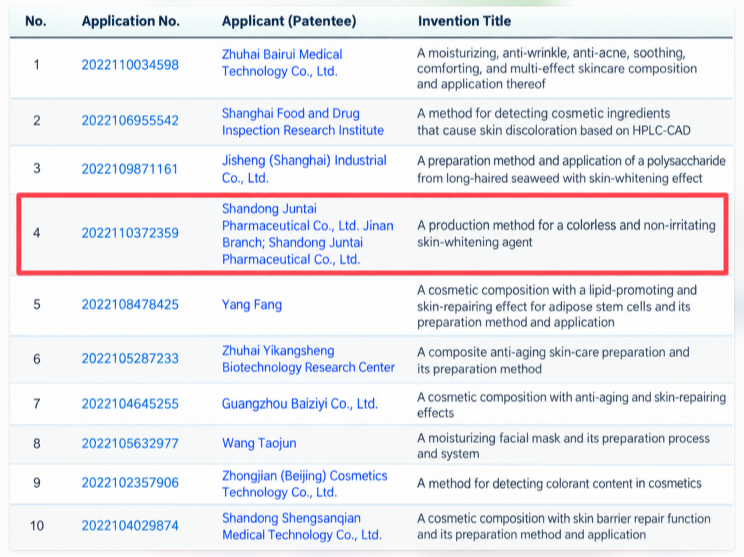
Shandong Juntai Pharmaceutical has developed a manufacturing process for Pro-Xylane and obtained Chinese patent CN115093386B, titled “A Method for Producing Colorless, Odorless Pro-Xylane without Boric Acid or Borates.”
The disclosed process involves intermediate protection, chiral catalytic reduction and subsequent separation and purification. These steps address manufacturing considerations associated with product composition, purification and the control of borate-related residues.
The patent provides technical information about the disclosed process and its experimental examples. It does not, by itself, establish that every commercial batch achieves identical results. Product purity, isomer composition and residual impurity levels must be assessed using the applicable specifications and batch-specific analytical data.
For technical buyers, the patent is a starting point for understanding the manufacturing approach and discussing relevant quality requirements with the supplier.
Read the Pro-Xylane manufacturing patent
3. Why Purity Alone Is Not Enough
Purity is an important parameter when evaluating Pro-Xylane, but it does not describe every aspect of product quality.
Total purity and S/R isomer composition, for example, represent different types of information. Two samples with similar reported purity values may have different isomer profiles. Results also need to be interpreted in the context of the analytical method and specification used.
Buyers should therefore confirm several points before comparing suppliers:
-
Chemical identity and the applicable product specification
-
Purity or assay results and the analytical method used
-
Isomer composition, where relevant to the project
-
Applicable impurity and residual testing
-
Batch documentation and acceptance criteria
For recurring purchases, it is also important to agree on specifications before placing an order. A single analytical result should not automatically be treated as evidence that every subsequent batch will have identical characteristics.
For a more detailed discussion of analytical documentation and batch evaluation, see Juntai's related article on Pro-Xylane purity, COA and batch data.
4. What Does “30% Pro-Xylane” Actually Mean?
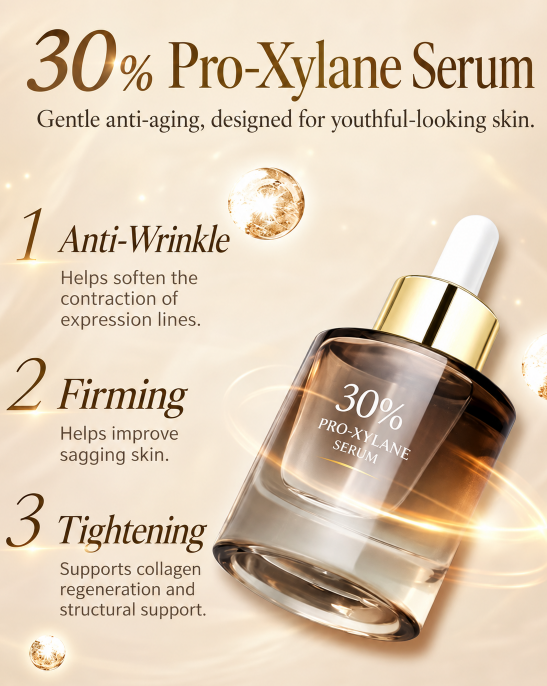
Concentration claims require careful interpretation, particularly when comparing ready-to-use solutions with concentrated raw materials.
A product described as a 30% Pro-Xylane solution does not automatically mean that a finished cosmetic formulation contains 30% pure Hydroxypropyl Tetrahydropyrantriol.
For example, if a raw material solution contains 30% of the target ingredient and is added to a formulation at 10% by weight, the theoretical contribution of that ingredient would be 3% by weight, assuming both percentages use the same mass basis.
The calculation is straightforward, but only when the concentration basis is clearly defined. Buyers should confirm whether the stated percentage refers to the active ingredient content of the supplied material, the composition of a commercial solution or the addition level in the finished formulation.
This distinction is essential when comparing specifications, evaluating quotations and communicating formulation requirements.
5. From Cosmetic Ingredients to Juntai's Own Brand: Gan Hua Lu
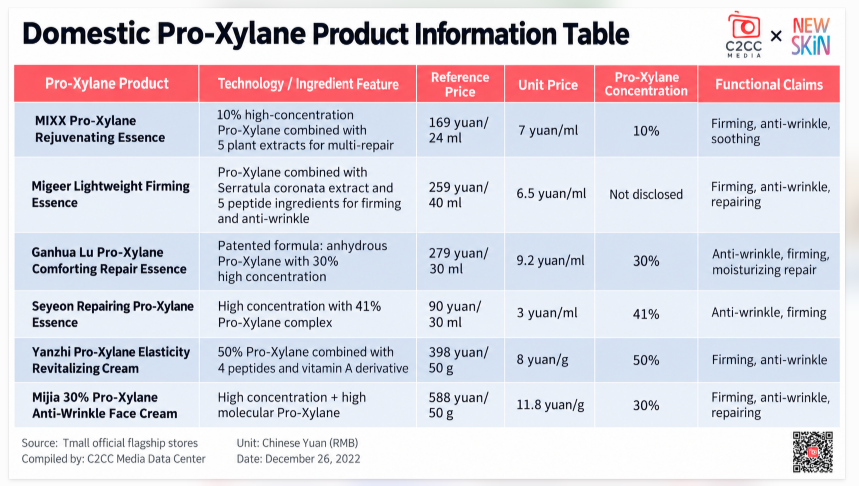
Juntai's work with Pro-Xylane is not limited to ingredient manufacturing. The company also has its own cosmetic brand, Gan Hua Lu.
An industry report published by Jiemian News, “Domestic Pro-Xylane: Ambitions Beyond the ‘Alternative’ Label,” featured Juntai and its Gan Hua Lu Pro-Xylane Soothing Essence product. The report discussed the product's 30% Pro-Xylane solution positioning and related manufacturing characteristics.
This provides an example of how ingredient technology can connect with finished skin-care products. However, raw material specifications and finished-product claims must be evaluated separately. Concentration statements should be interpreted in the context of the actual formulation, while technical claims should be supported by the relevant product documentation and test results.
To explore Gan Hua Lu's consumer skin-care products, visit the Gan Hua Lu Taobao Global store and review the products currently listed.
For cosmetic ingredient buyers, formulation developers and distributors seeking Pro-Xylane raw materials, Juntai can discuss product specifications, analytical documentation and supply requirements according to individual project needs.
6. What Should Buyers Look for in a Pro-Xylane Supplier?
Price remains a commercial consideration, but it should not be the only basis for supplier selection.
A useful assessment starts with a clearly identified material and a specification that both parties understand. Buyers can then evaluate analytical data, relevant impurity controls, batch documentation and the supplier's ability to meet agreed requirements.
Manufacturing patents may help buyers understand a supplier's technical approach, while product specifications and analytical reports provide the evidence needed to evaluate a particular material.
For Chinese Pro-Xylane suppliers, long-term competitiveness depends on more than offering an alternative price. Process development, transparent specifications and consistent fulfillment of agreed quality requirements are important foundations for sustainable B2B relationships.
For further information about Juntai's Pro-Xylane ingredient, please contact Shandong Juntai Pharmaceutical to confirm the applicable product identity, specifications, documentation and current supply availability.


