
![Fmoc-L-Lys[C20-OtBu-γ-Glu(OtBu)-AEEA-AEEA]-OH](/upload/2026/7/89-1.jpg "Fmoc-L-Lys[C20-OtBu-γ-Glu(OtBu)-AEEA-AEEA]-OH")
Pro-Xylane Quality: How to Read Purity, COA and Batch Data
2026.02.25
Two Pro-Xylane Samples Both Say 99%. Are They Really the Same?
Imagine receiving two Pro-Xylane quotations from different suppliers.
Both list the same familiar ingredient name. Both show a purity of 99%. At first glance, the comparison seems simple.
It usually is not.
One material may be a high-content raw material, another may follow a different analytical specification. The test methods may not be identical. The reported purity may describe total assay without telling you anything about stereochemical composition. Even when the numbers look similar, the materials may behave differently once they enter a formulation project.
That is why an experienced buyer rarely stops at the largest number on the specification sheet.
A better starting point is to ask:
What exactly has been measured, and what does this batch data actually tell me?
For the current product grade, see the Pro-Xylane product specification.
Start with the Specification, Not the Purity Number
A purity value only becomes useful when you know what sits behind it.
Before comparing two quotations, the product identity, CAS number, supplied form and analytical method should first line up.
This sounds basic, but it prevents one of the most common sourcing mistakes: comparing two materials that share a commercial name but are not being supplied under the same technical conditions.
A useful specification should make the product easy to understand.
| What to Check | What It Helps Confirm |
|---|---|
| Product name and CAS | Whether the correct material is being discussed |
| Assay / purity | How much target material is present |
| Physical form | How the product will be handled in formulation |
| Analytical method | How the reported value was obtained |
| Storage / packaging | Whether handling conditions suit the project |
Once these points are clear, the purity number starts to mean something.
Without them, “99%” is just a number on a page.
The Method Behind the Number Matters
This is where supplier documents begin to separate from marketing copy.
If two suppliers both report 99%, but one result comes from a different analytical method or is calculated on a different basis, the values are not necessarily directly comparable.
For a technical buyer, the question is not only:
“What is the result?”
but also:
“How was the result obtained?”
That one question often reveals more than another paragraph of product description.
Then Look at the COA: Does the Actual Batch Match the Promise?
Once the specification is clear, the next document becomes much more useful: the COA.
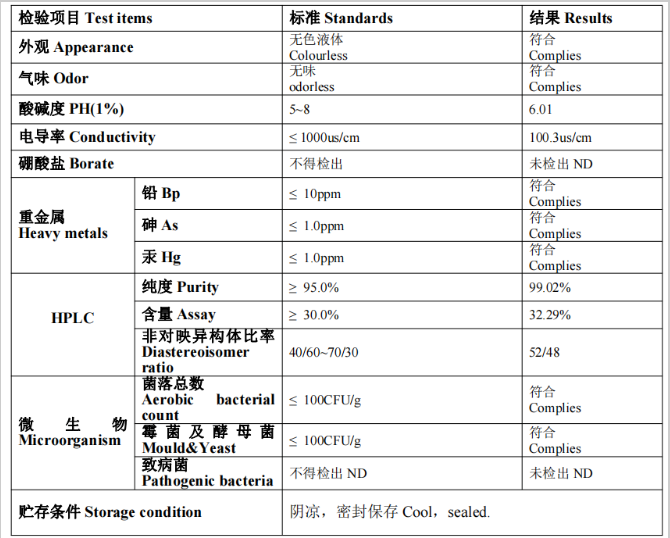
A specification tells you what the product should meet.
A COA tells you what one actual batch did meet.
That difference is important.
If the specification says the product should meet a certain assay, appearance and identification requirement, the COA gives you the real result for the batch being supplied.
This is where the evaluation moves from general product information to actual material.
A useful review is usually simple: check whether the product name, CAS number, test items, analytical methods and results all match the agreed specification.
If they do, the documents tell a consistent story.
If they do not, the inconsistency deserves an explanation before the material reaches the formulation bench.
A COA Is More Useful When You Have Something to Compare It With
One COA can confirm one batch.
Two or three COAs begin to show whether the product is being controlled consistently.
That difference becomes important when a project moves from a laboratory sample to repeated purchasing.
A formulator does not want to re-learn the raw material every time a new batch arrives.
This Is Where Batch Consistency Becomes More Important Than a “Perfect” Result
A single batch with an excellent assay can look impressive.
For an ongoing project, consistency is usually more valuable.
If one batch reports 99.8%, another 99.1%, and another 99.5%, the key question is not which number looks best on a sales sheet. The real question is whether all three batches remain within a defined and controlled specification and whether their analytical profiles remain reasonably consistent.
That is what gives a formulation team confidence to repeat a process.
It also explains why quality control cannot begin only at final testing.
Stable batch results normally depend on what happened earlier: starting-material control, reaction conditions, purification and process repeatability all affect what eventually appears on the COA.
The final document is only the visible end of a much longer process.
Why Process Control Matters to a Raw-Material Buyer
Buyers do not need to know every manufacturing parameter.
But they do need to understand whether a supplier is controlling the variables that matter.
For Hydroxypropyl Tetrahydropyrantriol, the quality of the final material is linked to more than final assay alone. If reaction and purification conditions vary too much, the final analytical profile can move with them.
This is why process development and quality control belong in the same conversation.
At Shandong Juntai Pharmaceutical, product evaluation can be supported with specification, batch COA and project-specific technical communication rather than relying only on a catalog description.
For buyers working across a broader cosmetic ingredient portfolio, the current product range is available through the Cosmetic Ingredients category.
When Should You Ask for More Than Assay and COA?
For many routine sourcing decisions, identity, assay and batch documentation answer most of the first questions.
Some projects go further.
This is particularly true when the material has a stereochemical specification.
A product may show a high overall assay and still require separate analysis of its isomer profile. The two measurements describe different things.
That is why:
99% total assay does not automatically mean a defined S/R composition.
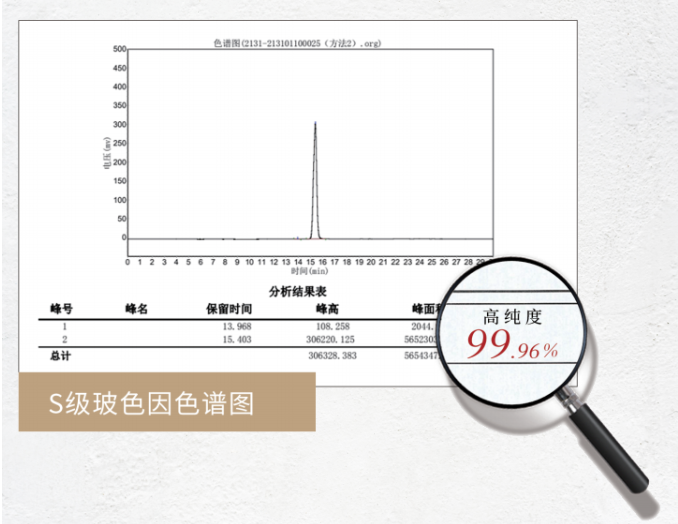
At this point, the discussion moves beyond ordinary purity control and into chromatographic and stereochemical evaluation.
That deserves its own article.
In the next part of this series, we will look specifically at Pro-Xylane S/R ratios, HPLC data and how S-grade materials should be compared.
A Better Way to Compare Pro-Xylane Suppliers
The most useful supplier comparison is rarely:
Supplier A: 99%
Supplier B: 99%
A more meaningful comparison looks at whether the documents support each other.
Does the product identity match the specification?
Does the COA match the agreed specification?
Do different batches stay within the same control range?
And when a project has special analytical requirements, can the supplier provide the data needed to discuss them?
When those answers are clear, the purity number finally has context.
That is what turns a specification from a sales figure into something a formulation and procurement team can actually use.


