
![Fmoc-L-Lys[C20-OtBu-γ-Glu(OtBu)-AEEA-AEEA]-OH](/upload/2026/7/89-1.jpg "Fmoc-L-Lys[C20-OtBu-γ-Glu(OtBu)-AEEA-AEEA]-OH")
Juntai S-Grade Pro-Xylane: S/R Control, HPLC & Quality Management
2026.02.25
From Pro-Xylane to S-Grade: How Juntai Builds a More Defined Product
For many Pro-Xylane products, 99% purity is already an important specification.
But as formulation and sourcing teams look more closely at the material, another question often follows:
What does that 99% actually consist of?
This is where stereochemistry begins to matter.
Alongside its general Pro-Xylane grade, Juntai has continued developing S-grade Pro-Xylane for projects that require a more clearly defined stereochemical profile.
The purpose is not simply to introduce another grade. It is to make the product easier to understand through identity, S-form control, analytical data and documented quality management.
Why Move from General Pro-Xylane to an S-Grade?
Overall assay and stereochemical composition describe different aspects of the same material.
A conventional Pro-Xylane grade may already meet the needs of many skincare formulation projects. But some customers go further and want to understand:
-
the S/R profile;
-
the degree of S-form enrichment;
-
the analytical evidence behind the specification.
For these projects, total assay alone does not provide enough detail.
Juntai's S-grade development is designed around this more specific requirement.
General Grade vs. S-Grade
| Item | General Pro-Xylane | Juntai S-Grade Pro-Xylane |
|---|---|---|
| Product Focus | General Pro-Xylane specification | More defined S-form specification |
| CAS | 439685-79-7 | 868156-46-1 |
| Main Evaluation | Assay, physical form, batch specification | Assay + stereochemical profile |
| Product Form | According to specification | White to off-white powder |
| Stereochemical Focus | S/R profile can be evaluated | Focus on S-form control |
| Assay | According to batch specification | ≥99% |
| Documentation | Specification / COA | Specification / COA / analytical data |
The difference is not simply the letter “S”.
It is the level of definition built into the product specification.
For the current general grade, see Juntai Pro-Xylane product information.
The Analytical Data Makes the Difference Visible
The clearest way to understand the two product directions is to look at the analytical results.
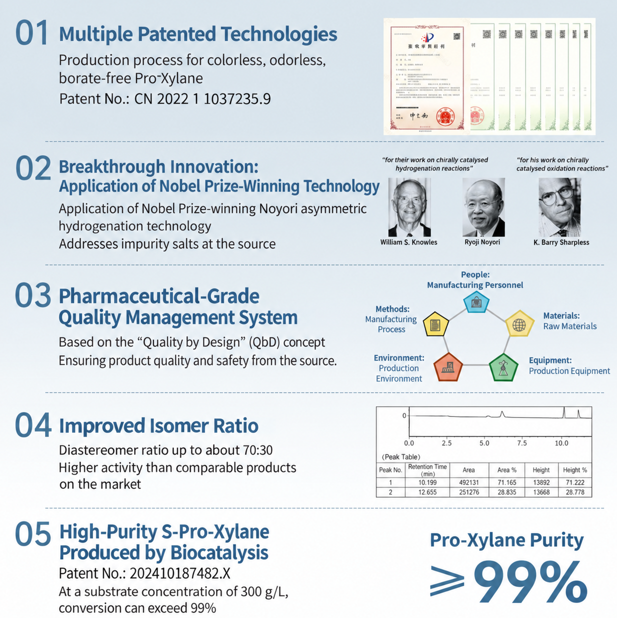
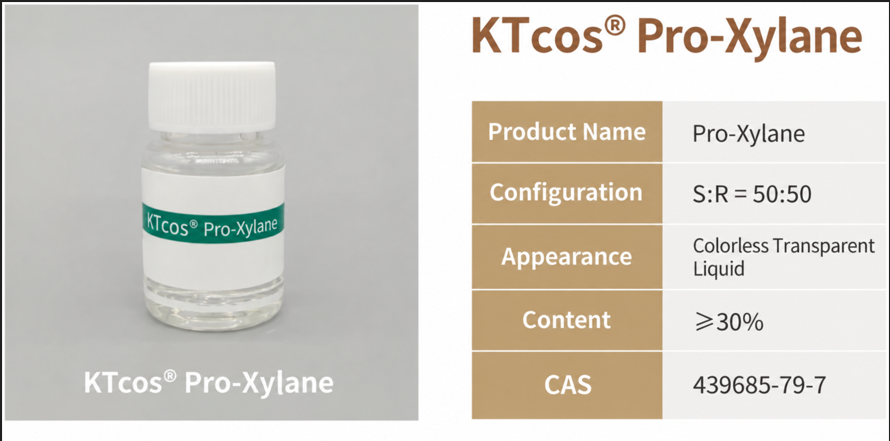
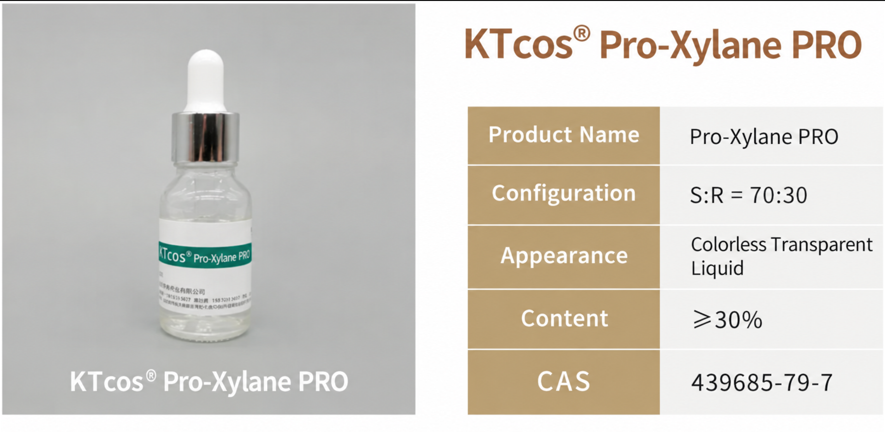
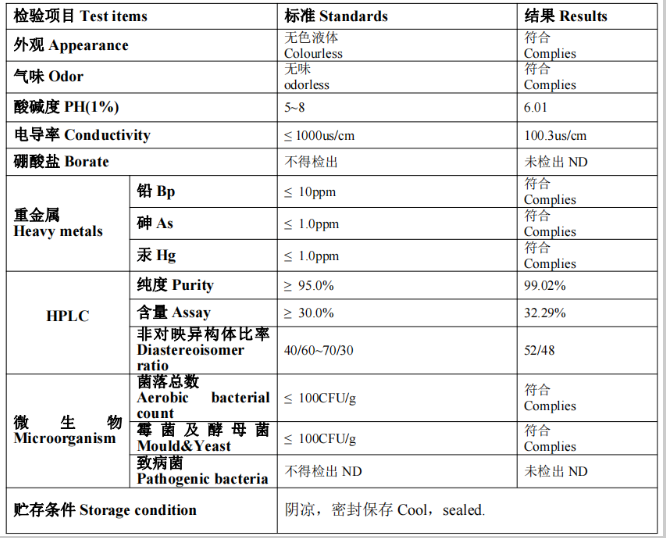
In Juntai's existing Pro-Xylane materials, representative data for the general grade shows an S/R profile of approximately 70/30.
For the S-grade material, representative analytical data shows purity above 99%, with one chromatographic result reaching 99.96%.
These figures are representative results from existing technical materials. Final product values should always follow the COA and analytical report of the supplied batch.
What matters here is not simply which number is larger.
The data shows that the two grades are being evaluated from different technical perspectives:
-
the general grade focuses on the overall product specification;
-
the S-grade adds a more specific stereochemical dimension.
HPLC as Technical Evidence
A chromatogram is most useful when it can be read together with the specification and batch documentation.
For a technical team, it can help confirm whether:
-
the expected components are being measured;
-
the batch meets the agreed specification;
-
the analytical profile is consistent with the grade being supplied.
This makes the analytical data part of the product definition rather than a standalone graphic.
The Data Starts with Process Development
HPLC shows the result, but stereochemical control begins earlier.
Route design, reaction conditions, purification and process optimization all influence the composition of the final material.
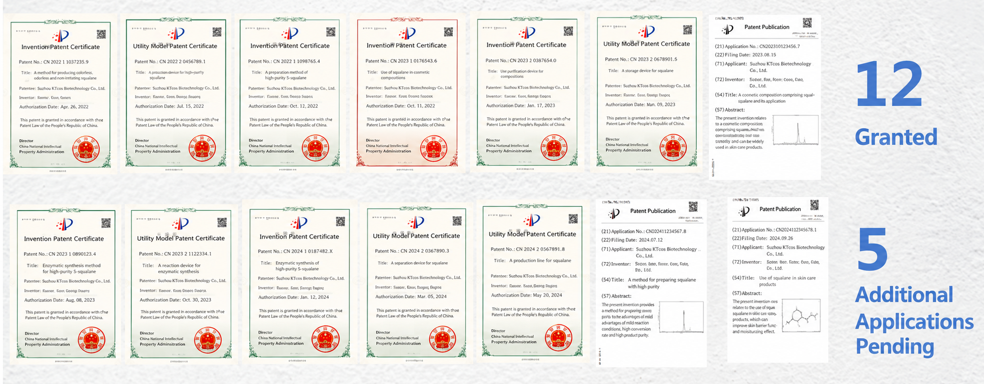
Juntai has continued technical development around Pro-Xylane, including process development and related patent work.
The value of these patents is not the certificate alone. Their significance lies in the technical work behind the product: improving process control and supporting a more defined, reproducible specification.
Patent Development Should Ultimately Be Reflected in the Product
For customers, the practical result of technical development should be visible in three areas:
a controllable process, a clear specification and repeatable analytical results.
That is how Juntai approaches the value of its Pro-Xylane-related patent work.
Turning a Good Result into Repeatable Quality
Product development solves one part of the problem.
Quality management determines whether the same standard can continue to be applied during later supply.
Juntai connects:
process control → analytical testing → product specification → batch COA → quality documentation
within one quality-management workflow.
The QbD-related quality-management materials and quality management system certification shown in Juntai's existing documentation provide additional support for this approach.
The point is practical: testing is documented, specifications are defined, and batch information can be reviewed and traced.
Why This Matters for Ongoing Projects
A single laboratory sample only needs to answer one question:
Does this batch meet the requirement?
An ongoing project has a different concern:
Can the same requirement continue to be met?
For repeated formulation trials or longer-term sourcing, this is where a defined quality system becomes particularly important.
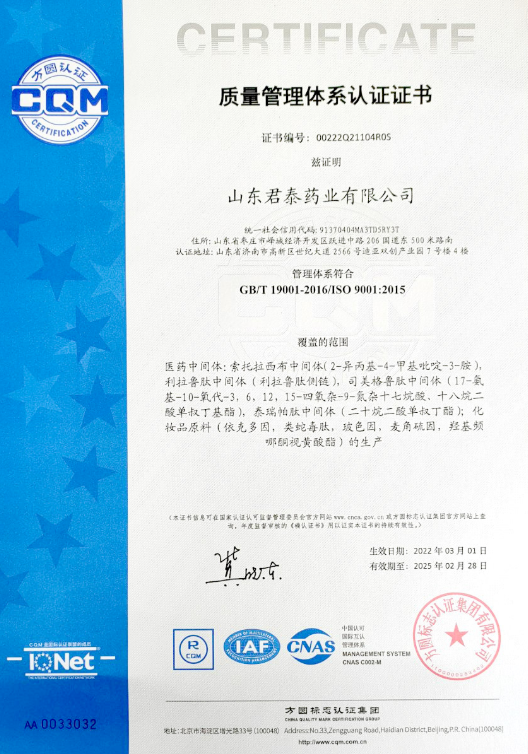
【Image placement】 QbD quality-management graphic + quality management system certification.
Who Is S-Grade Pro-Xylane Designed For?
S-grade is not necessary for every formulation.
A stable general Pro-Xylane grade may already be suitable for many conventional skincare projects.
S-grade becomes more relevant when a project requires closer control of:
-
stereochemical composition;
-
S-form enrichment;
-
analytical data;
-
batch-to-batch specification.
In those cases, the value of S-grade is not simply “higher purity.”
It is the ability to work with a more clearly defined and documented raw material.
For Juntai's wider cosmetic active portfolio, visit the Cosmetic Ingredients product category.
From a Product Name to a Defined Specification
Juntai's S-grade Pro-Xylane development follows a simple logic:
define the material more clearly, verify it with analytical data, support it through process development, and maintain it through quality management.
That is the real difference between adding another product name and building a new product grade.
For customers, the benefit is equally clear:
they can see what the material is, how it is evaluated and what documentation supports the specification.


