
![Fmoc-L-Lys[C20-OtBu-γ-Glu(OtBu)-AEEA-AEEA]-OH](/upload/2026/7/89-1.jpg "Fmoc-L-Lys[C20-OtBu-γ-Glu(OtBu)-AEEA-AEEA]-OH")
Octadecanedioic Acid in Semaglutide Side-Chain Chemistry
2026.08.20
Octadecanedioic Acid in Semaglutide Side-Chain Chemistry: Understanding the Role of the C18 Fatty Diacid
Octadecanedioic Acid, CAS 871-70-5, is increasingly searched alongside terms such as Semaglutide side chain, C18 fatty diacid and AEEA linker.
The connection is structural.
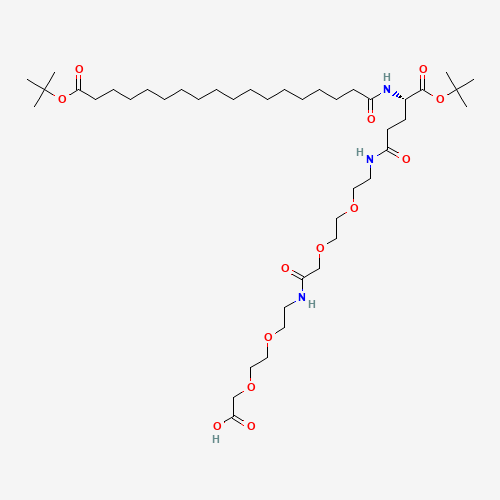
According to the Japanese Accepted Names database maintained by Japan's National Institute of Health Sciences, Semaglutide contains a Lys residue connected to 1,18-octadecanedioic acid through a linker composed of one Glu and two 8-amino-3,6-dioxaoctanoic acid units.
This means Octadecanedioic Acid is not the complete Semaglutide side chain. Instead, it is the C18 dicarboxylic acid component within a larger side-chain architecture.
That distinction is important for researchers, process chemists and technical procurement teams.
This article discusses structural chemistry only and is intended for research-related information.
What Is Octadecanedioic Acid?
Octadecanedioic Acid is an α,ω-dicarboxylic acid with the molecular formula C₁₈H₃₄O₄ and a molecular weight of approximately 314.46 g/mol.
Structurally, it consists of:
carboxyl group — long C18 framework — carboxyl group
This gives the molecule both:
-
a long hydrophobic aliphatic region;
-
two chemically addressable terminal functional groups.
These characteristics help explain why long-chain diacids can be incorporated into functionalized peptide side-chain structures.
Where Does Octadecanedioic Acid Fit into the Semaglutide Side Chain?
The official JAN structural description provides a useful way to understand the architecture.
At a simplified structural level:
Peptide Lys residue
↓
Glu-derived unit
↓
AEEA-based spacer units
↓
1,18-Octadecanedioic Acid
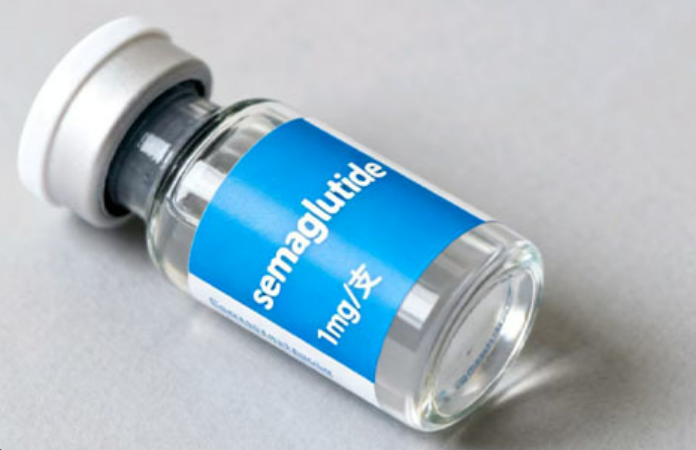
The official description specifies one Glu and two 8-amino-3,6-dioxaoctanoic acid units in the linker between the peptide and 1,18-octadecanedioic acid.
This architecture brings together three different functional concepts:
-
an amino-acid-derived branching element;
-
hydrophilic spacer units;
-
a long-chain C18 diacid moiety.
Why Use a Long-Chain Diacid in Side-Chain Design?
From a chemical-design perspective, Octadecanedioic Acid contributes a long aliphatic segment while retaining terminal carboxyl functionality.
That makes it different from a simple monocarboxylic fatty acid.
Long-Chain Structural Element
The C18 skeleton provides a substantial hydrocarbon segment.
In peptide modification research, the length and nature of such a side-chain component are part of the overall molecular architecture.
Dicarboxylic Functionality
Because Octadecanedioic Acid contains two carboxyl groups, one end can participate in the constructed side-chain linkage while the molecule still retains the structural characteristics of a fatty diacid.
This bifunctionality also makes protected derivatives particularly useful during multistep synthetic research.
The Role of AEEA Linker Units
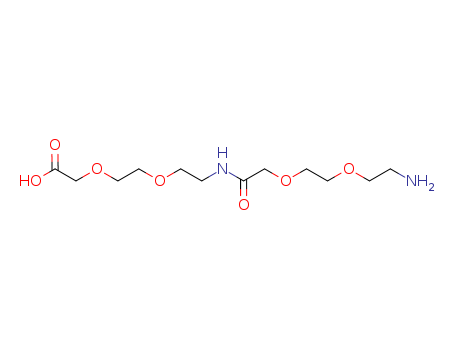
The official Semaglutide structural description refers to two 8-amino-3,6-dioxaoctanoic acid units.
AEEA-type structures contain ether-containing spacer segments and terminal functional groups that allow them to be incorporated into larger linker architectures.
In practical molecular design, these linker units create separation between the peptide portion and the long-chain diacid portion.
For this reason, researchers looking at Semaglutide-related side-chain chemistry often encounter an interconnected group of building blocks:
-
AEEA;
-
AEEA-AEEA;
-
glutamic-acid-derived intermediates;
-
Octadecanedioic Acid;
-
protected C18 diacid derivatives.
This creates a natural technical-content cluster rather than a group of unrelated products.
Octadecanedioic Acid vs. a Complete Side-Chain Intermediate
One of the most common misunderstandings in online supplier content is treating Octadecanedioic Acid and Semaglutide side-chain intermediate as interchangeable terms.
Chemically, they are not identical.
Octadecanedioic Acid is the C18 dicarboxylic acid building block.
A more advanced side-chain intermediate may already contain:
-
linker units;
-
amino-acid-derived components;
-
protected functional groups;
-
additional activated or coupled structures.
For procurement and R&D teams, confirming the exact structural stage is therefore critical.
A CAS number should always be matched to the expected structure rather than relying only on a marketing description such as “Semaglutide intermediate.”
Why Protected C18 Diacid Derivatives Matter
Multistep synthesis often requires chemists to distinguish between two otherwise similar terminal carboxyl groups.
One approach is to temporarily protect one end.
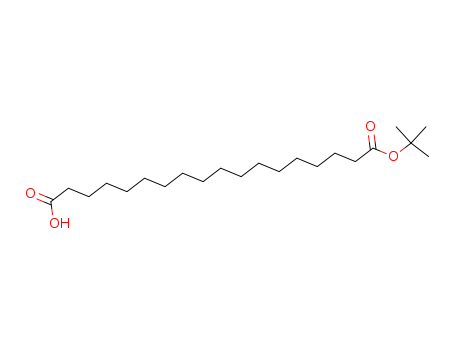
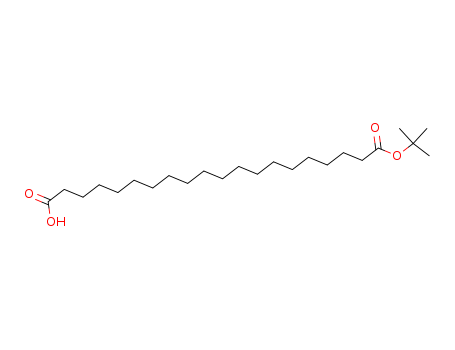
For example, 18-(tert-butoxy)-18-oxooctadecanoic acid, CAS 843666-40-0, is also identified as mono-tert-butyl octadecanedioate or Octadecanedioic Acid mono-tert-butyl ester. TCI lists these names for the same compound.
This derivative contains:
-
one free carboxylic acid;
-
one tert-butyl-protected carboxyl functionality.
That asymmetric functionality can be useful when a project requires controlled sequential modification of the C18 diacid framework.
What Should Peptide R&D Teams Confirm?
Exact Chemical Identity
Determine whether the project requires:
-
free Octadecanedioic Acid;
-
mono-protected C18 diacid;
-
AEEA-containing linker;
-
a more advanced assembled side-chain intermediate.
Purity and Batch Data
The required quality level depends on the stage of the project and downstream chemistry.
Actual batch data should be reviewed rather than relying only on catalog purity.
Structural Documentation
For complex linker projects, product identity and structural confirmation are especially important because compounds can have similar names while representing very different stages of synthesis.
Frequently Asked Questions
Is Octadecanedioic Acid part of Semaglutide side-chain chemistry?
Yes. The official JAN description states that a Lys residue in Semaglutide is connected to 1,18-octadecanedioic acid through a linker consisting of Glu and two AEEA-type units.
Is Octadecanedioic Acid itself the complete side-chain intermediate?
No. It is the C18 dicarboxylic acid structural component within a larger linker architecture.
Why are protected Octadecanedioic Acid derivatives used?
Protected derivatives can differentiate the reactivity of the two terminal carboxyl groups during multistep structural development.
What information should be confirmed before project evaluation?
Confirm the CAS number, exact chemical structure, protection state, purity requirement and batch-specific analytical documentation.
Research and Technical Support
Shandong Juntai Pharmaceutical supports peptide-related intermediate and functional building-block projects, including Octadecanedioic Acid and related C18 structures.
For technical evaluation, project teams can communicate the exact target structure, purity requirement, quantity and documentation needs.
For research use only.


