
![Fmoc-L-Lys[C20-OtBu-γ-Glu(OtBu)-AEEA-AEEA]-OH](/upload/2026/7/89-1.jpg "Fmoc-L-Lys[C20-OtBu-γ-Glu(OtBu)-AEEA-AEEA]-OH")
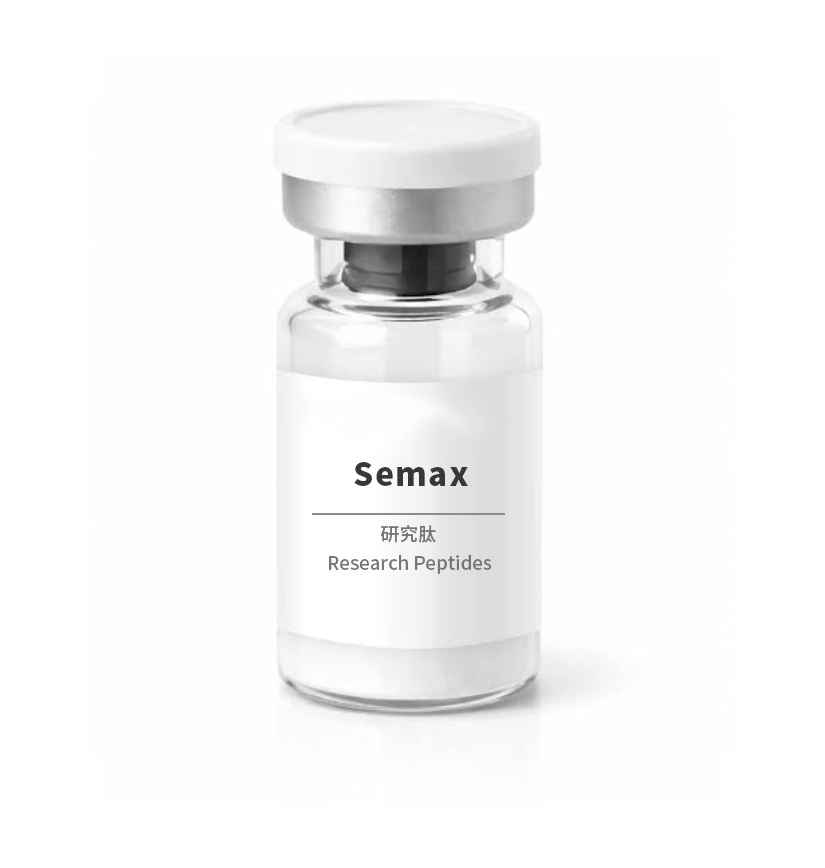
Semax | CAS /
- cas:/
- Molecular Formula:C37H51N9O10S
- Purity:99%
- Molecular Weight:813.92 g/mol
Product Details
CasNo: /
Molecular Formula: C37H51N9O10S
Delivery Time: Confirmed according to order quantity, target specification, and current supply availability
Product Overview
Semax is a synthetic short peptide composed of seven amino acid residues. Its amino acid sequence is Met-Glu-His-Phe-Pro-Gly-Pro, with the one-letter sequence MEHFPGP.
Structurally, the N-terminal Met-Glu-His-Phe sequence corresponds to ACTH(4-7), while the C-terminal region contains the Pro-Gly-Pro sequence. Semax is therefore commonly discussed in the context of ACTH-derived peptides and short-peptide sequence research.
Its compact and clearly defined structure provides a useful model for investigating peptide sequence design, local conformation, fragment combination, and sequence–structure relationships.
This page focuses on the molecular structure of Semax, its relationship to ACTH-derived sequences, and common approaches used for analytical characterization.
Molecular and Structural Information
| Item | Information |
|---|---|
| Name | Semax |
| Amino Acid Sequence | Met-Glu-His-Phe-Pro-Gly-Pro |
| One-Letter Sequence | MEHFPGP |
| Peptide Length | 7 amino acids |
| Peptide Type | Synthetic heptapeptide / ACTH-derived short peptide |
| Molecular Formula | C37H51N9O10S |
| Molecular Weight | Approx. 813.92 g/mol |
| Sequence Relationship | ACTH(4-7) linked to Pro-Gly-Pro |
| Research Context | ACTH-derived peptides, short-peptide structure, sequence design, and structure–function studies |
Structural Features
Defined Heptapeptide Framework
Semax consists of seven amino acids arranged as Met-Glu-His-Phe-Pro-Gly-Pro.
Compared with longer peptides and proteins, its relatively short sequence allows individual residues and local sequence motifs to be examined more directly.
This makes Semax useful for studying how short peptide sequences, terminal regions, and residue combinations influence molecular structure.
ACTH(4-7)-Derived Sequence
The N-terminal Met-Glu-His-Phe segment corresponds to residues 4–7 of ACTH.
This sequence relationship is one of the defining structural features of Semax and explains why it is frequently included in ACTH-derived peptide research.
Semax should not, however, be considered identical to ACTH(4-7), since the full Semax sequence contains an additional Pro-Gly-Pro segment.
Pro-Gly-Pro Segment
The C-terminal region of Semax contains the sequence Pro-Gly-Pro.
Proline has a cyclic side-chain structure that can restrict local peptide conformation, while glycine has a small side chain and generally allows greater conformational flexibility.
The combination of these residues gives the C-terminal portion of Semax structural characteristics that differ from the ACTH(4-7) segment.
Relationship Between Semax and ACTH
ACTH is a considerably longer peptide, whereas Semax contains only the ACTH(4-7) sequence followed by Pro-Gly-Pro.
The structural relationship can be summarized as:
ACTH(4-7) + Pro-Gly-Pro → Semax
This design makes Semax a useful model for examining peptide fragment extension, sequence combination, and structural changes in short synthetic peptides.
When comparing scientific data, it is important to distinguish among full-length ACTH, ACTH(4-7), Semax, and other ACTH-derived peptide sequences, as these are chemically distinct molecules.
Short-Peptide Structure Research
The seven-residue structure of Semax allows researchers to examine how specific amino acid combinations contribute to peptide properties.
Common research topics include:
- Amino acid sequence arrangement
- ACTH-derived sequence motifs
- The Pro-Gly-Pro segment
- Local peptide conformation
- Charge and polarity distribution
- Peptide length
- Single-residue substitution
Comparing related sequence variants can help clarify how changes in peptide composition influence molecular structure and behavior.
Different Molecular Forms
Semax may appear in scientific literature as a free peptide or in salt forms such as an acetate-associated form.
Although these forms share the same core seven-amino-acid sequence, they may differ in molecular composition, theoretical molecular weight, ionic state, and analytical behavior.
For this reason, molecular identity should be evaluated using several parameters rather than relying on the name alone, including:
- Complete amino acid sequence
- Molecular formula
- Molecular weight
- N-terminal and C-terminal state
- Salt form
- Analytical data
This distinction is particularly important when comparing results from different databases or experimental studies.
Analytical and Structural Characterization
Semax can be examined using established analytical methods for short peptides.
Common approaches include:
- High-performance liquid chromatography (HPLC)
- Mass spectrometry (MS)
- LC-MS analysis
- Molecular-weight verification
- Amino acid sequence analysis
- Peptide mapping
- Related-component analysis
HPLC can be used to examine major peptide components and related chromatographic peaks, while MS and LC-MS provide molecular-mass information that supports identity assessment.
When different salt forms or related molecular forms are involved, analytical data should be interpreted according to the exact molecular composition.
Frequently Asked Questions
Why can the reported molecular weight of Semax differ between sources?
Differences may result from salt form, molecular form, or database conventions. The complete sequence, molecular formula, molecular weight, and any indicated salt form should be checked together.
How can Semax free form and acetate form be distinguished?
They share the same core peptide sequence but differ in overall molecular composition. Molecular formula, theoretical mass, and MS or LC-MS data can help distinguish the specific form being studied.
Why is the product name alone not enough to confirm Semax identity?
The name “Semax” may be used for more than one molecular form in scientific or commercial references. Sequence, terminal state, salt form, and analytical data provide a more reliable basis for identification.
Which analytical methods are most useful for confirming Semax identity?
MS and LC-MS are useful for molecular-mass and identity-related analysis, while HPLC helps evaluate major components and related chromatographic peaks. Sequence analysis may provide additional confirmation when required.
What should be checked when comparing Semax data from different studies?
Key factors include the exact amino acid sequence, molecular form, salt form, theoretical molecular weight, and analytical method used. Results are more directly comparable when the molecular identity is consistent.
Relevant Products
-
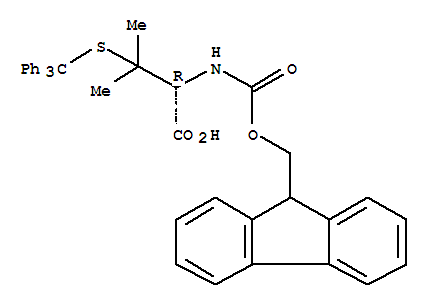 Fmoc-L-Pen(Trt)-OH
CAS:201531-88-6
-
 Selank
CAS:/
-
 BPC157
CAS:137525-51-0


