
How to Stabilize NAD+ in Cosmetic Emulsions: A Technical Formulator's Guide
2026.10.28
NAD+ (Nicotinamide Adenine Dinucleotide) has attracted increasing attention in cosmetic formulation research. As an essential coenzyme involved in cellular energy metabolism and redox reactions, NAD+ also serves as a substrate for enzymes associated with cellular signaling and DNA repair.
However, from a formulation chemistry perspective, NAD+ presents several technical challenges. It is a relatively large, highly water-soluble molecule that can undergo chemical degradation in aqueous environments, particularly when exposed to unsuitable pH conditions, elevated temperatures, or prolonged storage.
For R&D teams developing NAD+-containing creams and lotions, simply dispersing the powder into an emulsion without considering its compatibility and stability may lead to a gradual loss of active content over time.
This guide explores three critical technical strategies for improving NAD+ stability in cosmetic emulsions, together with a practical O/W formulation approach for laboratory evaluation.
The Formulation Dilemma: The 500 Dalton Rule and Aqueous Degradation
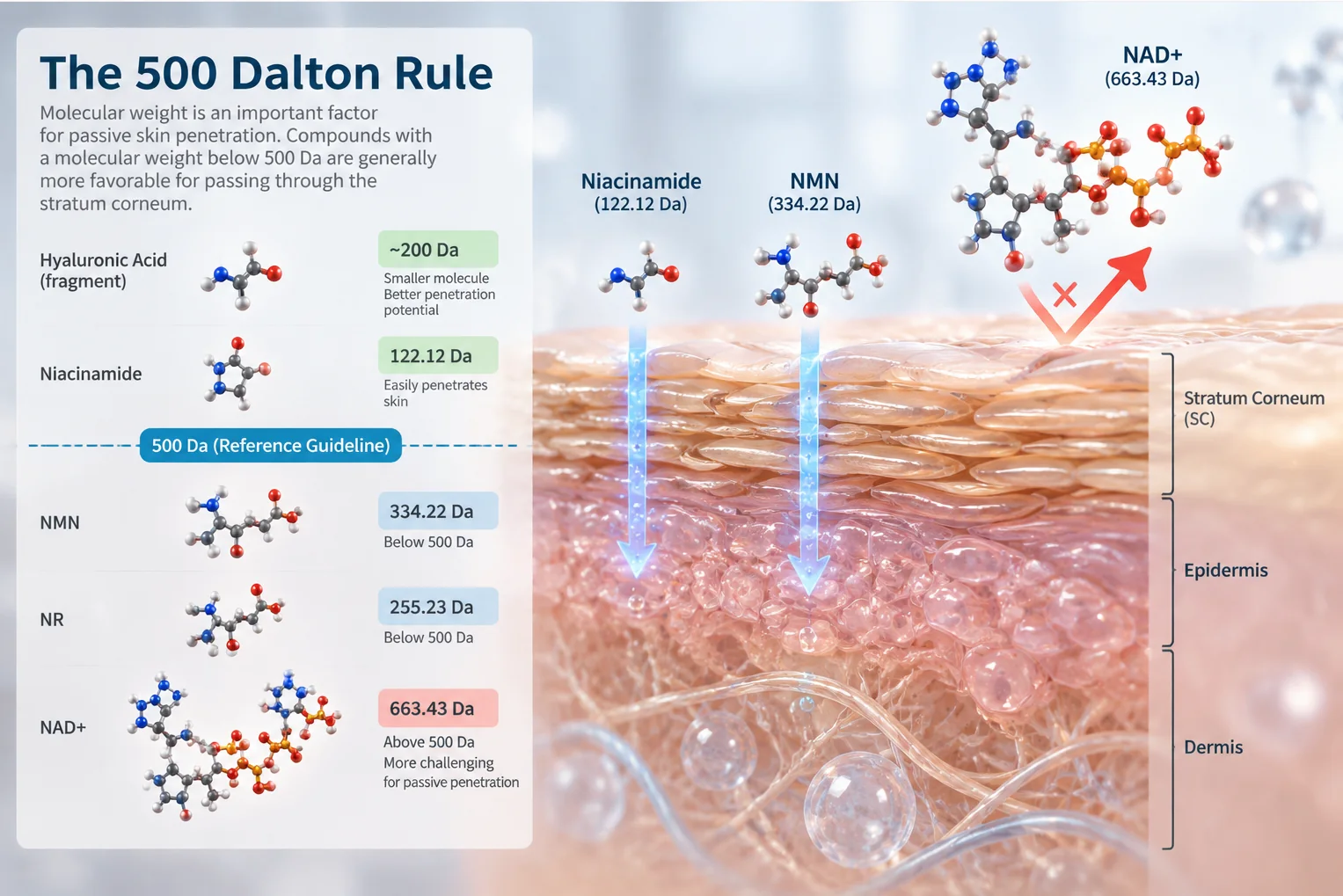
Before formulating, it is important to understand two major physicochemical considerations associated with NAD+ (CAS 53-84-9, MW: 663.43 g/mol):
-
The 500 Dalton Rule: According to the widely cited 500 Dalton Rule, molecules with a molecular weight below approximately 500 Da are generally more favorable for passive penetration through intact skin. Because NAD+ has a molecular weight of 663.43 Da, its passive penetration through the stratum corneum (SC) is expected to be limited. This does not mean that skin delivery is impossible, but it highlights the importance of suitable delivery technologies when intracellular delivery is intended (Bos and Meinardi, 2000).
-
Aqueous Degradation: NAD+ can undergo chemical degradation in aqueous environments. Its stability is influenced by several factors, including pH, temperature, buffer composition, and storage time. In particular, alkaline conditions can accelerate base-catalyzed degradation. The effects of these variables need to be evaluated in the context of the actual cosmetic formulation.
A 2024 study by Wolfe et al. investigated NAD+ and NADH stability in three aqueous buffer systems at 19°C and 25°C over 43 days. The results demonstrated that buffer composition and temperature can influence long-term cofactor stability. Although this research focused on cell-free biocatalysis rather than cosmetic emulsions, it provides useful background for formulation screening (Wolfe et al., 2024).
To address these challenges, formulation development should go beyond simple solubilization and focus on advanced delivery systems and microenvironment control.
Strategy 1: Encapsulation & Nanotechnology (Liposomes & SLNs)
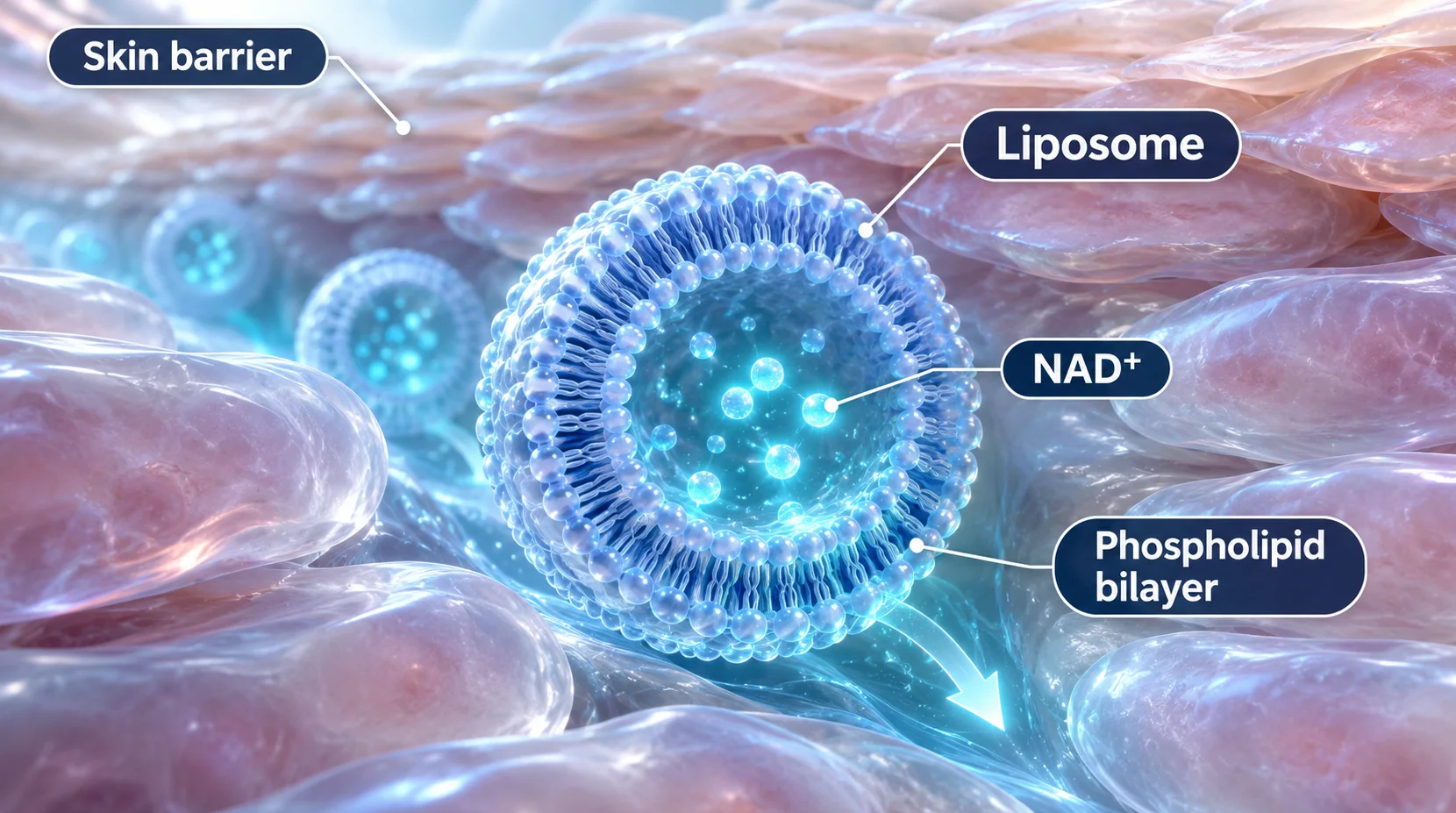
Encapsulation is an established approach in cosmetic formulation technology for improving the delivery and protection of sensitive active ingredients.
-
Liposomal Encapsulation: Liposomes are phospholipid-based vesicles capable of encapsulating hydrophilic ingredients such as NAD+ within their internal aqueous compartments. This may help reduce the active ingredient's exposure to certain external environmental factors while improving its delivery into skin layers.
A 2025 study by Ministrini et al., published in Current Issues in Molecular Biology, reported approximately 30% higher NAD+ skin penetration measurements with a liposomal formulation compared with free NAD+ in an ex vivo skin model. However, the skin penetration assessment had a limited sample size (n=1), and the findings should be interpreted as preliminary rather than a universal performance benchmark. The study also disclosed commercial relationships involving the liposomal matrix provider. Independent replication and formulation-specific validation remain important.
-
Solid Lipid Nanoparticles (SLNs): Solid lipid nanoparticles and related lipid-based delivery systems may also be explored for NAD+ formulations. However, because NAD+ is highly hydrophilic, its encapsulation efficiency, loading capacity, release behavior, and storage stability must be evaluated experimentally. Improved photostability or controlled release should not be assumed without supporting test data.
-
Formulation Tip: If your R&D team does not have in-house encapsulation capabilities, consider evaluating pre-encapsulated NAD+ raw materials or compatible carrier systems. Always request technical documentation covering encapsulation efficiency, active content, release characteristics, and stability under the intended formulation conditions.
Strategy 2: Microenvironment Control (pH and Temperature)
When formulating with free (unencapsulated) NAD+ powder in a standard O/W emulsion, careful control of processing conditions is essential.
-
The Cool-Down Phase (Crucial): Avoid adding NAD+ directly to the heated water phase. To minimize thermal exposure, NAD+ should preferably be introduced during the cool-down stage, at a temperature below 40°C. Pre-dissolve the powder in a reserved portion of cool purified water before incorporating it into the emulsion. This temperature is a conservative processing target rather than a universal degradation threshold.
-
Initial pH Range: A formulation pH between 5.0 and 7.0 can serve as an initial screening range for NAD+-containing cosmetic emulsions. For the formulation example below, a target pH of 5.5 to 6.0 is proposed as a starting point. However, the optimal range should be established through stability testing because NAD+ degradation depends not only on pH but also on buffer composition, temperature, and other formulation components.
When combining NAD+ with acidic active ingredients such as AHAs, BHAs, or high concentrations of L-Ascorbic Acid, do not rely on ingredient names alone to determine compatibility. Evaluate the final formulation pH and monitor NAD+ content over time to identify potential stability issues.
Strategy 3: Chelation and Antioxidant Compatibility
In cosmetic emulsions, trace metal ions such as iron and copper may influence oxidation reactions and affect the stability of certain formulation components. Their potential impact should therefore be considered during raw material selection and formulation development.
-
Add a Chelating Agent: Consider incorporating a suitable chelating agent, such as EDTA-2Na or Sodium Phytate, into the water phase. A concentration range of 0.05%–0.1% can be evaluated as an initial formulation screening level, subject to compatibility testing. These ingredients bind certain metal ions and may help reduce metal-related instability. However, they should not be regarded as direct inhibitors of NAD+ hydrolysis.
-
Antioxidant Compatibility: Ingredients such as Vitamin E, Ferulic Acid, and Coenzyme Q10 may be incorporated as complementary antioxidant components in a cosmetic formulation. They can contribute to the overall antioxidant design of the product, but their presence does not automatically improve the chemical stability of NAD+ itself. Their compatibility with NAD+ should be confirmed through formulation testing and analytical monitoring.
Formulation Blueprint: NAD+ Protective O/W Emulsion
The following is an illustrative starting formula for laboratory screening. Final ingredient levels and processing conditions should be confirmed through compatibility and stability testing.
| Phase | Ingredient | Function | % | Technical Note |
|---|---|---|---|---|
| A (Water) | Purified Water | Solvent | q.s. | Use purified or deionized water. Reserve a portion for dissolving NAD+. |
| Glycerin | Humectant | 5.0 | Supports ingredient wetting and formulation hydration. | |
| EDTA-2Na | Chelator | 0.05 | Binds trace metal ions; evaluate its contribution to overall formulation stability. | |
| B (Oil) | Emulsifying Wax (NF) | Emulsifier | 4.0 | A non-ionic emulsifier system may be evaluated. |
| Caprylic/Capric Triglyceride | Emollient | 8.0 | Provides emollience and supports the oil phase. | |
| C (Cool-down) | NAD+ (H2O Pharm) | Active | 1.0 | Pre-dissolve in cool purified water and add below 40°C. |
| Phenoxyethanol & EHG | Preservative | 1.0 | Confirm compatibility and preservative efficacy in the final formulation. | |
| Citric Acid (10%) | pH Adjuster | q.s. | Use as needed to lower the final pH to the target range of 5.5–6.0. |
Note: The water reserved for dissolving NAD+ should be included in the total Phase A water quantity.
Processing Protocol:
-
Heat Phase A and Phase B separately to approximately 75°C.
-
Homogenize Phase B into Phase A to form the O/W emulsion.
-
Cool the emulsion to approximately 38°C while stirring gently.
-
Dissolve NAD+ in a reserved portion of cool purified water. Add the solution gradually to the emulsion, together with the remaining Phase C ingredients according to their processing requirements.
-
Adjust the final pH to approximately 5.5–6.0 using suitable pH adjusters. Use the diluted citric acid solution when the pH needs to be lowered.
Stability Evaluation: After preparation, monitor the formulation's physical appearance, pH, and NAD+ content over time. HPLC analysis should be used to assess active content and potential degradation products under the intended storage and packaging conditions. Preservative efficacy and physical stability should also be evaluated before commercial application.
The Critical Role of Raw Material Quality
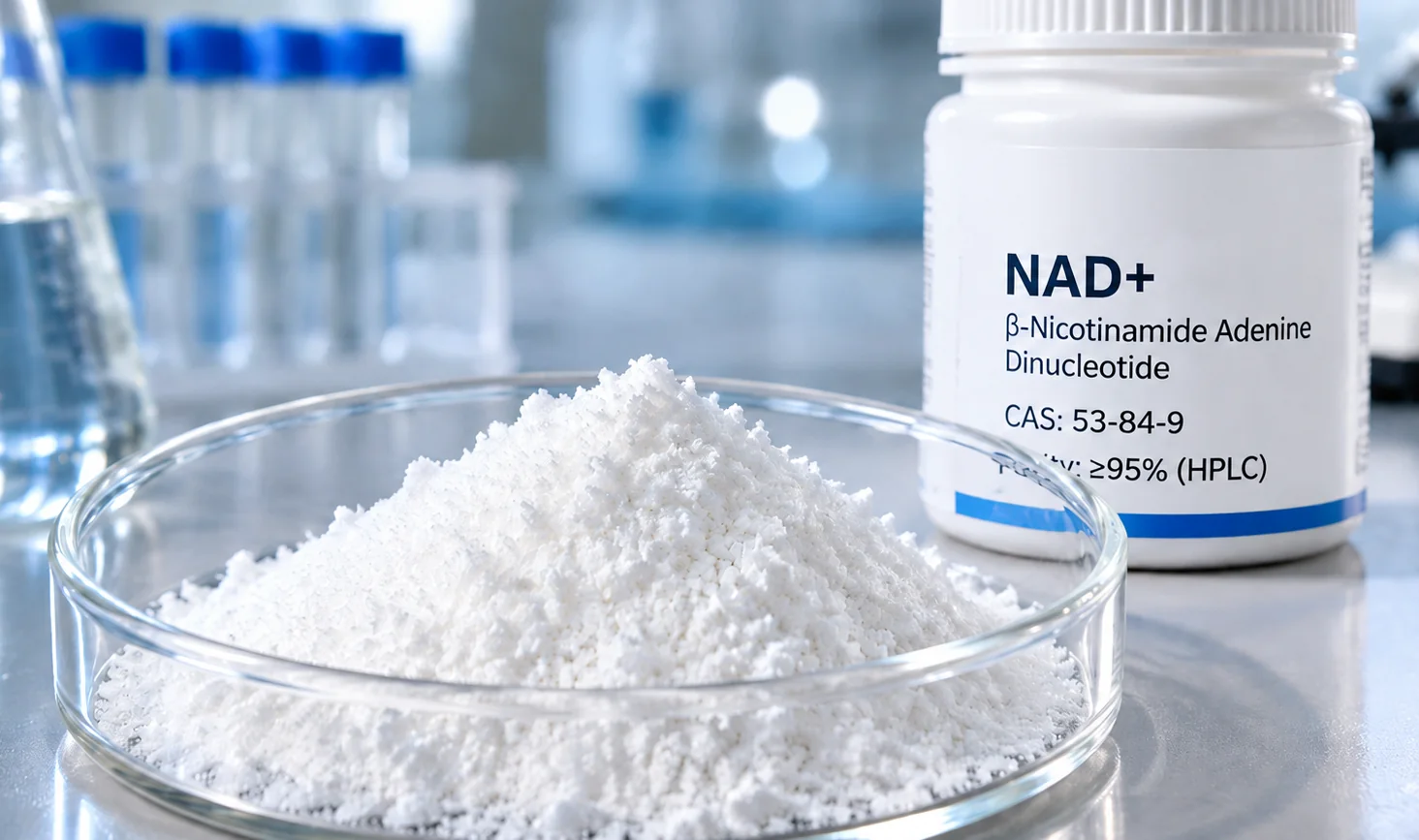
A stable formulation begins with reliable raw materials. The quality of NAD+ powder directly affects formulation development, analytical consistency, and the ability to maintain the intended active content.
Impurities, including trace metals and other uncontrolled components, may affect formulation compatibility and chemical stability depending on their identity and concentration. Therefore, HPLC purity should be considered alongside the available impurity profile and supporting quality documentation.
As a B2B NAD+ supplier, H2O Pharm provides Beta-Nicotinamide Adenine Dinucleotide (NAD+) (CAS 53-84-9) with the following supply and quality support:
-
≥95% HPLC Purity: Batch quality is assessed by HPLC, with purity specifications documented in the corresponding COA.
-
Quality Documentation: COA, TDS, and MSDS are available to support raw material evaluation, formulation development, and R&D documentation.
-
Manufacturing and Quality Controls: Manufacturing information and applicable quality-system documentation are available for review according to the relevant production scope.
-
Flexible Supply: From gram-level R&D samples to bulk commercial quantities, we support different project and procurement requirements.
-
Formulation Support: Our R&D team can discuss stability testing, ingredient compatibility, and formulation development requirements with customers.
Ready to Develop Your NAD+ Cosmetic Formulation?
Don't let formulation stability challenges delay your R&D timeline.
[👉 Contact Our Technical Team] to request the NAD+ TDS and COA, or [👉 Request a NAD+ Sample] to begin your laboratory formulation trials.
References
-
Bos, J.D.; Meinardi, M.M.H.M. The 500 Dalton Rule for the Skin Penetration of Chemical Compounds and Drugs. Experimental Dermatology. 2000;9(3):165–169. https://doi.org/10.1034/j.1600-0625.2000.009003165.x
-
Wolfe, K.D.; Alahuhta, M.; Himmel, M.E.; Bomble, Y.J.; Jennings, G.K.; Cliffel, D.E. Long-Term Stability of Nicotinamide Cofactors in Common Aqueous Buffers: Implications for Cell-Free Biocatalysis. Molecules. 2024;29(22):5453. Published November 19, 2024. https://doi.org/10.3390/molecules29225453
-
Ministrini, S.; Liberale, L.; Erle, H.-E.; Percoco, G.; Tfayli, A.; Assi, A.; Kapitonov, I.; Greiner, I.; Camici, G.G. A Liposomal Formulation Enhances the Anti-Senescence Properties of Nicotinamide Adenine-Dinucleotide (NAD+) in Endothelial Cells and Keratinocytes. Current Issues in Molecular Biology. 2025;47(9):722. Published September 5, 2025. https://doi.org/10.3390/cimb47090722


